China Auto Export Insights
Stay informed with the latest trends, policies, and market updates.
 Market
CAAM Lifts China's 2026 Export Forecast Above 11 Million as October Shipments Top 1.06 Million
CAAM reports China exported 1.066 million vehicles in October 2026, up 60.2% year on year and the fifth consecutive month above one million, taking January-October exports to 9.271 million (up 65.1%). New-energy exports reached 606,000 in October — up about 1.4 times, 57% of the monthly total — and 4.612 million in January-October. CAAM has raised its full-year 2026 export forecast from 7.4 million at the start of the year to more than 11 million; CPCA secretary-general Cui Dongshu projects 11.5-12 million. These are forecasts, not results. Brazil was the largest new-energy export market in January-September at 379,000 units.
 Policy
From Buying a Car to Using One: China's Shift to Usage-Based Auto Policy and What It Means for Used-Car Supply
A 22 November commentary in the state-backed China Reform Daily argues China's auto policy has moved from purchase management to usage management, a shift written into the State Council's 15th Five-Year Plan on expanding consumption in July 2026. The plan names four paths — used-car circulation, after-market, scrapping and recycling, and a full-lifecycle information system — and follows an eight-ministry pilot notice (January 2025) and a 40-city reform list (June 2026). The context is a split market: January-October narrow passenger-car retail fell 22.3% to 14.978 million units while CAAM vehicle exports rose 65.1% to 9.271 million, and NEV retail penetration reached 67.5% in October and 73.2% in the first half of November.
MarketGuangdong Turns 109 Exporters Into One Cross-Border Used-Car Expo: The Cluster Model Behind a 61% Export Jump
On 26-28 November 2026 Guangdong holds its cross-border automobile and used-car procurement conference at the Canton Fair Complex in Guangzhou, with 109 provincial exporters and over 20 manufacturer-authorized brands exhibiting and nearly 200 overseas buyers from more than 20 countries registered. The event sits on a structural shift: China exported 325,000 used vehicles worth USD 7.6 billion in H1 2026, up 61% and 54%, with three-to-five-year cars at 64% of the mix and new-energy used cars above 30% (up 196%). Attendance figures are event numbers, not national statistics.
 Logistics
Wuhan's 500th China-Europe Train of 2026: What the Rail Numbers Do and Do Not Measure
At 10:35 on 20 November 2026, the 500th China-Europe freight train to leave Wuhan in 2026 departed Wujiashan Station for Moscow via Erenhot, carrying new-energy vehicle parts made in Hubei. The same departure was the 6,000th train in the corridor's 14-year history and came 36 days earlier than Wuhan's 500th train of 2025. The corridor reports 454,800 tonnes dispatched in 2026 to date, up 44.2%, 64 cross-border routes reaching 46 countries and 167 cities, and timetable capacity of 11 trains per week; the full-year expectation is more than 460 China-Europe and more than 100 Central Asia trains. Dongfeng reports 38 trains and 3,522 TEU of finished vehicles and KD kits on the corridor in January-October, up 124% and 148%, with new-energy models at 85.5%. Dongfeng's claim of 10%-20% lower cost and 20-25 days faster transit than all-sea routing is an operator statement, not audited data. These are new-vehicle, parts and general-cargo figures: they are not national vehicle exports and do not measure used-car demand.
 Finance
China Auto Export Value Reaches USD 169.6 Billion: Four Statistical Lenses Exporters Must Separate
On 20 November 2026, CPCA secretary general Cui Dongshu cited customs data showing China's finished-vehicle export value at USD 169.6 billion in January-October, up 52% year on year, and about USD 19.7 billion in October, up 38%. Auto parts contributed a separate USD 88.7 billion, up 12%, including about USD 9.2 billion in October, up 32%. CAAM counted 9.271 million vehicle exports in January-October, up 65.1%, and 1.066 million in October, up 60.2%. Separately reported customs volumes were 9.736 million for January-October, up 49.6%, and 1.108 million in October. The customs and CAAM unit series use different scopes and cannot be combined; dollar value is not sales volume, finished vehicles are not parts, and used-car exports are outside these new/finished-vehicle statistics.
LogisticsChina's 10,000th Vehicle Export Train Signals a Logistics Step-Change
A dedicated train carrying 203 Chinese-made new energy vehicles left Zhengzhou International Land Port on 19 November 2026, taking the cumulative total of China's dedicated finished-vehicle export trains to 10,000. The cargo travels by rail to Shanghai Minhang, then by roll-on/roll-off ship to Australia, a journey of more than 10,000 km expected to take about 14 days. Regular dedicated service began in 2021; the first 5,000 trains took about four years, while the next 5,000 took just over a year. Zhengzhou now runs three to four trains a day, carrying 700 to 1,000 vehicles, and about 400,000 vehicles were railed for export from the hub in January-October 2026. The trains carry new vehicles, not used cars; CAAM's 9.27 million January-October export figure is also a new-vehicle statistic.
PolicyEU Used Chinese EV Imports Jump 280% as Tariffs Hit Only New Cars
EU buyers imported about 7,900 used Chinese electric cars in January-September 2026, up 280% year on year, according to German EV site ElektroQuatsch citing China EV Marketplace data, while the same platform's new Chinese EV sales to the EU fell 44%. The shift follows the EU's countervailing duties on new Chinese battery-electric cars, in force since 30 October 2024: 17% for BYD, 18.8% for Geely and 35.3% for SAIC, plus the 10% base duty, up to 45.3%. A car classified as used pays only the 10% base duty. The EU defines used as permanently registered for more than six months and driven more than 6,000 km. The figures are platform data, not Eurostat totals, and the European Commission has previously said official data showed no significant rise.
MarketChina's October Vehicle Exports Hit 1.07 Million as Domestic Retail Falls 25%
China exported 1.066 million vehicles in October 2026, up 60.2% year on year and the fifth consecutive month above one million, CAAM data reported on 18 November show. Passenger-car exports reached 927,000 and NEV exports 606,000, up 140%, while CPCA puts passenger exports at 928,000 and NEV passenger exports at 582,000. At home, retail passenger sales in 1-15 November fell 25% year on year to 611,000, with NEV retail penetration at 73.2%. The divergence matters to used-car exporters: the 1.07 million figure is new-vehicle export shipments, not used-car exports, which reached 325,000 in the first half of 2026. A planned cut in the NEV export VAT rebate from 13% to 9% on 1 April 2027 is pulling Q4 volume forward.
 Policy
Canada to Review Where Chinese EVs Can Drive as Tariff Quota Opens Market
Canadian Transport Minister Steve MacKinnon told Global News on 18 November 2026 that access for Chinese electric vehicles to military and government facilities will be part of a cross-governmental review involving Public Safety, as Ottawa weighs the security risks of connected cars. The review comes after Canada replaced its 100 per cent surtax on Chinese EVs with a 6.1 per cent tariff inside an initial annual quota of 49,000 vehicles, confirmed by China's Ministry of Commerce on 16 January 2026. The quota covers new Chinese-built EVs, not used-car imports, and the review is a proposal, not an enacted ban. Germany has separately restricted listed Chinese-made vehicles at barracks and secure zones, per Der Spiegel reporting of 11 November. Certification of some Chinese manufacturers in Canada is still ongoing.
PolicyChina to Give Every EV Battery a Digital ID Under Nine-Department Recycling Guideline
Nine Chinese departments, led by the Ministry of Commerce, released a recycling guideline on 17 November 2026 with 16 tasks and a 2030 target for solid waste from the "new three" categories, including a digital identification system for EV power batteries and vehicle-battery integrated scrapping. The digital ID itself is established by MIIT Order No. 73, published on 31 December 2025 and effective 1 April 2026 (Article 12), with detailed rules still to come; Article 21 treats a scrapped EV without its battery as incomplete and Article 32 allows fines up to RMB 50,000. The guideline governs domestic collection, dismantling and utilisation, not used-vehicle export licensing, which remains under the four-ministry notice of November 2025. The 2030 goal is a stated policy target, not a forecast, and no collection volumes were published.
MarketEU Tariffs Hit New Cars Only: Used Chinese EV Imports Jump 280 Percent
China EV Marketplace, a Czech-registered importer, says it sold about 7,900 used EVs to EU customers in January-September 2026, up 280 percent year on year, while its new-car sales fell 44 percent, as reported by CarNewsChina on 22 October, Newmobility.news on 27 October and Sina Finance on 19 November 2026. The driver is the EU tariff gap: definitive countervailing duties on new China-built BEVs are 17.0 percent for BYD, 18.8 percent for Geely and 35.3 percent for SAIC on top of the 10 percent standard duty, while genuinely used cars pay only the base duty. EU rules define used as permanently registered for more than six months and driven more than 6,000 km. The 7,900 figure is company-reported platform sales, not Eurostat imports or EU registrations; official data have not confirmed a market-wide surge, and the reported 350,000-unit hybrid quota remains an unconfirmed draft.
IndustryXPeng's Q3 Overseas Deliveries Surge 153 Percent as It Targets 100,000 Exports in 2026
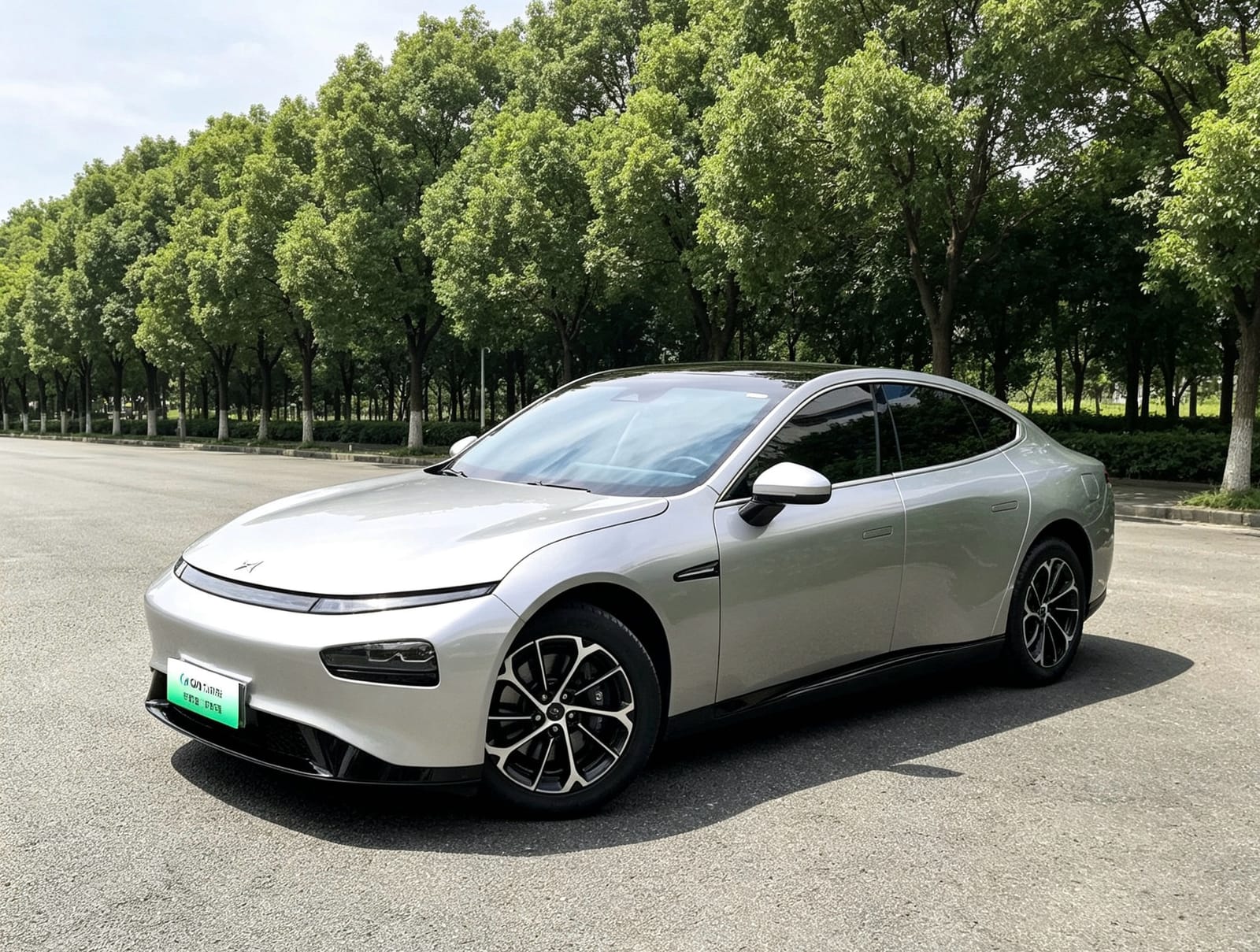
XPeng's unaudited Q3 2026 results, released on 16 November and confirmed by independent reporting from Gasgoo and Sina Finance, show record quarterly revenue of RMB 24.28 billion, up 19.1 percent year on year, and record deliveries of 118,390 units, up just 2.1 percent at home. The growth engine is now overseas: international deliveries reached 27,882 vehicles, up 153.4 percent, across 82 countries and 552 overseas stores. October alone brought a record 13,000-plus export sales, up 166 percent, and management guided to more than 40,000 overseas deliveries in Q4 and above 100,000 for the full year — company guidance, not audited results. All figures are company wholesale deliveries, not registrations or used-car trade, and the net loss narrowed quarter on quarter but remained RMB 870 million.