From Buying a Car to Using One: China's Shift to Usage-Based Auto Policy and What It Means for Used-Car Supply
A 22 November commentary in the state-backed China Reform Daily argues China's auto policy has moved from purchase management to usage management, a shift written into the State Council's 15th Five-Year Plan on expanding consumption in July 2026. The plan names four paths — used-car circulation, after-market, scrapping and recycling, and a full-lifecycle information system — and follows an eight-ministry pilot notice (January 2025) and a 40-city reform list (June 2026). The context is a split market: January-October narrow passenger-car retail fell 22.3% to 14.978 million units while CAAM vehicle exports rose 65.1% to 9.271 million, and NEV retail penetration reached 67.5% in October and 73.2% in the first half of November.

What Happened
On 22 November 2026 the state-backed China Reform Daily published a commentary arguing that China's automobile policy has crossed a line: it is no longer about managing who can buy a car, but about managing how cars are used. The article's title — "From Buying a Car to Using One" — describes the shift the author says has been building since early 2025 and was made explicit in mid-2026.
The change is not rhetorical. The commentary traces it through a document trail: an eight-ministry pilot notice in January 2025, a 40-city reform list in June 2026, a State Council plan in July 2026, and a seven-ministry implementation opinion in August 2026. The same paragraph names the four operational paths the State Council plan sets out, and one of them — used-car circulation — is the one that matters most to the export trade this article serves.
The Numbers and Their Scope
The commentary opens with two figures that must not be added together, because they measure different things.
Domestic retail fell. January-October narrow passenger-car retail was 14.978 million units, down 22.3% year on year. That is domestic retail of narrow passenger cars only — it excludes commercial vehicles and, crucially, it is a retail figure, not a wholesale or export figure.
Exports rose. Over the same period CAAM counted 9.271 million vehicle exports, up 65.1%. That is total vehicle exports, a customs-facing series that includes passenger and commercial vehicles and is measured on a different basis from domestic retail.
The two series sit on different ledgers. "Domestic cold, foreign hot" is the correct headline, but the 22.3% fall and the 65.1% rise cannot be netted into a single market number.
New-energy penetration kept climbing. NEV share of retail reached 67.5% in October and 73.2% in the first half of November — roughly three in every four new cars sold. The commentary reads this as proof that the petrol-to-electric switch is continuing even as total volume shrinks, and that the market's centre of gravity has moved from first-time buyers to replacement buyers who weigh running cost and resale more carefully.
The Policy Timeline
The commentary lays out the sequence explicitly:
- January 2025 — eight ministries led by the Ministry of Commerce issue a notice on automobile circulation and consumption reform pilots, covering 2025-2027, spanning purchase-restriction optimisation, used-car circulation and after-market development.
- June 2026 — the list of 40 pilot cities (and regions) is published, tasked with removing unreasonable restrictions across the whole automobile circulation chain.
- July 2026 — the State Council approves the 15th Five-Year Plan on expanding consumption, which writes in the instruction to "promote the transformation of automobile and other consumption from purchase management to usage management".
- August 2026 — seven ministries publish an implementation opinion on expanding commodity consumption, adding force on used-car circulation, charging infrastructure and removing circulation restrictions.
The sequence matters because it shows the policy is not a single document but a layered, still-running programme. The commentary also names early local variants — Hefei's "front-shop, rear-factory" production-sales integration, Hainan's high-value special-purpose vehicles and modification work, Shenyang's used-car circulation reform — as the same principle being tested against different local endowments.
The Four Paths, and the One That Matters Here
The State Council plan is described as putting "full-chain innovative development" into four concrete paths: used-car circulation, after-market consumption, scrapping and recycling, and a full-lifecycle information system.
For a used-car exporter, three of the four are directly relevant:
- Used-car circulation — loosening the rules that make a car expensive to resell domestically is what enlarges the exportable pool.
- Scrapping and recycling — a more orderly end-of-life system raises the quality floor of the stock that remains in circulation.
- Full-lifecycle information — a credible, portable vehicle-history record is exactly the asset an overseas buyer and a destination regulator want to see attached to a used car.
The commentary frames the whole thing in the language of a "fourth consumption era": buyers moving from status purchases toward pragmatic, use-value purchases. That is the domestic demand story. The export side is the mirror image — the same realistic, well-documented cars that a Chinese replacement buyer now values are the cars a foreign used-car buyer can verify and trust.

What It Means for Used-Car Exporters
1. The supply pool is being deliberately deepened. Every piece of this policy — pilot cities, restriction removal, used-car circulation reform — is aimed at making more cars change hands more cheaply and more transparently. That enlarges the domestic pool from which export stock is drawn. It does not change export volume overnight, but it changes the ceiling.
2. The information system is the export-quality lever. A full-lifecycle information system, if it becomes standard, is what turns a "China used car" into a verifiable asset. Exporters who already attach inspection reports and history to their cars are aligned with where policy is heading.
3. Do not confuse retail, export and wholesale figures. The 22.3% retail fall, the 65.1% export rise and any monthly wholesale number are three separate series. Keep them apart on your own dashboard and in what you tell buyers.
4. Watch the 40 pilot cities for procedural shortcuts. The pilot cities are the places where resale paperwork, deregistration and title transfer are being simplified first. If you source export stock, those jurisdictions may become the fastest and cheapest places to buy and deregister a car.
5. The replacement-buyer shift feeds your best stock band. A market moving from first-time to replacement buyers produces more three-to-five-year cars with real usage history — the exact band that now dominates used-car exports. Policy and market are pointing the same way.
Method and Sources
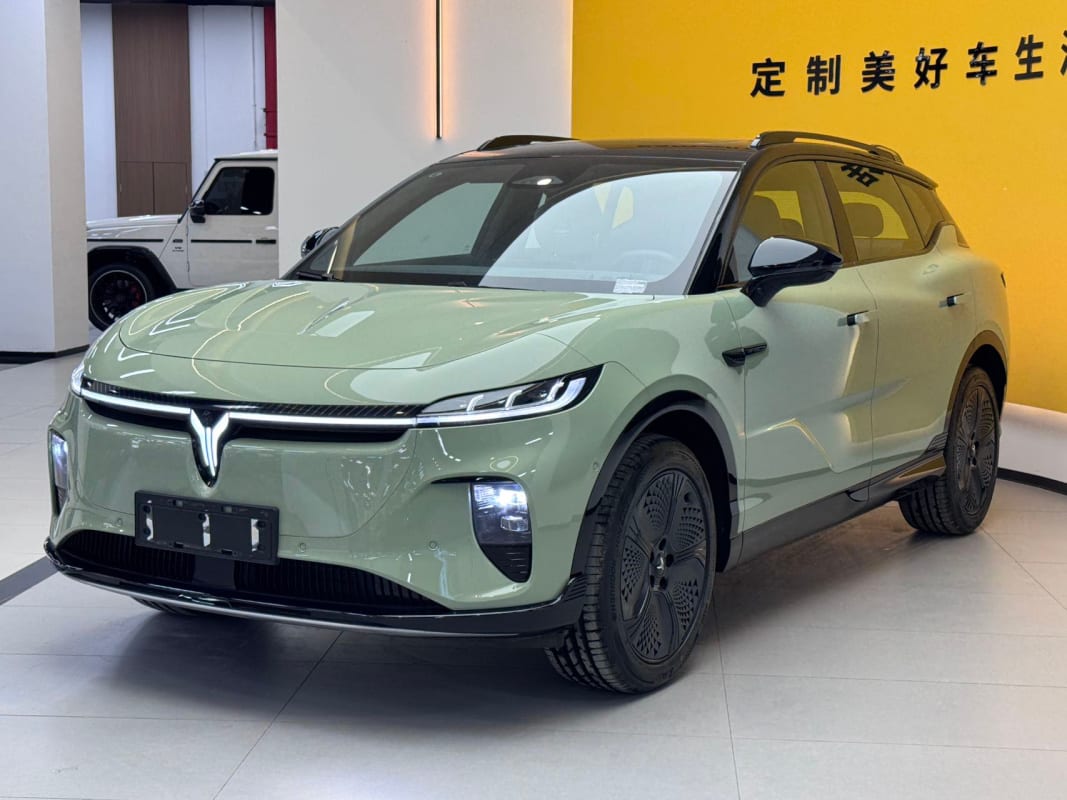
This article reports a policy commentary and separates the statistics around it. The primary source is the China Reform Daily commentary of 22 November 2026, republished by Sina Finance ([finance.sina.cn](https://finance.sina.cn/2026-11-22/detail-inizpyzn6254971.d.html)), which supplies the policy timeline (January 2025 eight-ministry notice, June 2026 40-city list, July 2026 State Council plan, August 2026 seven-ministry opinion), the four paths, and the local pilot examples. The market figures — 14.978 million units of narrow passenger-car retail (down 22.3%) and 9.271 million CAAM vehicle exports (up 65.1%) for January-October, and the 67.5% / 73.2% NEV retail penetration — are CAAM and CPCA series cited in the commentary and cross-checked against earlier same-source reporting. Retail, export and wholesale figures are different scopes and are not combined. The two photographs are real vehicle images, illustrative only.
CAAM Lifts China's 2026 Export Forecast Above 11 Million as October Shipments Top 1.06 Million
Guangdong Turns 109 Exporters Into One Cross-Border Used-Car Expo: The Cluster Model Behind a 61% Export Jump