Volkswagen Tiguan L Buyer Guide: 2018 vs 2022 Facelift Compared
Comparing two China-market Tiguan Ls photographed for this guide — a 2018 330TSI front-wheel-drive Luxury in black with China 5 emissions, and a 2022 330TSI R-Line in white with China 6 — what the EA888 2.0T, seven-speed wet DSG and MQB platform deliver, how the facelift changed the screens, safety equipment and body, why the long-wheelbase China body differs from the global Tiguan, what a used example must be inspected for, and how emissions and documentation shape export to Russia, Central Asia, Africa and Latin America.
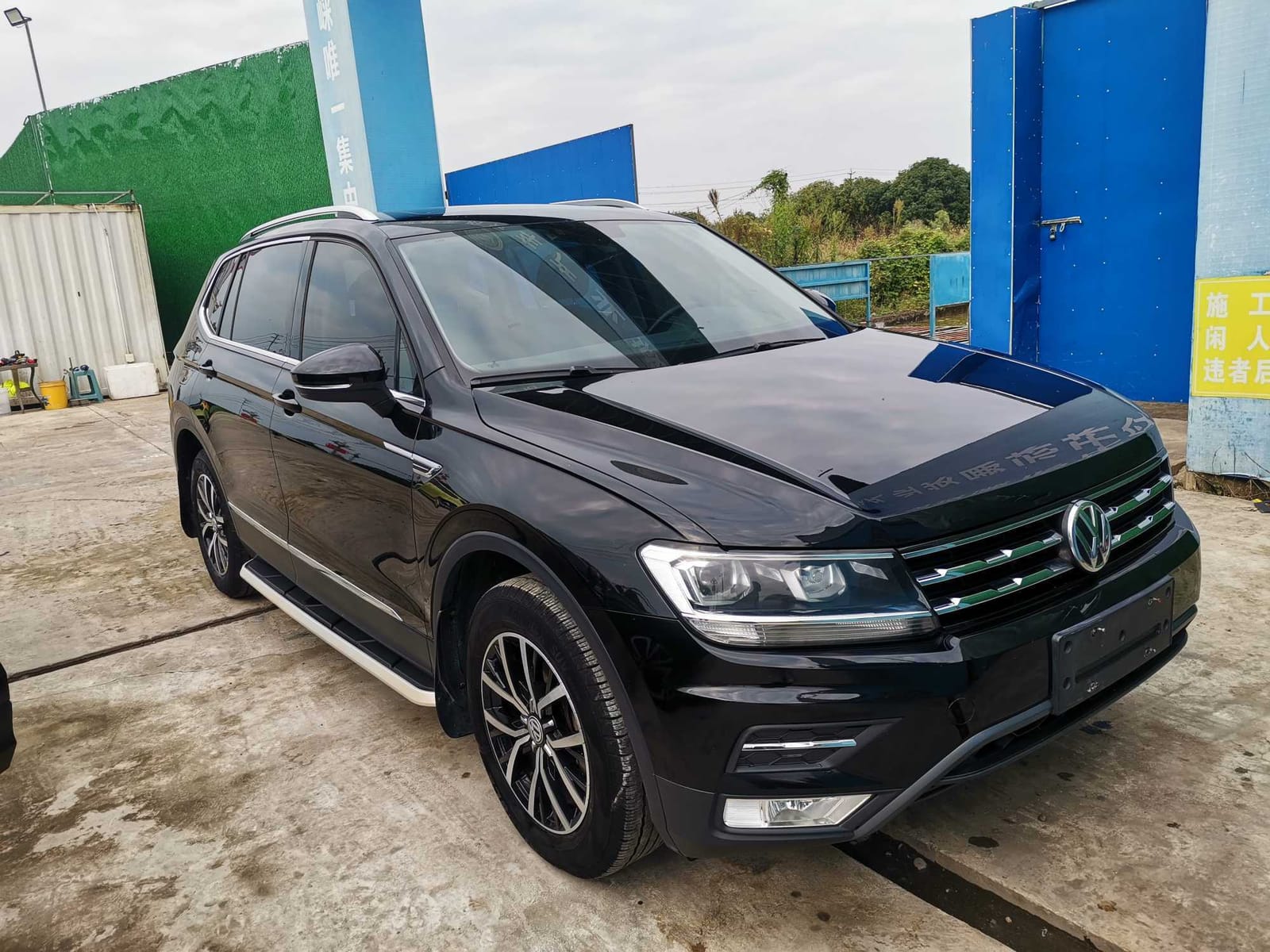
The Long-Wheelbase Tiguan Built for China
The Tiguan is one of the world's most recognisable compact SUVs, but the car in these photographs is not the Tiguan sold in Europe. It is the Tiguan L, the long-wheelbase version developed for China and built by SAIC Volkswagen since 2017. It uses the same MQB platform and 2.0-litre turbocharged engine family as the global car, but adds 110 mm of wheelbase, a much larger rear cabin and a genuinely useful boot.
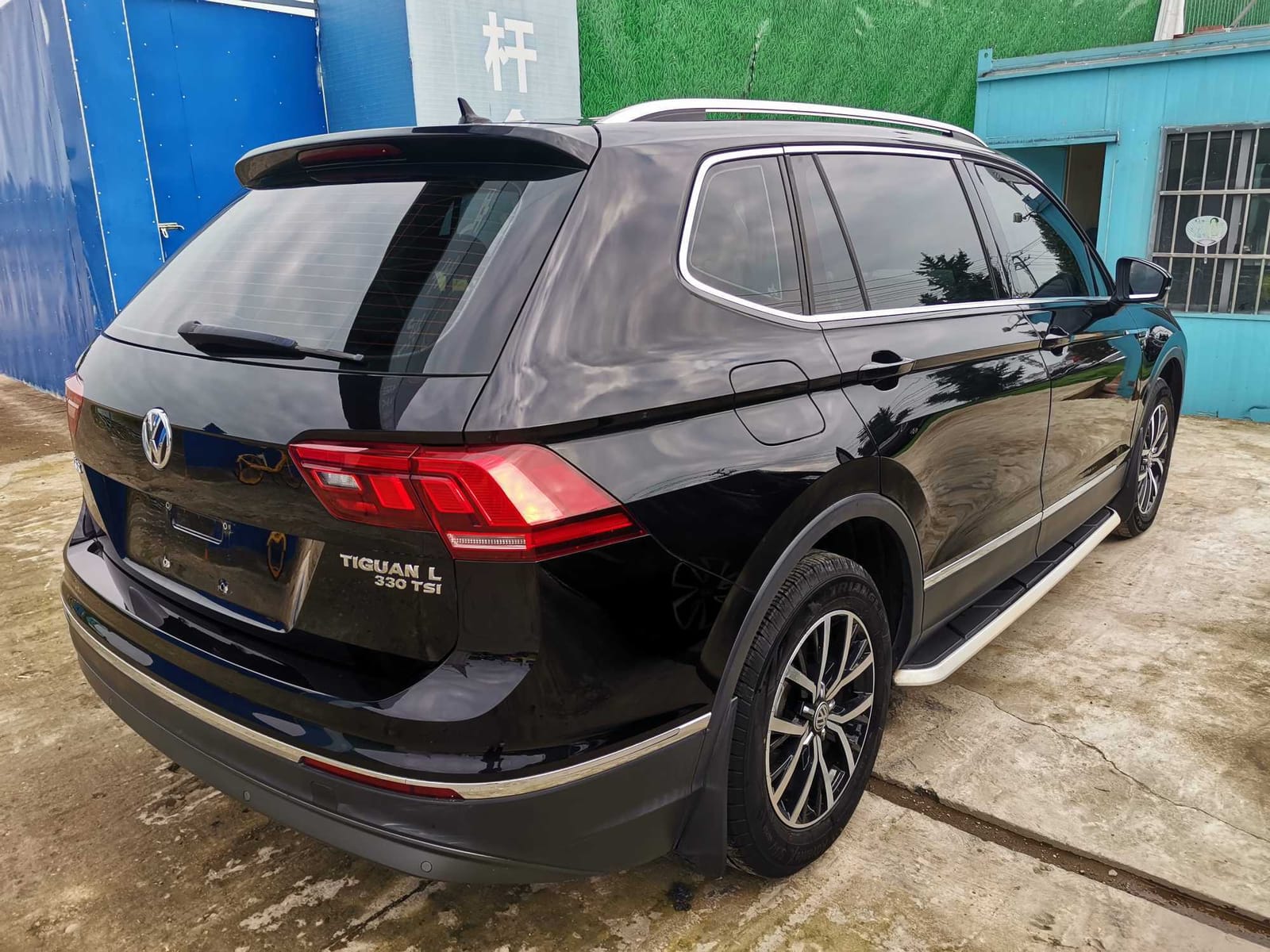
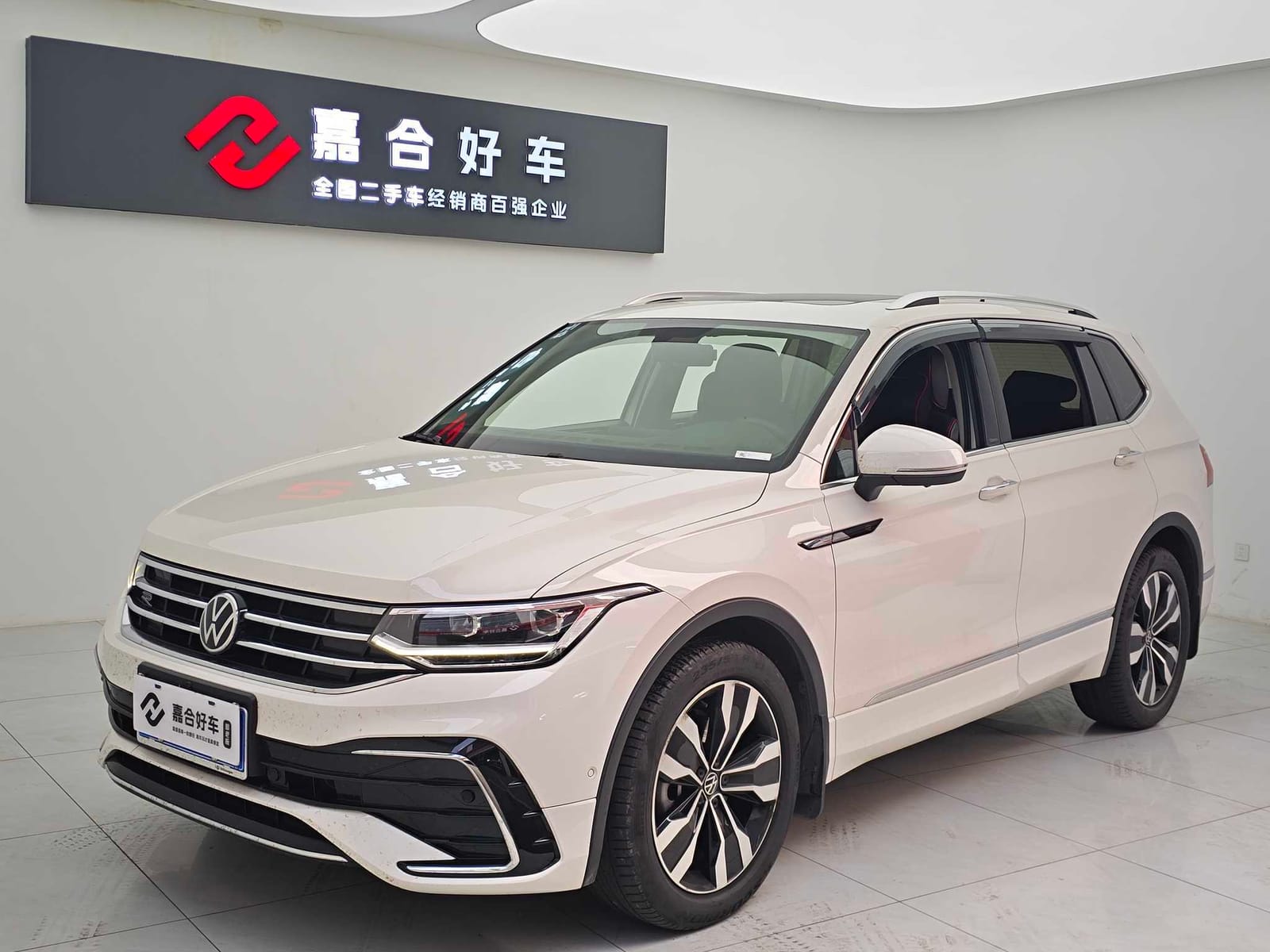
The two cars photographed bracket the model's first facelift. The first is a 2018 Tiguan L 330TSI automatic two-wheel-drive Luxury, black, from the pre-facelift generation and certified to China 5 emissions. The second is a 2022 Tiguan L 330TSI automatic two-wheel-drive R-Line, white, with the larger screens, China 6 certification and the R-Line body package. They share an engine, gearbox and wheelbase, so the comparison is about what four years of updates changed — and what a buyer gives up by choosing the older car.
What "Tiguan L" Actually Means
The first-generation Tiguan arrived in 2007. The second generation, on the MQB platform, launched internationally in 2016, and China received its long-wheelbase derivative in early 2017: keep the global car's front half, stretch the floor between the axles, and give rear passengers the space Chinese buyers expected.
The result occupies a useful middle ground. It is shorter than a Teramont or Highlander, but its 2,791 mm wheelbase and five-seat layout give it more rear legroom than a standard Tiguan and a 495-litre boot that expands to 1,780 litres with the rear seats folded.
Three generations overlap in the used market:
- The first-generation Tiguan (2007–2016) is the older compact car, mostly sold outside China.
- The second-generation Tiguan L (2017–2023) is the car here, facelifted in August 2021 for the 2022 model year.
- The Tiguan L Pro (2024 onward) is a newer China-specific development with a different electrical architecture.
The facelift is the important line for buyers. The 2022-model car brought a redesigned front and rear, a 12-inch floating centre screen, a 10.3-inch digital cluster on higher trims, touch-based climate controls and more driver assistance. The pre-facelift car has an 8-inch screen and analogue instruments.
Engine, Gearbox and Drivetrain
Both cars carry the 330TSI powertrain: the third-generation EA888 2.0-litre turbocharged four-cylinder, producing 137 kW (186 PS) at 4,100–6,000 rpm and 320 Nm from 1,500 to 4,000 rpm. It uses dual injection — direct and port — which reduces, though does not eliminate, intake valve carbon build-up compared with direct-injection-only engines.
The gearbox is a seven-speed wet-clutch dual-clutch automatic, the DQ381 family, driving the front wheels. The 330TSI is front-wheel drive only. Buyers who need all-wheel drive must look at the 380TSI, which uses a 162 kW/350 Nm version of the same engine and a 4MOTION system.
The 330TSI is not a sporting powertrain, but it is well matched: 0–100 km/h in 8.8 seconds, strong mid-range pull and relaxed cruising. Official NEDC consumption is 6.6 litres per 100 km for both cars, a figure real driving will exceed, especially in city traffic. The engine requires 95-octane fuel.
The dual-clutch gearbox defines the experience. At speed it shifts quickly and smoothly; at very low speed, in stop-start traffic or when manoeuvring, some examples show hesitation or slight judder — a known characteristic and a key inspection point.
The Two Cars Compared
The black car is the 2018 pre-facelift Luxury trim: 17-inch wheels with 215/65 tyres, 8-inch infotainment, panoramic sunroof, powered front seats, keyless entry and a rear climate zone. Its listing records China 5 emissions. It also wears aftermarket side steps, common on Chinese-market SUVs and worth inspecting for mounting quality and corrosion underneath.
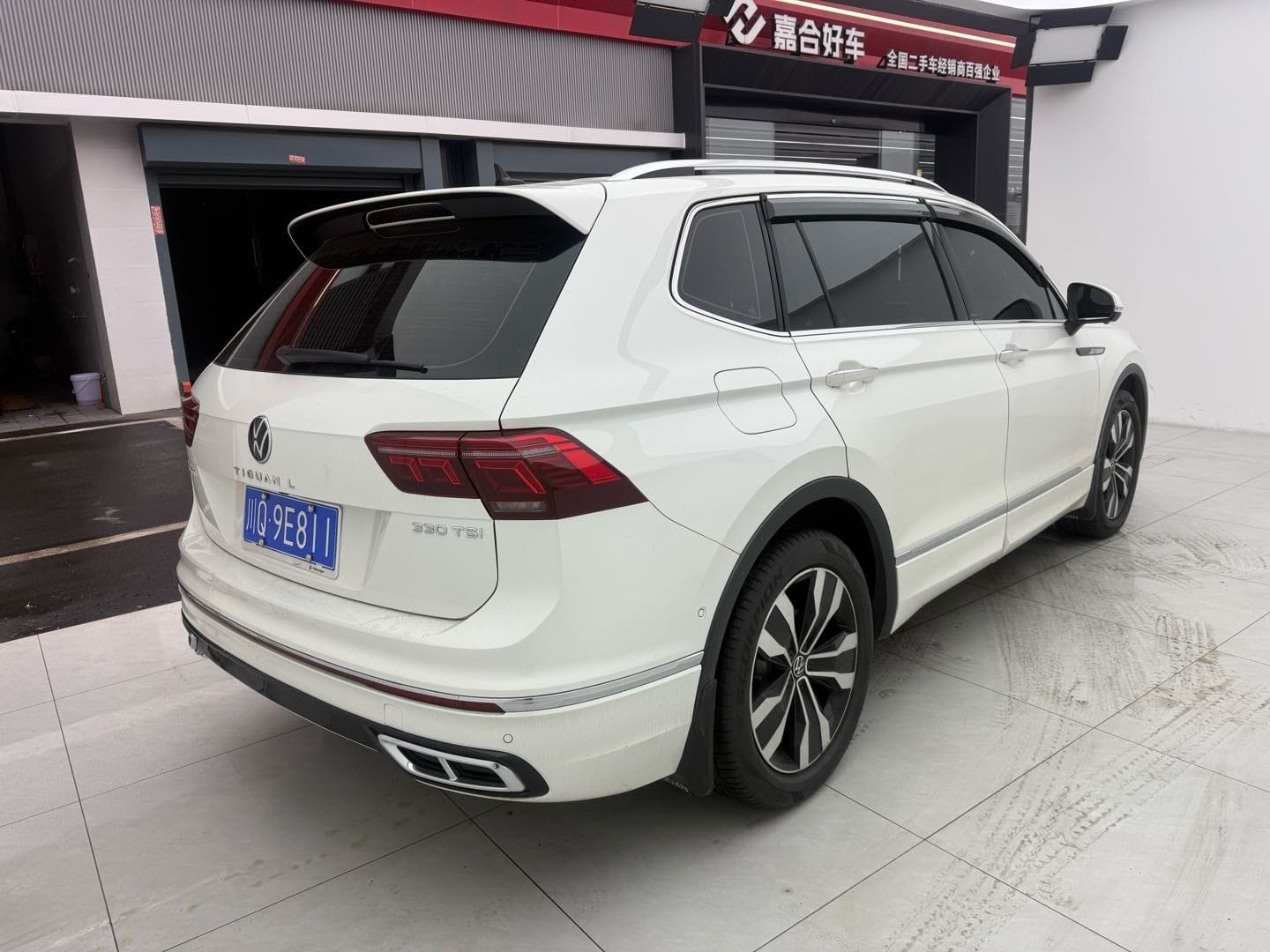
The white car is the 2022 R-Line: facelift front and rear styling, R-Line bumpers, 19-inch wheels with 235/50 tyres, 12-inch centre screen, digital cluster, electric tailgate, front parking sensors, automatic parking and autonomous emergency braking. Its listing records China 6 emissions.
Dimensions differ only slightly: the pre-facelift body is about 4,712 mm long and 1,839 mm wide, while the R-Line measures roughly 4,735 mm and is a little wider because of the kit. The wheelbase is unchanged at 2,791 mm, so passenger space is identical.
The choice is mostly about equipment, emissions and condition. The newer car offers a modern cabin, more safety technology and China 6 certification, which matters where China 5 imports are restricted. The older car is simpler, cheaper and, in many markets, easier to service.
Body, Space and Daily Use
The Tiguan L is a five-seat SUV with a conventional layout. The rear bench is wide, with a fold-down centre armrest, air vents and a charging point on most trims. The boot is 495 litres with the seats up and 1,780 litres folded, and the tailgate opening is wide and low.
The cabin is practical rather than luxurious: good storage, a high upright driving position and strong visibility. The panoramic roof on both cars lightens the interior but adds a maintenance item — blocked drain tubes can send water into the headlining and footwells.
Fuel capacity is around 58–62 litres depending on source and trim. That is smaller than a full-size SUV's, but the Tiguan L is not a heavy tow vehicle in 330TSI form; buyers who need towing should look at the 380TSI and confirm the market-specific rating.
Living With It
On the road, the Tiguan L feels more like a large Golf than a truck. The MQB platform gives it precise steering, controlled body movement and good refinement. It is easy to park for its size, and the R-Line's 19-inch wheels look good but firm up the ride and cost more to replace.
The 330TSI's front-wheel drive is fine for family use but not for serious snow, mud or steep gravel. The DSG is at its best on open roads; in dense traffic some drivers find low-speed behaviour less smooth than a torque-converter automatic. Real-world fuel consumption sits well above the NEDC figure, especially in city driving.
The facelift's touch-based climate controls divide opinion: modern-looking but harder to use by feel than the pre-facelift car's physical knobs.
What a Used Tiguan L Inspection Must Cover
Gearbox. Check this first. Drive from cold, then in stop-start traffic, and look for judder, hesitation, delayed engagement or a flashing selector. Ask for the DSG fluid and filter history — the wet-clutch unit needs periodic servicing, typically around 60,000 km, and neglected fluid causes expensive problems.
Engine. The EA888 is strong but has weak points. Check for coolant leaks at the water pump and thermostat housing, oil leaks at the valve cover and front seal, and the PCV system. Listen for timing-chain noise on cold start, scan for codes and check oil-service history.
Cooling, electrics and sunroof. Verify radiator, fans, hoses and the auxiliary pump on start-stop cars; test every screen, camera, sensor, window, mirror, seat motor and the facelift's electric tailgate. Check panoramic-roof drains, headlining stains, carpets and spare-wheel well for damp.
Suspension, brakes and body. Check front lower arm bushes, ball joints, anti-roll bar links, dampers and rear bushes; on a lift look for split boots, leaks and uneven tyre wear. Measure discs and pads, confirm tyre matching, and inspect the black car's aftermarket side steps for corrosion and mounting. Check panel gaps, paint match and accident repair.
History and identity. Match the VIN to the registration certificate and build sheet, confirm the emissions class and check for recalls. Verify the service record and previous use as a fleet car.
Export Paperwork and Who the Car Suits
All Chinese-market Tiguan Ls are left-hand drive, which suits Russia, Central Asia, the Middle East, Africa and Latin America in principle. The decisive issue is emissions: the 2018 car is China 5, the 2022 car China 6. Some destinations now refuse China 5 vehicles or apply age limits, so confirm the rules before committing.
The export file should include the registration certificate, factory specification sheet, purchase invoice, export licence documentation, customs declaration, service records and an independent inspection report. Photograph the VIN plate, engine number and odometer, and declare aftermarket parts such as side steps.
The Tiguan L suits families, ride-hailing and corporate fleets, and buyers who want a comfortable, efficient five-seat SUV with widely available parts. The 330TSI front-wheel-drive car is sensible for mild climates and paved roads; the 380TSI all-wheel-drive version is better for snow, rough gravel and heavier loads. Neither is a serious off-roader.
Buyer Questions
Is the Tiguan L the same as a Tiguan? It is the long-wheelbase version of the second-generation Tiguan, developed for China and also related to the long-wheelbase Tiguan sold in North America. The wheelbase is 2,791 mm versus about 2,681 mm for the European short-wheelbase car.
330TSI or 380TSI? The 330TSI is front-wheel drive with 137 kW and 320 Nm; the 380TSI has 162 kW, 350 Nm and 4MOTION all-wheel drive. The 330 is cheaper and more economical; the 380 is better for snow, gravel and towing.
Is the DSG reliable? The wet-clutch DQ381 is generally robust when serviced, but it is sensitive to neglected fluid and can develop judder or mechatronic faults. A test drive in traffic and a service history are essential.
What fuel does it need? 95-octane. The engine will run on lower grades in an emergency, but sustained use risks knock and performance loss.
Can I export a China 5 car? It depends on the destination. Some markets accept China 5, others require China 6 or impose age limits. Check before purchase; the 2022 car's China 6 status is a real advantage in stricter markets.
What is the most expensive common fault? Gearbox repairs and water-pump or thermostat housing leaks are the ones to budget for. Sunroof drain damage and electrical faults on the facelift car can also be costly.
Next Step
Tell us which Tiguan L you are considering and where it will be used — family transport, fleet, ride-hailing or mixed urban and gravel roads — and we will send the file for that specific car: the full inspection report, factory specification sheet, cold-start and driving video, close-ups of the underbody and any aftermarket parts, an honest assessment of the emissions and registration route into your market, and the export documents we hold. If you are choosing between the black 2018 car and the white 2022 R-Line, say so, and we will compare their condition and equipment rather than their listing headlines.
Lexus LX Buyer Guide: 2019 LX 570 V8 vs 2022 LX 600 Twin-Turbo
Product Research Team
Range Rover Buyer Guide: 2019 Supercharged V6 vs 2022 Ingenium Inline-Six
Product Research Team
Land Rover Defender Buyer Guide: 2023 HSE vs 2025 X-Dynamic Black Compared
Product Research Team