Land Rover Defender Buyer Guide: 2023 HSE vs 2025 X-Dynamic Black Compared
Comparing two L663 Defender 110s photographed for this guide — a 2023 P400 X-Dynamic HSE in white with tan leather, and a 2025 P400 X-Dynamic Black special edition in grey — what the 400 PS inline-six mild hybrid, eight-speed automatic, air suspension and D7x aluminium monocoque deliver, how the 110 differs from the 90 and the old L316, why air suspension is the main ownership risk, what a used example must be inspected for, and how emissions, parts support and destination rules shape export.
The Defender Reinvented, and Two Ways to Buy It
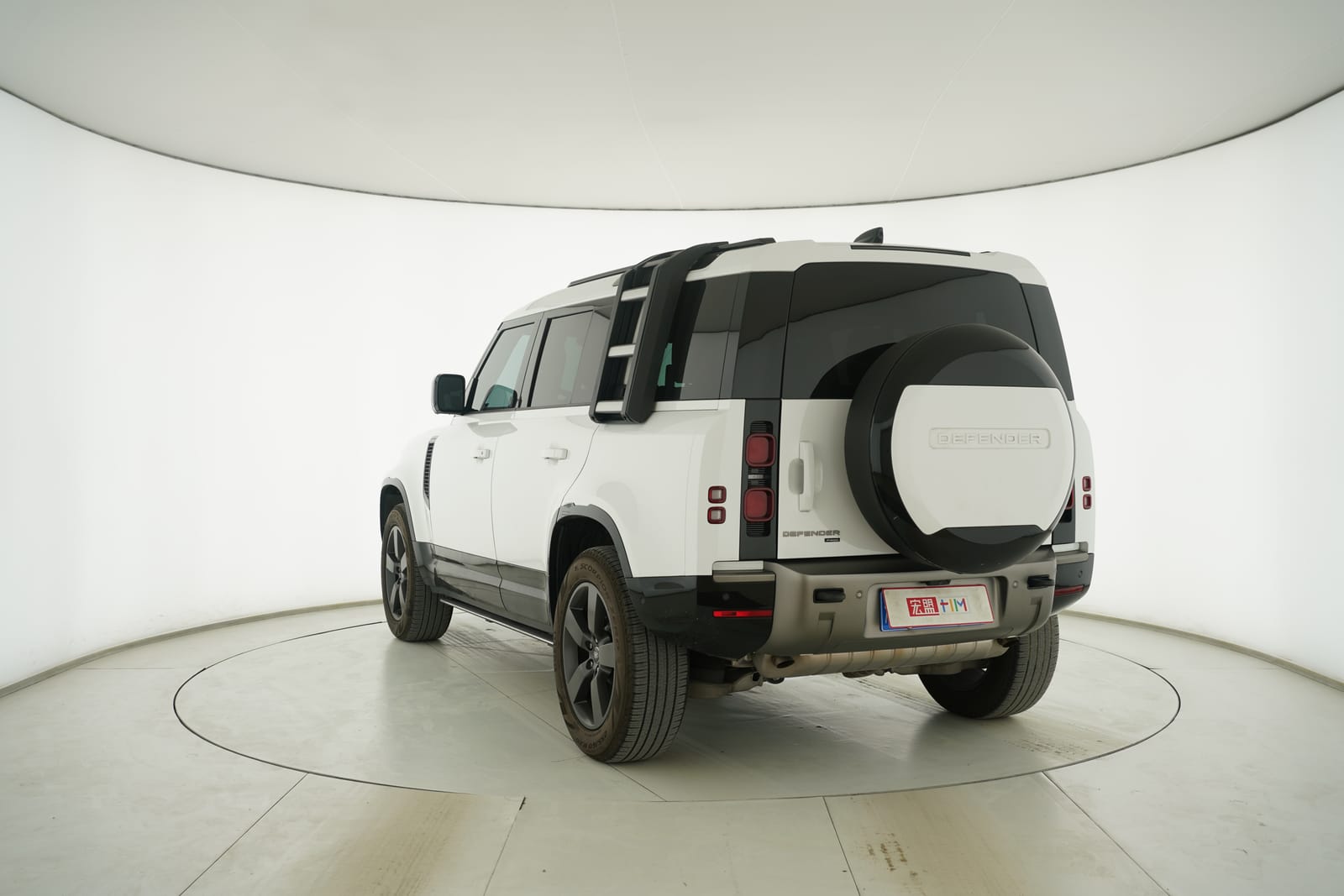
Few names carry as much off-road history as Defender. The original Land Rover of 1948 became the Defender in 1990, and the boxy L316 stayed in production until 2016 with only modest changes. The L663 that replaced it in 2020 kept the upright silhouette, side-hinged rear door and exposed spare wheel, but moved to an aluminium-intensive monocoque, independent suspension and electronics that would have been unthinkable in the old car.
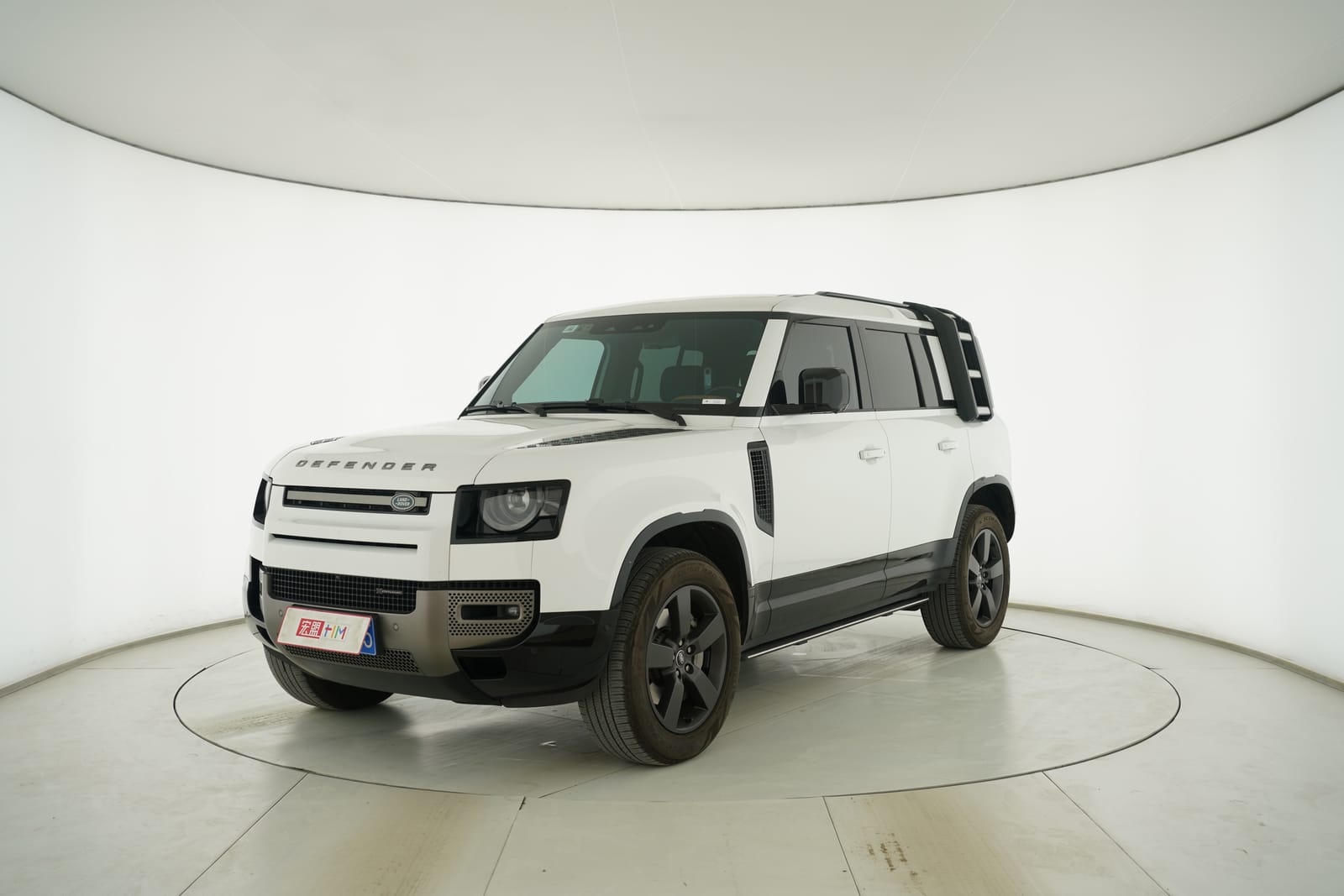
The two vehicles photographed are both Defender 110s with the P400 powertrain, at different points in the range. The first is a 2023 Defender 110 P400 X-Dynamic HSE, white, with a tan leather cabin. The second is a 2025 Defender 110 P400 X-Dynamic Black special edition, grey, with the black exterior package, black interior and red brake calipers. They share engine, gearbox and wheelbase, so the comparison is about model-year changes, trim and presentation.
What the L663 Is, and Where It Sits
The L663 was revealed in 2019 and went on sale in 2020. It comes in two body lengths: the 90, a three-door with a 2,587 mm wheelbase, and the 110, a five-door with a 3,022 mm wheelbase; a longer 130 followed later. All use the D7x architecture, which Land Rover describes as an aluminium-intensive monocoque rather than a ladder frame — a deliberate departure from the L316 and from rivals such as the Land Cruiser and Patrol.
The range has evolved since launch. Early cars offered the P300 2.0-litre four and the P400 3.0-litre inline-six, both petrol with mild-hybrid assistance, plus diesels in some markets; a 5.0-litre supercharged V8 joined later. Model-year updates brought infotainment changes, new trim packages and more driver assistance, but the core structure stayed the same.
Three generations matter in the used market:
- The original Land Rover/Defender (1948–2016), the L316, is a separate collector market with live axles.
- The L663 (2020 onward) is the modern car covered here.
- The 90, 110 and 130 are body variants of the L663, not separate generations.
The 110 is the practical choice: five doors, five seats in Chinese specification, a 972-litre boot expanding to 2,277 litres, and a 90-litre tank. The 90 is shorter and more style-led, with much less space.
Powertrain: the P400 Inline-Six
The P400 uses a 3.0-litre Ingenium inline-six with a turbocharger, an electric supercharger and 48-volt mild-hybrid assistance. Output is 400 PS (294 kW) at 5,500–6,500 rpm and 550 Nm from 2,000 to 5,000 rpm, through an eight-speed ZF automatic and permanent four-wheel drive with a two-speed transfer case and low range.
The numbers are strong for a vehicle of this size and weight: 0–100 km/h in about 6.1 seconds and a top speed of 191 km/h in Chinese specification. Official NEDC consumption is 9.6 litres per 100 km, a figure that real driving will exceed; the tank holds 90 litres. The engine requires 95-octane fuel.
The P300 2.0-litre four-cylinder is the cheaper alternative, with 300 PS and 400 Nm, and the V8 is the expensive flagship. The P400 is the sensible middle: noticeably quicker than the P300, less thirsty and less costly than the V8, and well matched to the eight-speed automatic. The mild-hybrid system is there to smooth the stop-start and low-speed response rather than to provide electric-only running.
Chassis, Capability and the Air Suspension Question
The L663's independent suspension, aluminium structure and electronic terrain systems make it a different kind of vehicle from the old Defender, but the capability numbers remain serious. Chinese specification quotes approach/departure/breakover angles of 30.1, 37.7 and 22 degrees and 218 mm of clearance laden. Land Rover's literature for the 110 quotes up to 900 mm of wading depth and 3,500 kg braked towing in many markets; confirm the local rating.
Air suspension is central to higher trims such as the X-Dynamic HSE. It raises and lowers the body for off-road use and access and improves the ride, but it is a complex system — compressor, valve block, height sensors and four air springs — and a main ownership risk on a used L663.
Four-wheel drive has a low range and centre differential with electronic traction control and terrain modes; some versions add a rear differential lock. It can genuinely leave the road, but the electronics that make it capable are also what can be expensive to repair.
The Two Cars Compared
The white 2023 X-Dynamic HSE is the more traditional luxury specification: tan leather, a contrast roof, 20-inch wheels and the HSE equipment level. The X-Dynamic package adds darker exterior detailing, but the overall look stays close to the classic Defender aesthetic.
The grey 2025 X-Dynamic Black special edition is a China-market appearance package that takes the dark theme further: black roof, grille and badges, black interior, dark 20-inch wheels and red brake calipers. Mechanically it is the same P400, with the same cabin layout, but the presentation is deliberately more aggressive.
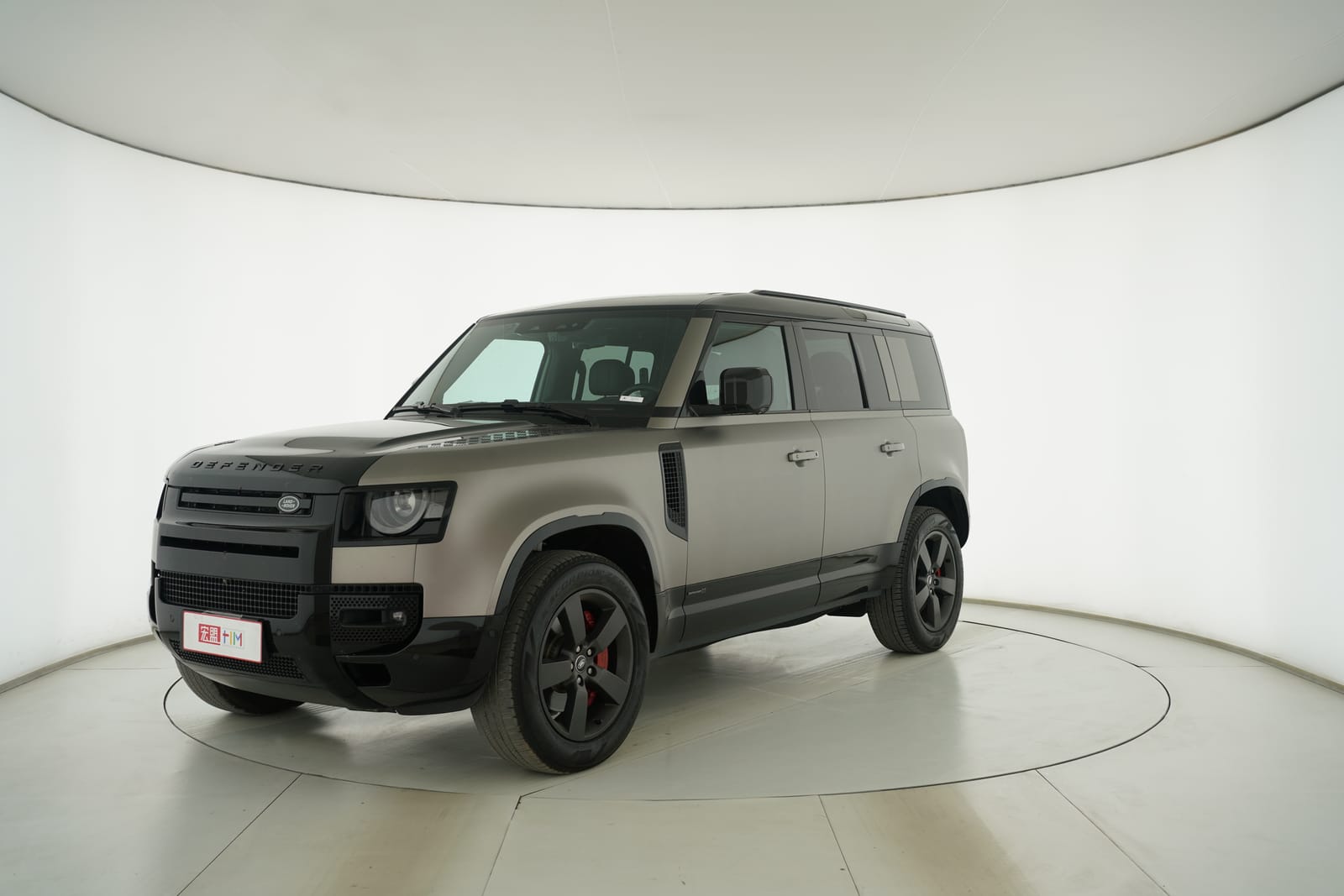
Model-year changes between the two are modest. The later car benefits from the most recent software and infotainment calibration, and its trim package is newer, but the engine, gearbox, suspension architecture and dimensions are unchanged. For a buyer, the difference comes down to condition, colour, interior, equipment and price rather than a fundamental step forward in engineering.
Living With It
The Defender 110 is a large vehicle: about 5.02 metres long, 2.01 metres wide and 1.97 metres tall, with a kerb weight around 2,361 kg in P400 form. It is comfortable and quiet on the road, with a commanding driving position and a ride that the air suspension keeps well controlled. It is not agile, and tight parking requires attention.
The cabin mixes rugged details — exposed structural elements, a dash-mounted grab handle, durable materials — with modern technology. Pivi Pro controls most functions, backed by physical controls for climate and off-road modes. The driving position is high, visibility is good, and the boxy shape makes the car easy to place, even if its width is intimidating in narrow streets.
Running costs are those of a large premium SUV: expensive tyres, heavy-duty brakes, high fuel consumption and complex systems needing specialist servicing. Buyers without a Land Rover dealer network should identify an independent specialist and confirm parts availability for air suspension, electronics and body panels.
What a Used Defender Inspection Must Cover
Air suspension. Check the compressor for noise and duty cycle, the valve block for leaks, the height sensors and the four air springs for cracks and leaks. Raise and lower the car through all modes and watch for uneven corners or a system that takes too long. This is the single most expensive common system on the car.
Engine and 48-volt system. Check for coolant leaks around the thermostat housing, water pump and hoses, oil leaks at the cam cover and front cover, and the condition of the belt starter-generator and 48-volt battery. Scan for stored faults and verify the service history and oil specification.
Transmission and driveline. The ZF eight-speed should shift smoothly hot and cold. Check the transfer case for correct high/low engagement, listen for whine from the differentials, and inspect the prop shafts and CV boots. Confirm the fluid service history.
Structure and body. The aluminium structure resists rust but is expensive to repair. Check panel gaps, paint match and paint thickness around corners, doors and rear quarters. Inspect the underbody, skid plates and subframes for off-road impact damage, and the rear door and spare-wheel carrier for wear.
Electronics, brakes and history. Test every screen, camera, sensor, window, mirror, seat function, terrain mode and driver-assistance feature; check the infotainment language and whether navigation and connected services work outside China. Measure discs and pads, confirm tyre matching, verify the VIN against the certificate and build sheet, confirm emissions class, and check for accident repair and recalls.
Export Paperwork and Who the Car Suits
All Chinese-market Defenders are left-hand drive, which suits the Middle East, Central Asia, Africa, Russia and Latin America in principle. Eligibility depends on the destination's emissions and registration rules, and on whether a Land Rover service and parts network exists locally. The export file should include the registration certificate, factory specification sheet, purchase invoice, export licence documentation, customs declaration, service records and an independent inspection report, with photographs of the VIN plate, engine number and odometer.
The Defender 110 suits buyers who want a premium, highly capable family SUV with real off-road ability and are prepared for the running costs and complexity. It is not the right choice for budget-conscious fleets, for buyers who need simple mechanical repairs in remote areas, or for anyone expecting Land Cruiser-style parts availability. The P400 is the best all-round engine; the P300 is cheaper, and the V8 is a statement.
Buyer Questions
Is the new Defender still a ladder-frame vehicle? No. The L663 uses an aluminium-intensive monocoque called D7x, with independent suspension. It is far more rigid and refined than the old L316, but it is not a traditional body-on-frame design.
Is the P400 reliable? The inline-six is strong, but the surrounding systems — 48-volt mild hybrid, air suspension, electronics — are complex. A full inspection and service history matter more than the engine's reputation.
Should I fear the air suspension? It is the main ownership risk: it works well when maintained, but compressor, valve block and air spring failures are expensive. Test every height mode and budget for repairs.
110 or 90? The 110 is the practical family and expedition choice, with five doors and a large boot. The 90 is shorter, more maneuverable and more style-led, with much less space.
Can a Chinese-market Defender be used in my country? Mechanically yes, subject to emissions and registration rules. The infotainment language, navigation and connected services are the main localisation issues, and dealer support may be limited.
What is the biggest inspection risk? Accident repair hidden by fresh paint, off-road underbody damage, and air suspension faults. Check all three before agreeing a price.
Next Step
Tell us which Defender you are considering and how it will be used — family transport, expedition, fleet or showpiece — and we will send the file for that specific car: the full inspection report, factory specification sheet, cold-start and driving video, close-ups of the air suspension, underbody and body repairs, an honest assessment of the emissions and registration route into your market, and the export documents we hold. If you are choosing between the white 2023 HSE and the grey 2025 X-Dynamic Black, say so, and we will compare their condition and equipment rather than their model-year labels.
Lexus LX Buyer Guide: 2019 LX 570 V8 vs 2022 LX 600 Twin-Turbo
Product Research Team
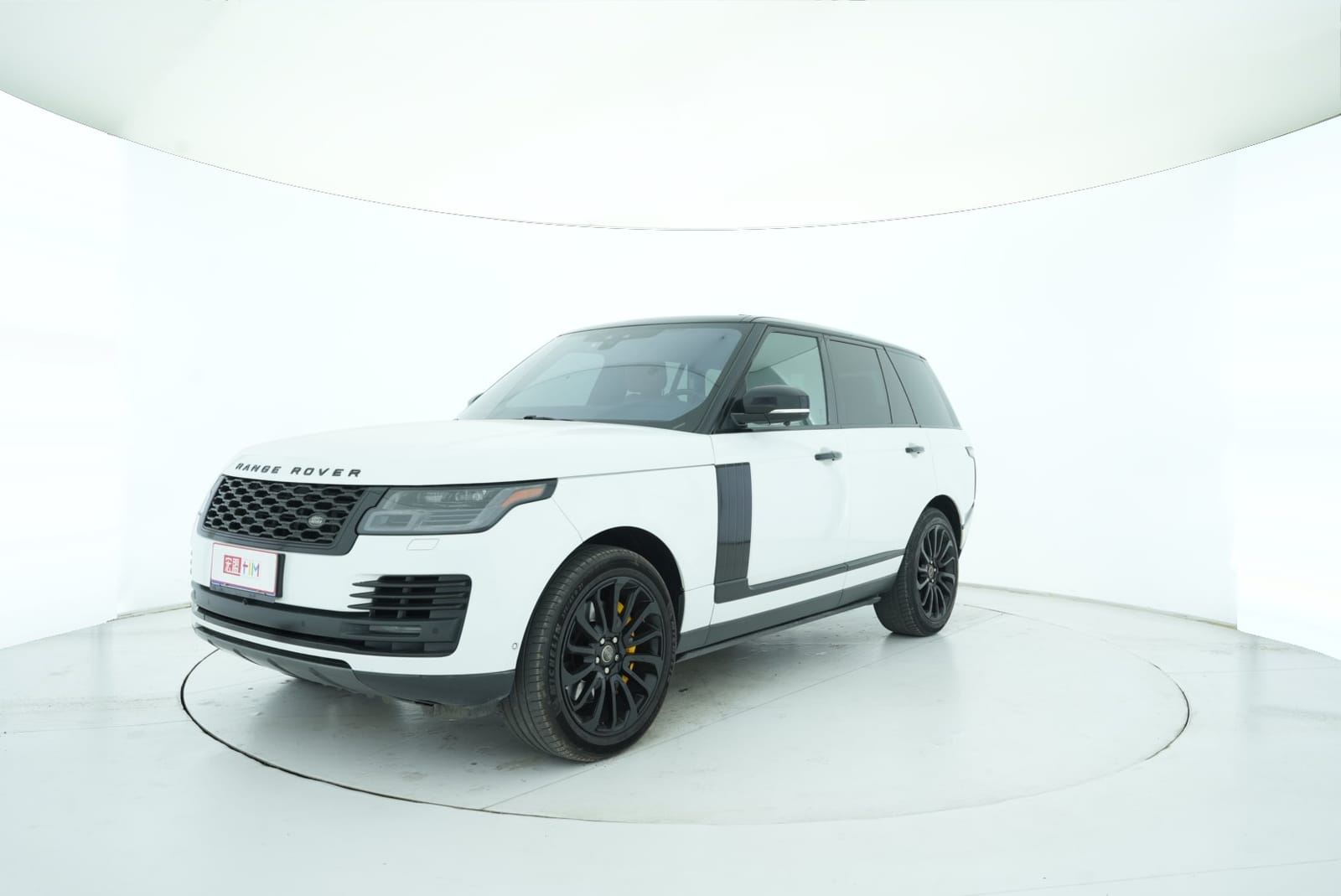
Range Rover Buyer Guide: 2019 Supercharged V6 vs 2022 Ingenium Inline-Six
Product Research Team
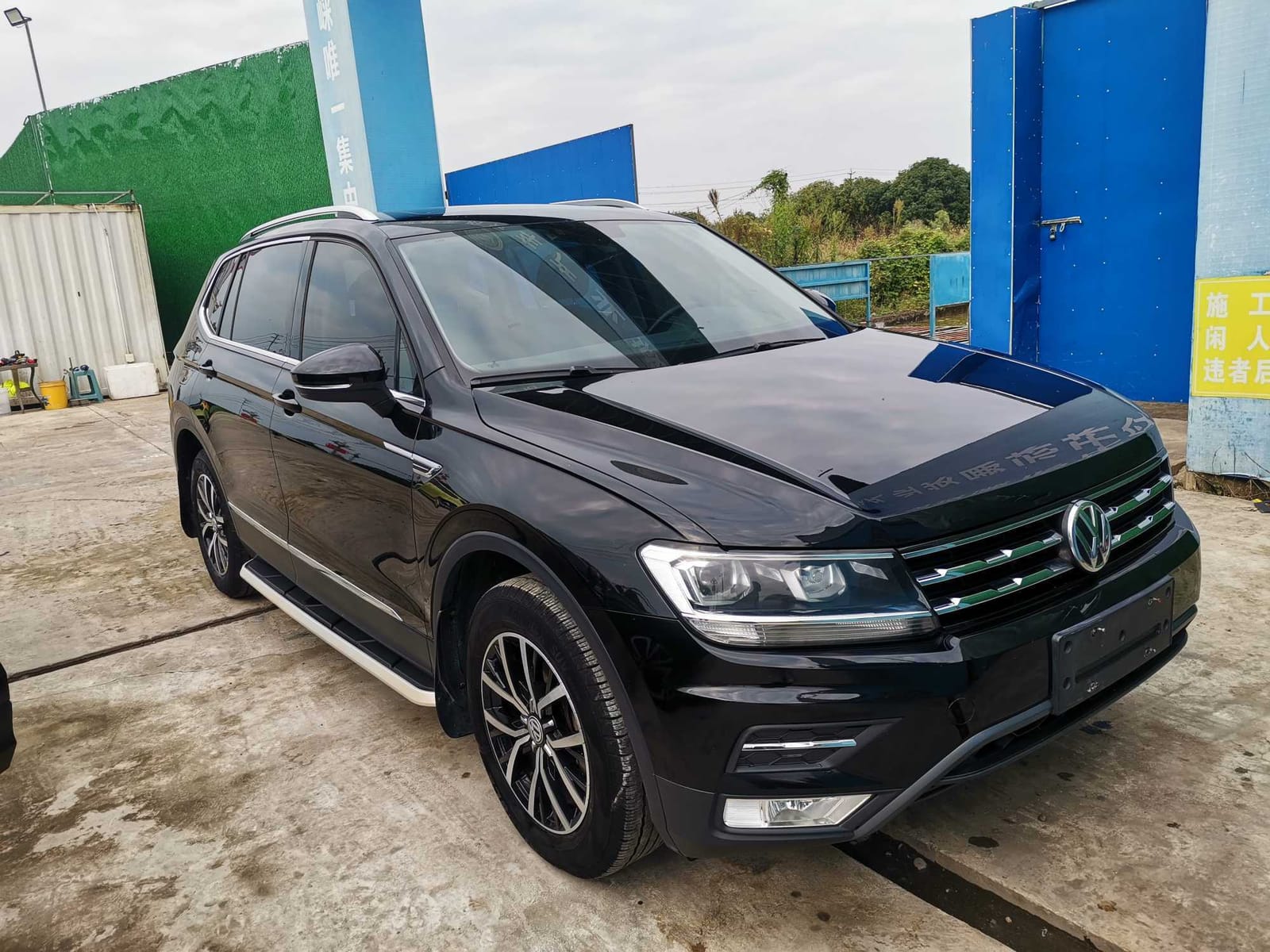
Volkswagen Tiguan L Buyer Guide: 2018 vs 2022 Facelift Compared
Product Research Team