Toyota Prado Buyer Guide: 2.7L vs 3.5L TX Compared for Export Buyers
Comparing a 2016 Prado 2.7L automatic standard edition with a 2018 Prado 3.5L TX photographed for this guide: what the 2TR-FE and 7GR-FKS engines, full-time Torsen versus part-time four-wheel drive and five- versus seven-seat bodies mean for export buyers, what a used example must be inspected for, and how emissions, paperwork and destination rules shape the choice.
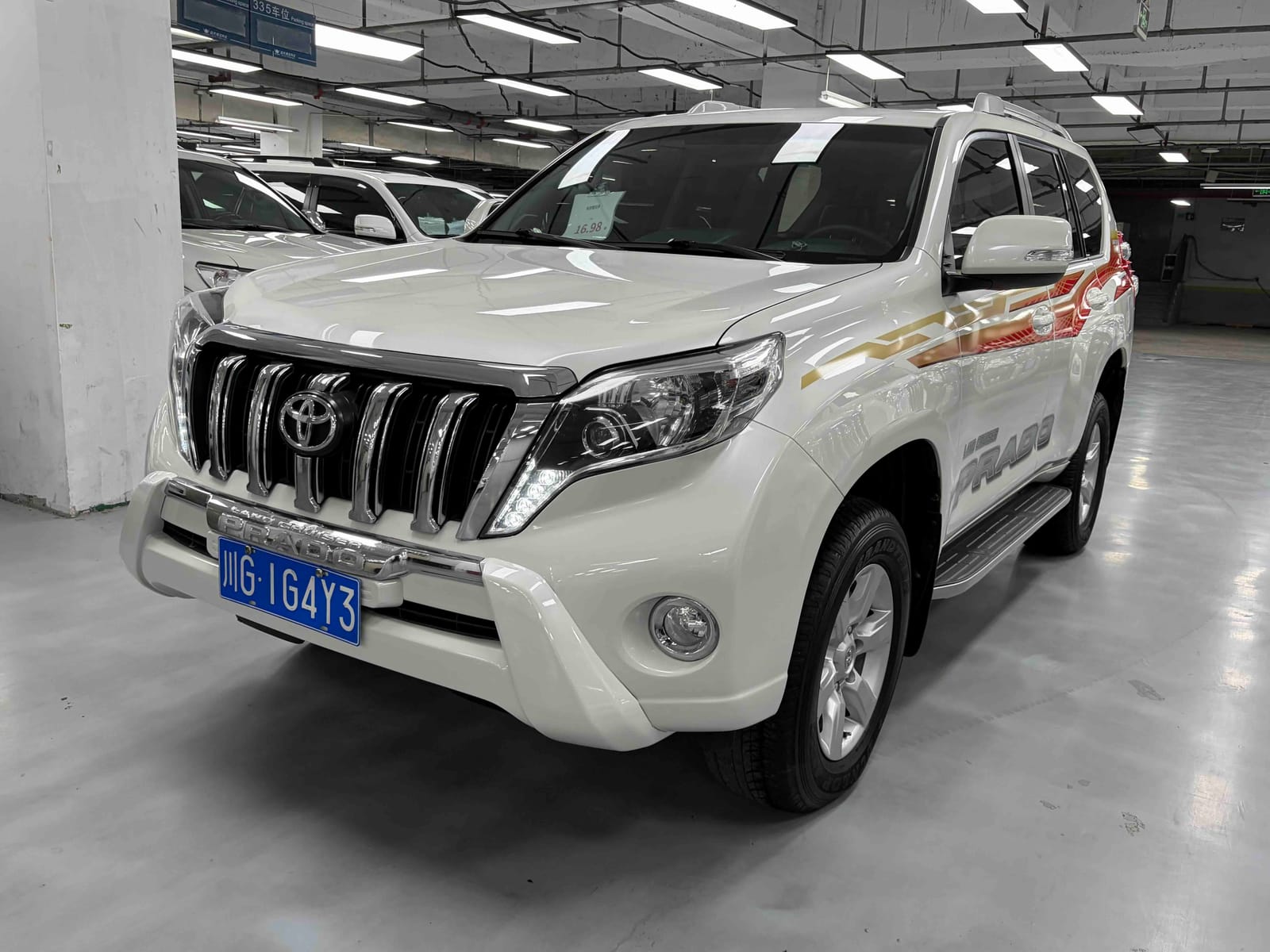
Two White Prados, One Real Decision
The Land Cruiser Prado has spent four decades earning a reputation most SUVs only advertise: it is the vehicle fleets buy when the road ends, workshops can fix with ordinary tools, and the second owner still wants ten years later.
The two cars photographed for this guide make the buying decision concrete. Both are left-hand-drive Chinese-market cars in white: a 2016 Prado 2.7L automatic standard edition and a 2018 Prado 3.5L TX. They share a badge, a ladder frame and an 87-litre tank, but use different engines, different four-wheel-drive systems and different seating layouts. That decides how each behaves on wet tarmac, at altitude, on indifferent fuel and in a remote workshop.
What the Prado Name Actually Means
Prado is not a model invented for marketing; it is the light-duty branch of the Land Cruiser family. The body here is the J150 generation, launched internationally in 2009 and built in China by FAW Toyota from 2010. It was sold in most markets as the Land Cruiser Prado and is still known in China by its old nickname, Badao.
Buyers confuse generations constantly, so keep the family tree straight:
- The J120 generation (2002–2009) is the previous body, still common in Africa and Central Asia, with a 2.7 four or 4.0 V6.
- The J150 generation (2009–2024 globally, 2010–2020 in China) is the car here, facelifted in 2013 and again for 2018.
- The J250 arrived in 2024 with turbo and hybrid powertrains and shares nothing mechanical with these cars.
Two moments matter to used buyers. In September 2015, FAW Toyota replaced the thirsty 4.0 V6 with a 3.5 V6. For the 2018 model year launched in late 2017, the line-up dropped the 2.7 entirely and switched the remaining 3.5 cars from full-time all-wheel drive to a part-time system without a centre differential. Chinese production ended in June 2020, when China 6 rules made the petrol V6 uneconomic.
So the 2016 2.7L is one of the last of the old philosophy: permanent four-wheel drive and a simpler engine. The 2018 3.5L TX is the facelifted car with more power, more seats and the controversial part-time transfer case.
Engine: the 2.7 Four Against the 3.5 V6
The 2016 car uses the 2TR-FE, a 2.7-litre inline-four with 120 kW (163 PS) at 5,200 rpm and 246 Nm at 3,900 rpm. Port injection and a timing chain, built for longevity rather than excitement. It runs on 92-octane fuel, which in many export markets is the only fuel reliably available, and its service parts are among the most widely stocked in the Toyota world.
The 2018 car uses the 7GR-FKS, a 3.5-litre V6 with 206 kW (280 PS) at 6,000 rpm and 365 Nm at 4,500 rpm. It combines port and direct injection, needs 95-octane fuel, and delivers its extra performance where an export buyer feels it: overtaking with a full load, climbing long grades and holding speed at altitude, where naturally aspirated engines lose power.
Both use a six-speed torque-converter automatic with a two-speed transfer case. The 2.7 is calm and unhurried, with enough low-end torque to crawl over rough ground, but it runs out of breath at highway speeds. The 3.5 is genuinely quick for a ladder-frame SUV and far more relaxed when loaded.
Combined consumption was quoted around 11.6 litres per 100 km for the 2.7 and 11.0 for the 3.5 on the old NEDC cycle; real-world figures are higher. The decisive difference is fuel tolerance, not economy. A 2.7 keeps running where 95-octane is a rumour. A 3.5 rewards good fuel and complains quickly on bad fuel.
Drivetrain: Full-Time Torsen Versus Part-Time 4WD
This is the most misunderstood difference, and the one that changes how the cars should be used.
The 2016 2.7L has full-time four-wheel drive with a Torsen centre differential and a lock. All four wheels are driven all the time, the differential splits torque between axles as grip changes, and the driver can lock it for serious terrain. On wet roads, snow, mud and gravel it is more stable and less demanding: no mode to select and no risk of driveline wind-up.
The 2018 3.5L TX uses part-time four-wheel drive. Normal driving is rear-wheel drive in 2H. Selecting 4H or 4L locks the front and rear axles together with no centre differential, which is excellent on loose surfaces and harmful on dry tarmac, where tight corners cause wind-up and wheel hop. Traction on slippery ground is handled by electronics (A-TRC) and by the driver's judgement about when to engage four-wheel drive.
Toyota made the change for fuel-economy and cost reasons, and it was unpopular in China because the Prado's reputation was built on the old system. The practical rule is simple: the part-time car is not worse off-road, but it demands discipline on-road. For wet highways, snow-cleared cities and mixed gravel, the full-time car is the friendlier tool. For a genuine utility vehicle with clear transitions between tarmac and rough ground, the part-time system is fully capable and slightly more economical.
Both cars have a low range, a rear live axle and independent front suspension. Neither photographed car has a locking rear differential; confirm the axle specification on the exact unit.
Body, Space and Daily Usability
The Prado is body-on-frame with a 2,790 mm wheelbase, double-wishbone front suspension and a four-link live rear axle. The 2.7 body is about 4.78 metres long, the facelifted 3.5 about 4.84 metres. The newer car quotes 215 mm of ground clearance, a 31-degree approach angle and 26-degree departure angle; the older car is slightly lower on smaller wheels.
The 2016 2.7L is a five-seat car with a conventional rear bench. The 2018 3.5L TX is a seven-seat body with a 2+3+2 layout and a third row that folds into the floor. The extra seats suit family transport, crew movement and airport work, though adults will only be comfortable there on short journeys.
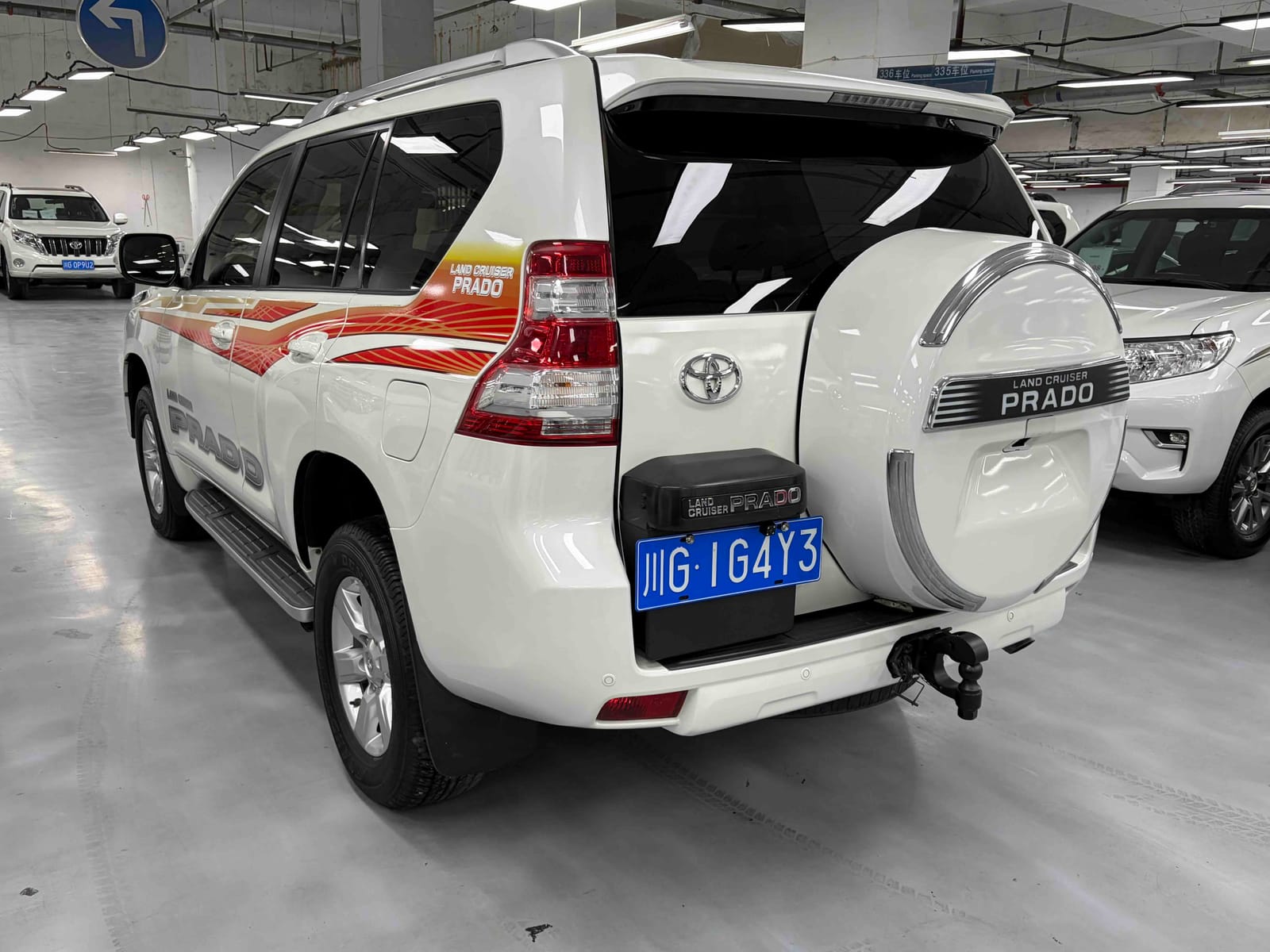
One visible difference says a lot. The 2016 car carries its spare wheel on a side-hinged tailgate, the classic Prado arrangement, which keeps the spare out of the cargo area but makes the rear door heavy. The 2018 TX keeps the spare under the floor and uses a top-hinged tailgate. Both have an 87-litre tank for long touring range; the older car rides on 17-inch wheels with taller 265/65 tyres, the newer on 18-inch wheels and 265/60 rubber, which is cheaper to replace and more forgiving on broken surfaces.
Cabin, Equipment and the China-Market Question
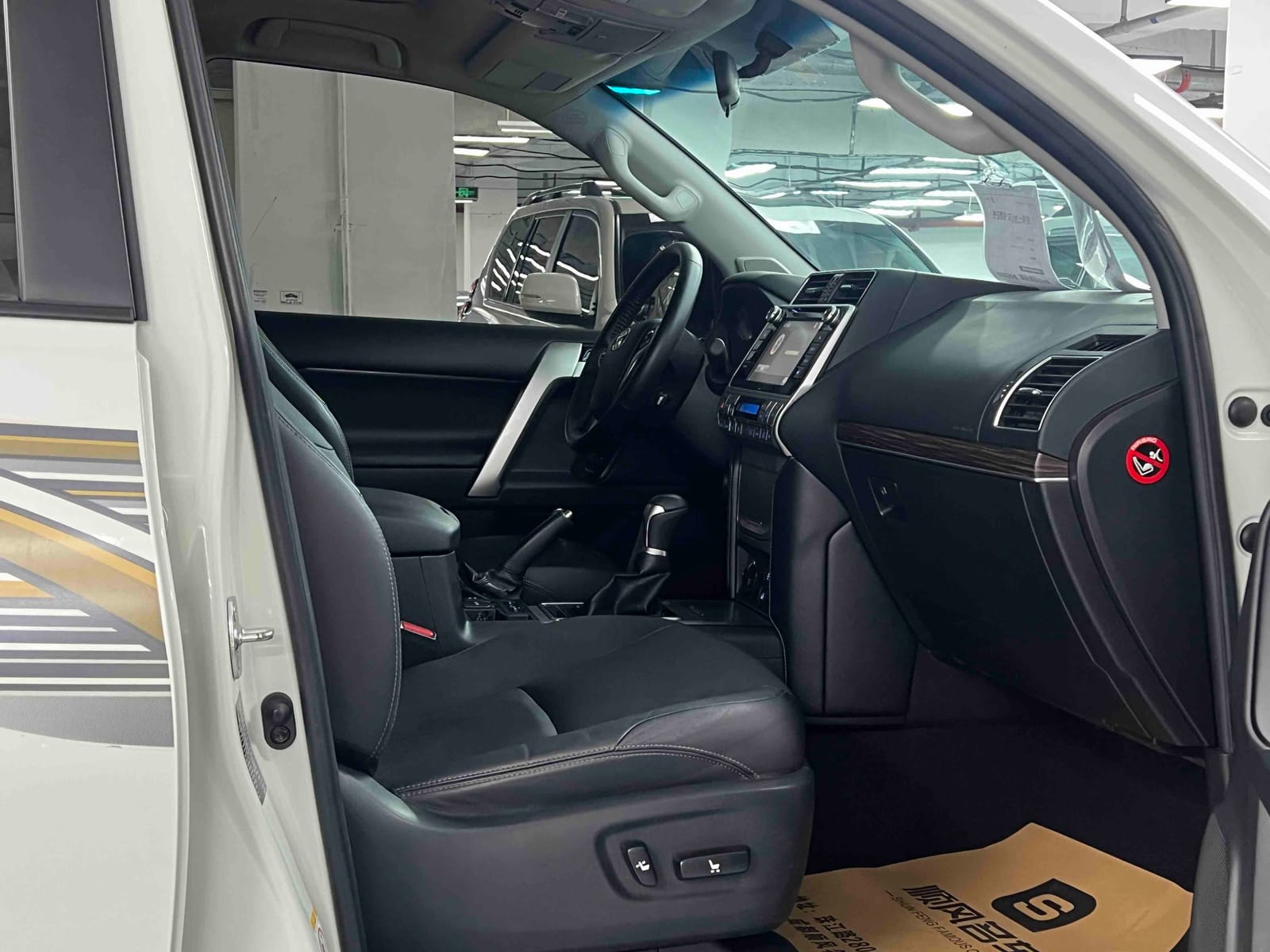
Both cabins are built for durability: hard-wearing plastics, physical climate controls, a conventional automatic selector and switchgear designed for gloved hands. The 2018 TX adds roof rails, hill-descent control, rear independent climate control and stop-start. Both have multiple airbags, stability control, keyless entry and electric front seats.
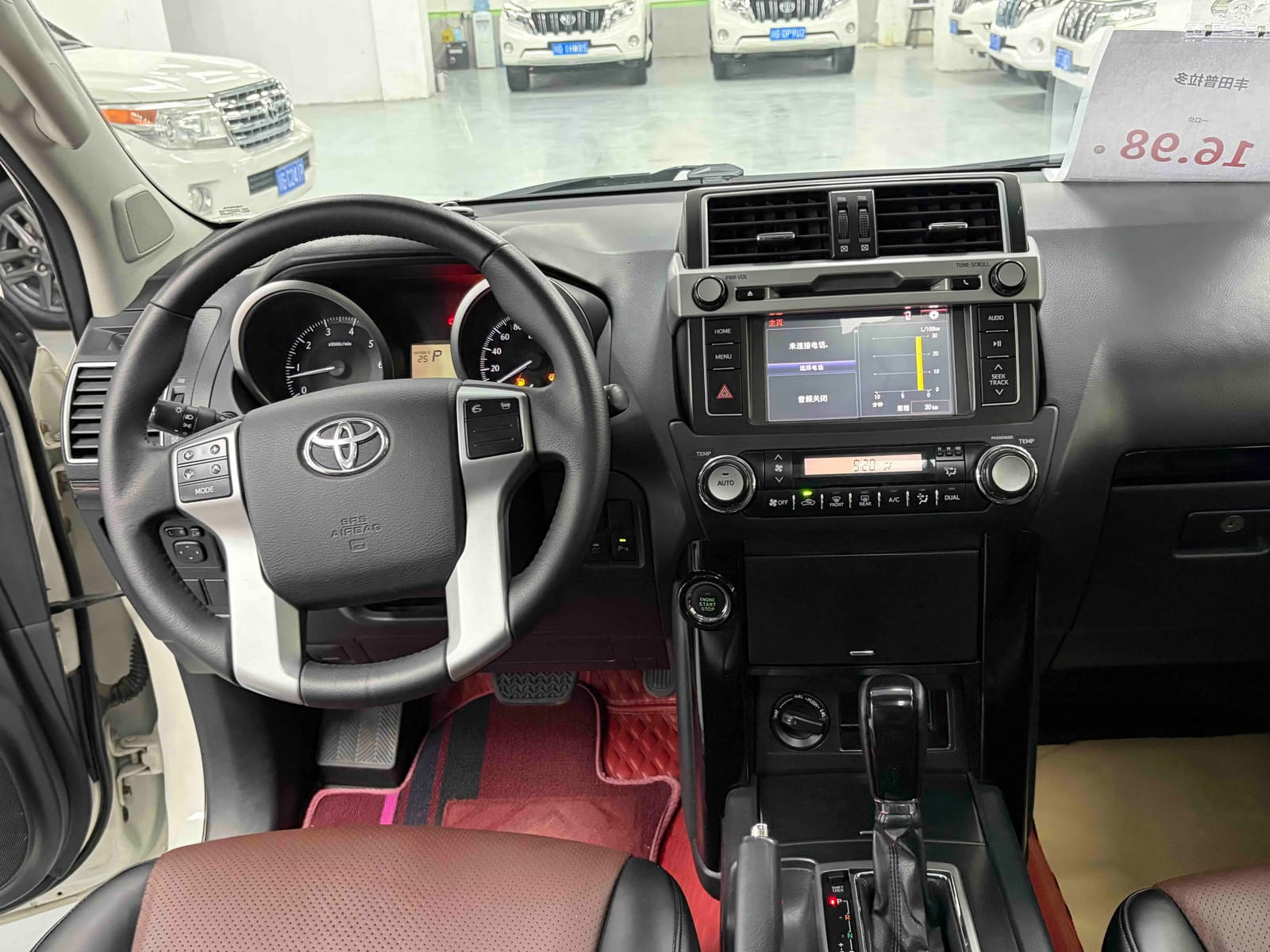
The infotainment needs attention on Chinese-market cars. Head units, navigation and connected services were designed for China, and some functions will not work outside it. Before shipping, confirm whether the screen can be switched to the buyer's language, whether navigation has usable local maps, and how the audio system behaves without a Chinese account. Many exporters replace the head unit or fit a local navigation module; budget for that rather than promise factory functions that cannot be supported.
Air-conditioning matters more than in Europe. The Prado's large glass area and boxy body load the system heavily in hot climates; check that the compressor, condensers and rear blower work and that the cabin cools properly at idle in traffic.
What a Used Prado Inspection Must Cover
Chassis and frame. The ladder frame is the car's foundation and its most expensive repair. Inspect frame rails, body mounts, crossmembers and the rear axle housing for rust, especially on vehicles from coastal or salted-road regions. Look for ripples, fresh underseal, weld marks and uneven panel gaps that suggest accident repair.
Engine. On the 2.7, check for oil leaks around the valve cover, front cover and sump, listen for timing-chain rattle on cold start, and verify the cooling system. On the 3.5, pay closer attention to injectors, direct-injection carbon build-up, oil consumption and misfire codes; the V6 is more complex and repairs cost more.
Transmission. Test the six-speed automatic for shudder under light acceleration, delays when selecting drive or reverse, and harsh downshifts. Confirm fluid and filter history and scan for stored codes.
Transfer case, differentials and 4WD. On the part-time car, engage 4H and 4L on a loose surface and listen for noise or slow engagement; the actuator and wiring are known service items. On the full-time car, test the centre-differential lock and listen for transfer-case whine at speed. Check both differentials for leaks and noise.
Suspension, brakes and tyres. Front lower ball joints, arm bushes, anti-roll bar links, dampers and rear bushes all wear; on a lift, check for play, split boots and leaking dampers. Measure discs and pads, confirm all five tyres match, and inspect the spare and its carrier.
Body, electrics and history. Test every switch, window, mirror, seat motor, camera, sensor and the sunroof drains. Check tailgate seals and door alignment, confirm both keys and the toolkit, and compare pedal, seat and steering-wheel wear against the odometer rather than trusting a fresh valet.
Export Paperwork, Emissions and Destination Rules
All Chinese-market Prados are left-hand drive, which makes them suitable for most of Africa, the Middle East, Central Asia, Russia and Latin America in principle. Eligibility comes down to paperwork and destination law, not the car's reputation.
These are China 5-era petrol vehicles. Check that the destination accepts that emissions class, or applies a different rule to used imports, before money changes hands. Some markets impose age limits, some require an independent inspection certificate, and some require type approval that a used car cannot easily obtain.
The export file should include the registration certificate, factory specification sheet, purchase invoice, export licence documentation, customs declaration, service records and a pre-shipment inspection report. Photograph the VIN stamp, engine number and odometer. If the car ships with a rear-mounted spare, confirm the carrier accepts the extra length.
Which of the Two Suits Your Market
The 2016 2.7L suits operators who value the simplest drivetrain, tolerate modest performance, and work where 92-octane is normal. Its full-time four-wheel drive is better for wet climates, mixed fleets and anyone who does not want to think about when to engage four-wheel drive. The five-seat body is lighter, simpler and slightly more economical.
The 2018 3.5L TX suits buyers who need real highway performance, seven seats and the ability to climb at altitude with a load. It is the better touring and family car, provided 95-octane fuel is available and the driver understands the part-time system. It also benefits from the facelift's active safety equipment.
Neither car is a luxury purchase. Both are working vehicles with a premium reputation, and the right choice is the one whose compromises match the route it will actually drive.
Buyer Questions
Is a Prado the same as a Land Cruiser? It is the light-duty member of the Land Cruiser family, not the full-size 200 or 300 series. It shares the philosophy — body-on-frame, durable mechanicals, global parts — in a smaller package.
Which engine is more reliable? The 2.7 has the simpler design, wider fuel tolerance and lower repair costs. The 3.5 is still a robust Toyota V6 but more complex and more sensitive to fuel quality.
Can I drive the 2018 part-time car in 4H all the time? No. On dry tarmac it should stay in 2H. 4H is for loose, wet or slippery surfaces where wheels can slip; on dry pavement it causes wind-up and tyre scrub.
Is the part-time system a dealbreaker? Not for genuine utility use, and off-road ability is similar. It is a real disadvantage for buyers who mainly drive wet highways and expect all-weather stability without thinking about modes.
Can the 3.5 run on 92-octane? Toyota specified 95-octane. Occasional low-grade fuel may be tolerated, but sustained use risks knock, power loss and long-term damage.
What is the biggest used-buying risk? Frame rust and hidden accident repair, followed by neglected transmission fluid and, on the 2018 car, a tired transfer-case actuator.
Next Step
Tell us which Prado you are considering and what it will do — highway touring, mining support, family transport, fleet duty — and we will send the file for that specific unit: the full inspection report, factory specification sheet, cold-start and driving video, close-ups of the frame and underbody, an honest assessment of the emissions and registration route into your market, and the export documents we hold. If you are choosing between the two cars in these photographs, say so, and we will walk through the differences with your route and fuel supply in mind.
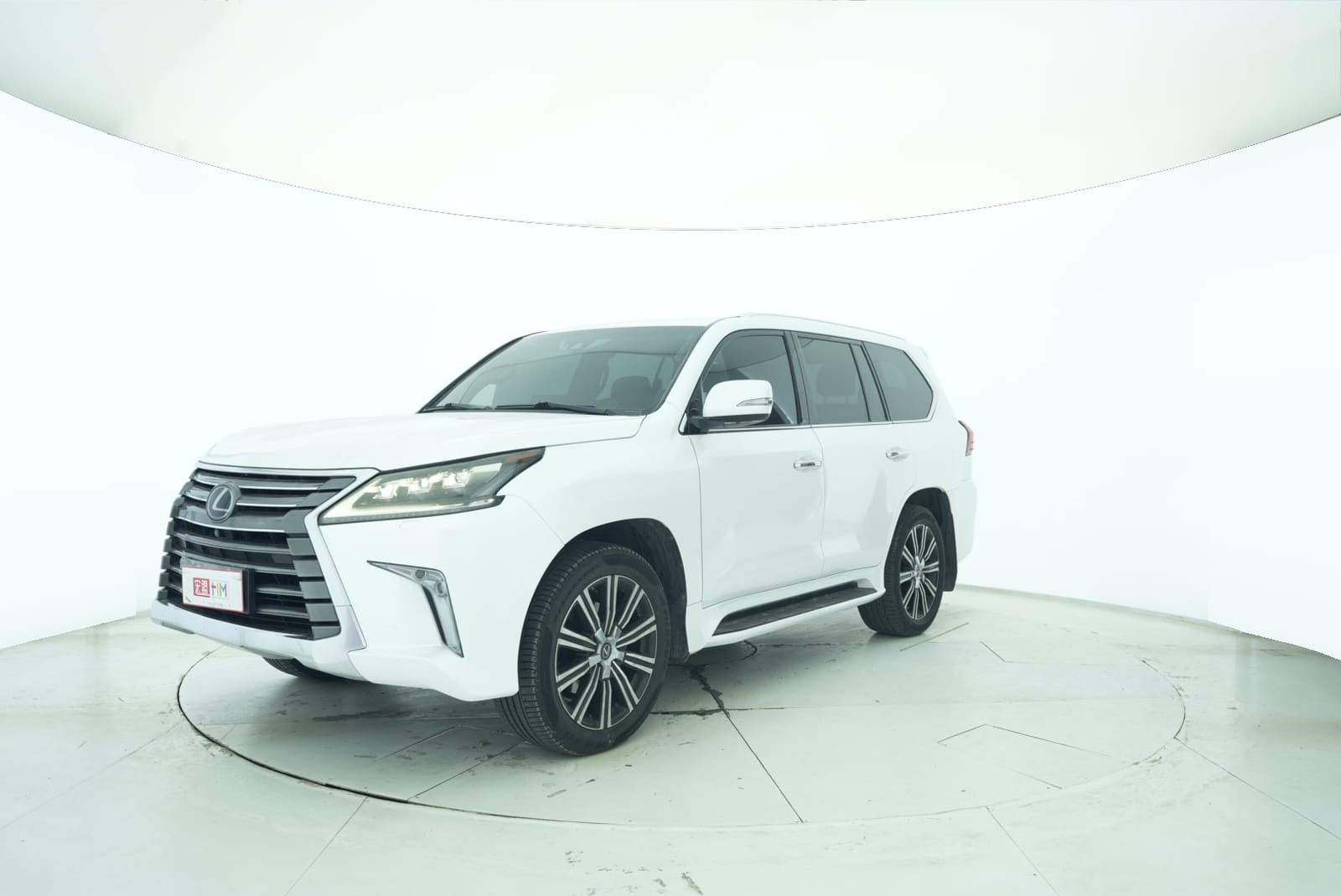
Lexus LX Buyer Guide: 2019 LX 570 V8 vs 2022 LX 600 Twin-Turbo
Product Research Team

Range Rover Buyer Guide: 2019 Supercharged V6 vs 2022 Ingenium Inline-Six
Product Research Team

Land Rover Defender Buyer Guide: 2023 HSE vs 2025 X-Dynamic Black Compared
Product Research Team