Mercedes-Benz G-Class Buyer Guide: 2019 G 500 vs 2024 G 500 and the V8-to-Six Change
Comparing a 2019 Mercedes-Benz G 500 in white with a 2024 G 500 in blue, both photographed for this guide: why the W463 second-generation cars share a 4.0-litre twin-turbo V8, a nine-speed automatic, permanent four-wheel drive and three 100% differential locks, what actually changed between the two model years, why the 2025 G 500's switch to a 3.0-litre inline-six is the real generational break, what a used G-Class must be inspected for, and how emissions, parts and destination rules shape the export decision.
The Shape That Refused to Change
The Mercedes-Benz G-Class has looked broadly the same since 1979, and that is the point. It began as a military utility vehicle, became a status symbol, and survived every attempt to make it sensible. The second-generation W463, launched in 2018 for the 2019 model year, finally gave it independent front suspension, electric power steering and a modern cabin without removing the ladder frame, the live rear axle, the external door hinges or the three differential locks.
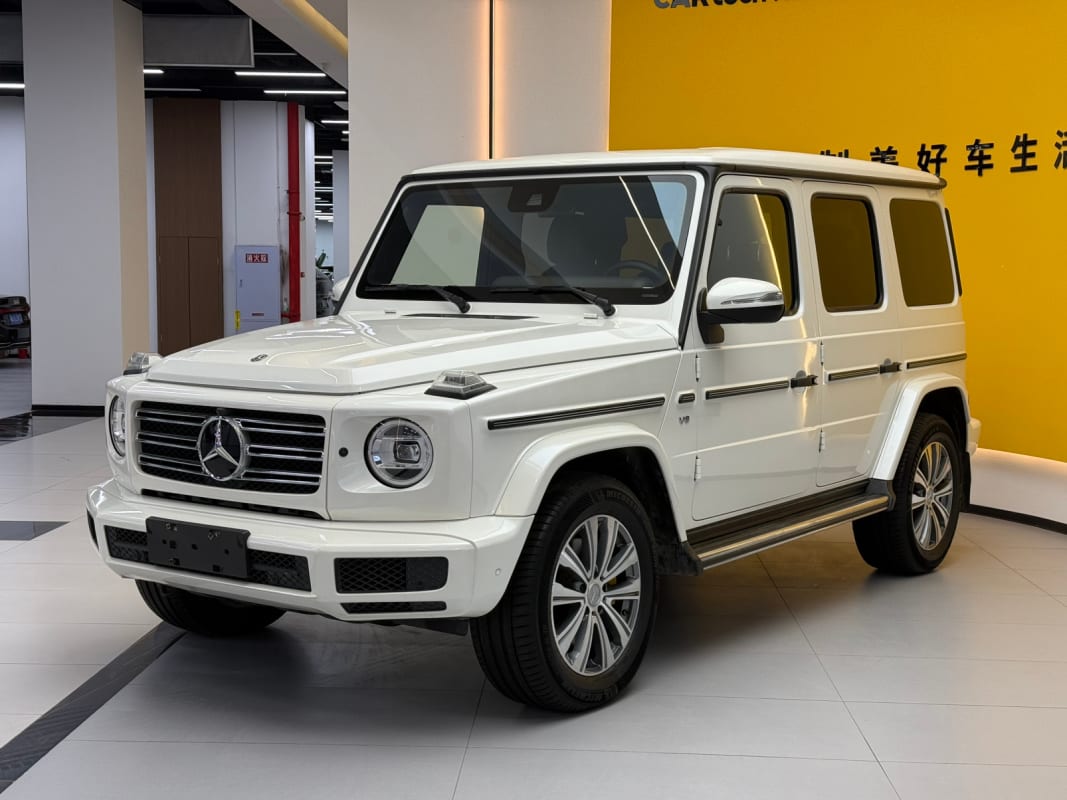
The two cars photographed for this guide are a 2019 G 500 in white and a 2024 G 500 in blue. Both are left-hand-drive Chinese-market cars. On paper and under the bonnet they are closer than the six-year gap suggests: both use the 4.0-litre twin-turbo V8, the nine-speed automatic, permanent four-wheel drive and the same three-lock hardware. The real break in the story came after them, when the 2025 G 500 replaced the V8 with a 3.0-litre inline-six and 48-volt assistance.
That distinction matters for anyone importing one. A car described as a 2024 G 500 may be the V8 car; a 2025 may be the six-cylinder car; registration dates and model-year labels do not always agree. The engine, not the badge, should decide the purchase.
What the G-Class Actually Is
The G-Class is a body-on-frame 4x4 with a separate ladder chassis, a live rear axle, a two-speed transfer case and permanent four-wheel drive. The W463 second generation, built in Graz, Austria, kept that architecture and added comfort, safety and electronics. It is not a crossover with a square body; it is a heavy utility vehicle with a luxury cabin, and it drives like one.
The mechanical package is unusually complete for a passenger car:
- Permanent four-wheel drive with a centre differential.
- Three 100% differential locks: centre, rear and front, engaged by buttons on the dashboard.
- Low range with a reduction of about 2.93:1.
- Independent front suspension and a live rear axle.
- Ground clearance around 241 mm and a wading depth of 700 mm.
- 100-litre fuel tank and 19-inch wheels with 275/55 tyres on the photographed cars.
The three locks are the G-Class's defining feature. They are mechanical, not brake-based electronic imitations, and they allow the car to keep moving when individual wheels lose grip. They are also easy to misuse: the front and rear locks should only be engaged on low-grip surfaces, and the centre lock should be engaged before the axle locks. Engaged on dry tarmac, they cause transmission wind-up and expensive damage.
2019 G 500: The First Year of the Modern Car
The 2019 G 500 uses the M176 4.0-litre twin-turbo V8, producing 310 kW (421 PS) and 610 Nm between 2,000 and 4,750 rpm. The gearbox is a nine-speed automatic, replacing the seven-speed of the previous generation. Mercedes quoted 0-100 km/h in 5.9 seconds and a top speed of 210 km/h. The cabin has dual 12.3-inch screens, MBUX, a Burmester audio system and the three lock buttons in the centre of the dashboard.
The first year of a new generation always deserves extra attention. Early W463 cars can have software quirks, door and window calibration issues, sunroof noises and electronic faults that later build dates resolved. Many have been updated by dealers since, but the service history and a current fault scan matter more than the model year alone.
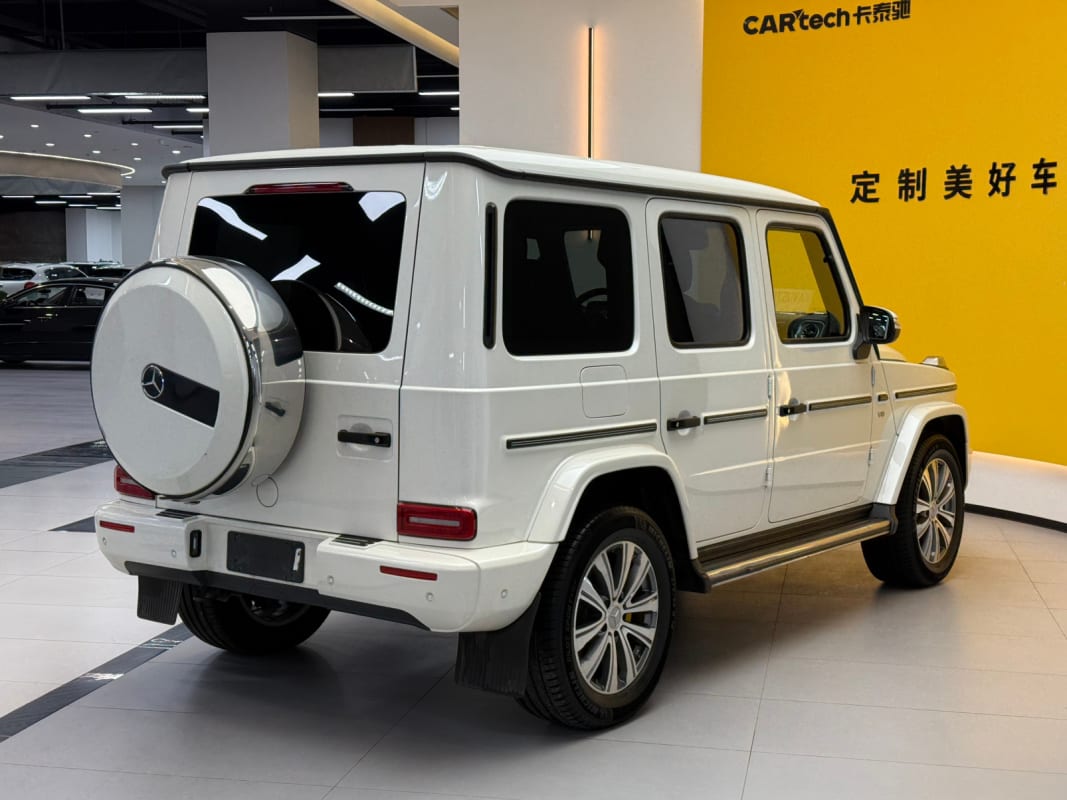
The white car in these photographs is a 2019 G 500 with the classic G proportions: flat glass, exposed hinges, a side-hinged tailgate and the spare wheel on the rear door. Its 19-inch wheels and 275/55 tyres are the sensible choice for rough roads and for replacement availability in export markets.
2024 G 500: Same V8, Newer Details
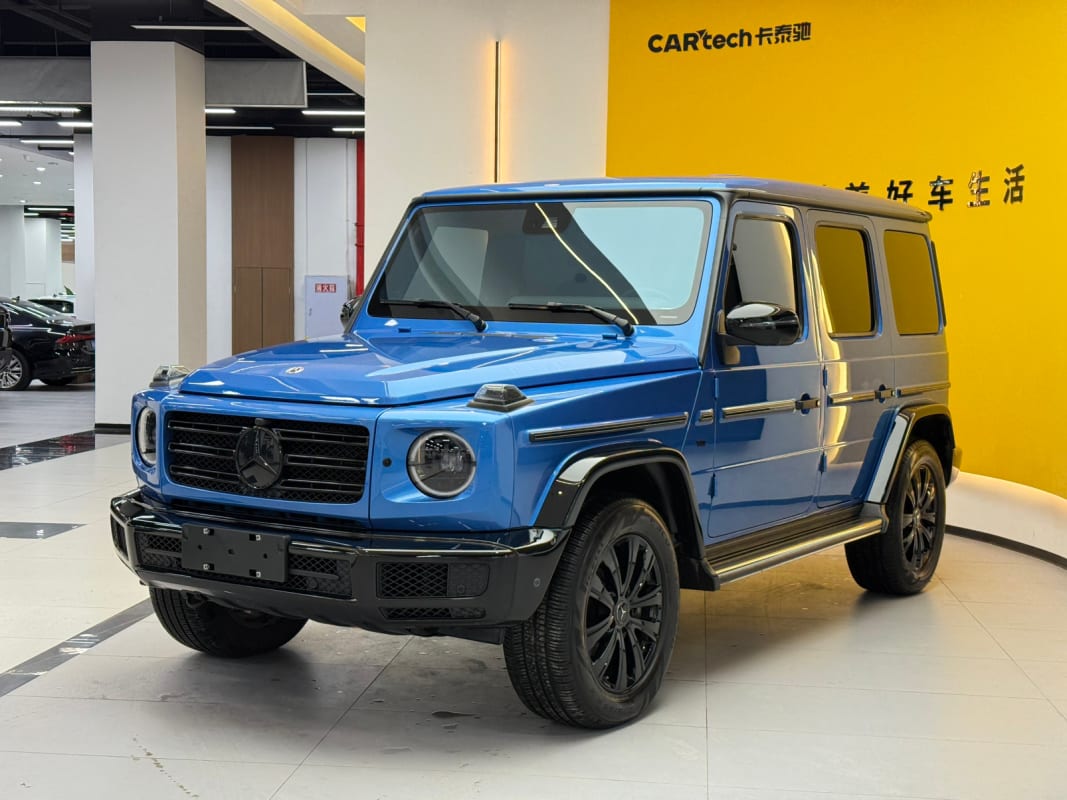
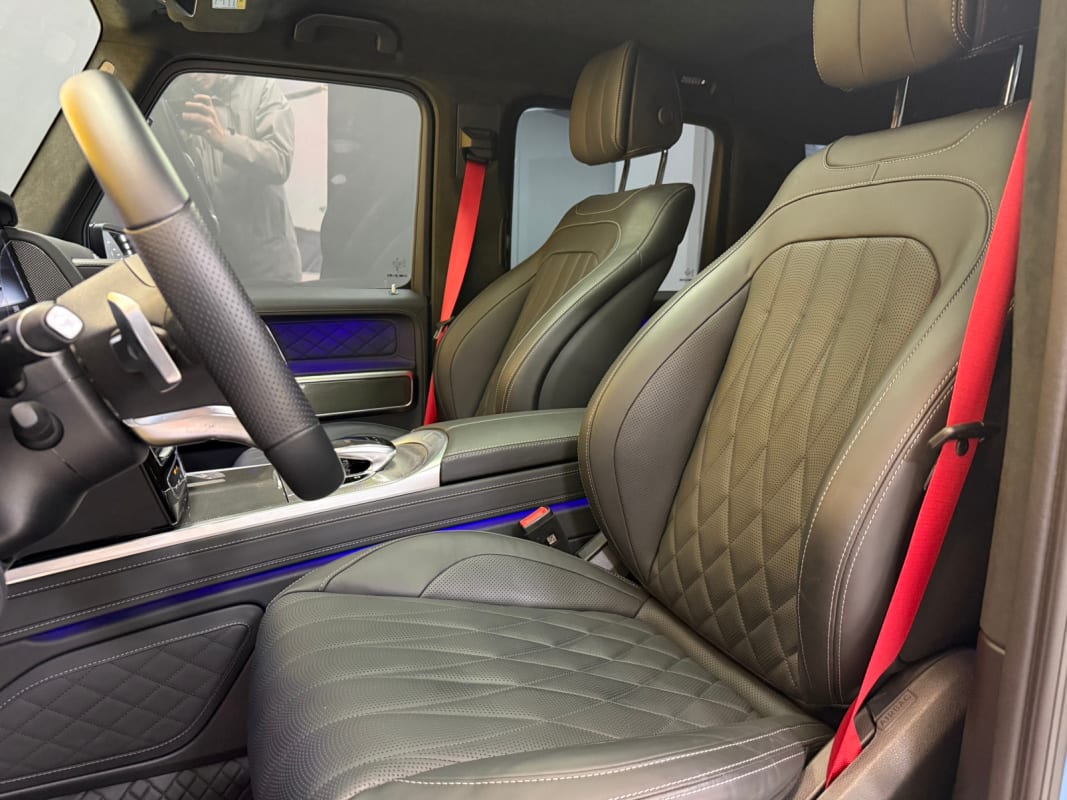
The 2024 G 500 sold in China kept the 4.0-litre V8, the nine-speed automatic and the three locks. The 2024 model year was largely a special-edition year: Mercedes added limited-run trim and badges, including a "1 of 500" identifier on some cars, while the mechanical package stayed the same. The blue car photographed here has Nappa leather, red seatbelts, a Burmester system, carbon-look trim and black wheels, but its drivetrain is the familiar V8 and nine-speed automatic.
That makes the 2019-versus-2024 comparison less dramatic than the age gap implies. The newer car has fresher software, possibly more equipment and a different trim story; the older car has the same engine, gearbox, transfer case and locks. Condition, mileage, service history and accident repair should outweigh the model year.
There is a catch, and it is important. In 2024 Mercedes launched the updated G-Class for the 2025 model year, and the G 500 switched from the 4.0-litre V8 to a 3.0-litre inline-six with 48-volt assistance: 330 kW (449 PS), 560 Nm plus a 15 kW/200 Nm boost, 0-100 km/h in 5.4 seconds. The 2025 car also gained keyless entry, wireless charging, heated front armrests, rear MBUX entertainment, lane centring and other equipment. It retained the three locks and the ladder frame.
So there are really three cars to understand: the 2019-2024 V8 G 500, the 2025 six-cylinder G 500, and the AMG G 63, which keeps a V8. Confirm the engine from the VIN, the under-bonnet plate and the registration documents before you agree a price or a shipping plan.
V8 or Inline-Six: What It Means for an Export Buyer
The V8 is the traditional G-Class experience: strong low-end torque, a deep exhaust note and a simpler emissions story in markets that still reward large petrol engines. It is also thirstier. Chinese WLTC consumption for the V8 is quoted around 13 litres per 100 km, and real-world figures in city traffic, with air-conditioning and a loaded car, will be higher.
The 3.0-litre inline-six is more efficient and more modern. It produces more power, delivers its torque lower in the rev range and uses 48-volt assistance to smooth stop-start and low-speed response. It is the engine Mercedes now builds for the G 500, and it will be the one with the longer future parts and software support.
For an export market, the question is not which is "better" in the abstract. It is which one the destination can register, fuel and service. A V8 may face higher emissions or displacement taxes in some countries; a six-cylinder may be easier to homologate but needs technicians familiar with its 48-volt system. Check the destination's rules for the exact engine and model year, not for the G-Class name in general.
What a Used G-Class Inspection Must Cover
Frame and underbody. Inspect the ladder frame, body mounts, suspension pick-up points, rear axle housing and underbody for rust, impact damage and fresh underseal. The G-Class is often used off-road; look for dented guards, scraped skid plates, packed mud and damaged connectors.
Body and structure. Check panel gaps, paint match, overspray and repair marks. Inspect the roof, A-pillars, sills and floor for rollover or impact repair. The external hinges and door alignment are part of the structure, not decoration. Check the tailgate, spare-wheel carrier and sunroof drains.
Engine. On the V8, check for oil leaks at the cam covers, front cover, sump and turbochargers, coolant leaks at the radiator, hoses and water pump, and listen for turbo noise, exhaust leaks and misfires. On the six-cylinder, also check the 48-volt system, belt-driven starter-generator and associated cooling. Confirm the oil specification and service history.
Transmission and transfer case. Test the nine-speed automatic from cold and warm, at low speed and under load. Check for delayed engagement, shudder and harsh shifts. Exercise high and low range and listen for transfer-case actuator noise.
Differential locks. Engage and disengage the centre, rear and front locks in a safe, low-grip area and confirm the dashboard indicators behave correctly. Locks that have never been used can seize; locks that have been used hard can be damaged. A G-Class with an inoperative front lock is a repair, not a quirk.
Suspension, steering and brakes. Check bushes, ball joints, dampers, springs and the rear axle for leaks, wear and play. On cars with adaptive damping, check for leaks and warnings. Measure discs and pads, confirm the tyres match and inspect the spare.
Electrics and history. Test every screen, camera, sensor, seat motor, window, lock, light and driver-assistance function twice. Match the VIN, engine number, model year and trim to the documents, verify the mileage against service records, and review the history for accident damage, rental or fleet use, and repeated off-road abuse.
Export Paperwork and Destination Rules
Chinese-market G-Class cars are left-hand drive, which suits the Middle East, Central Asia, Africa, Russia and Latin America in principle. Eligibility depends on each destination's emissions, age and registration rules, and those rules can differ by city as well as by country.
The export file should include the registration certificate, factory specification sheet, purchase invoice, export licence documentation, customs declaration, service records and an independent inspection report, with photographs of the VIN plate, engine number and odometer. If the car has been modified, keep the original parts and documentation; some markets require the vehicle to be returned to standard specification.
Parts support is a mixed picture. Mercedes-Benz has a global network, but G-Class body panels, trim, lights and electronic modules are expensive and may need to be ordered. Buyers in remote areas should identify a workshop with Mercedes diagnostic equipment before purchase, not after.
Buyer Questions
Is the 2024 G 500 mechanically different from the 2019 car? In the 4.0-litre V8 form, no: the engine, nine-speed automatic, permanent four-wheel drive, low range and three locks are the same package. The 2025 model year is the real change, with the 3.0-litre inline-six and 48-volt assistance.
Which is the better export buy? A well-maintained 2019 V8 offers the classic G-Class experience and the same mechanical capability. A 2024 V8 offers a newer car with fresher software and possibly more equipment. Inspect the individual vehicle and confirm the engine; do not buy on the model year alone.
What is the biggest used-buying risk? Hidden accident or rollover repair, a neglected transfer case or differential lock, electronic faults, and poorly executed modifications. A pre-purchase inspection by a G-Class specialist is worth the cost.
Next Step
Tell us which G 500 you are considering and how you intend to use it — daily transport, desert touring, a collection car or a fleet vehicle — and we will send the file for that specific unit: a full inspection report, factory specification sheet, cold-start and driving video, close-ups of the frame, underbody, transfer case and differential locks, an honest assessment of the emissions and registration route in your country, and the export documents we hold. If you are deciding between the two cars in these photographs, say so: we will walk through the differences against your route, your fuel supply and your workshop support.
Lexus LX Buyer Guide: 2019 LX 570 V8 vs 2022 LX 600 Twin-Turbo
Product Research Team

Range Rover Buyer Guide: 2019 Supercharged V6 vs 2022 Ingenium Inline-Six
Product Research Team
Land Rover Defender Buyer Guide: 2023 HSE vs 2025 X-Dynamic Black Compared
Product Research Team