Deepal L07 Buyer Guide: 550Ultra BEV vs 240Ultra Range-Extender
Comparing a 2026 Deepal L07 550Ultra pure-electric sedan in white with a 240Ultra range-extender in grey, both photographed for this guide: why the two cars share a 4,875 mm liftback body, a 2,900 mm wheelbase and Huawei Qiankun ADS SE assistance but differ in battery, motor and fuel system, how the 550 km CLTC electric version compares with the 240 km CLTC plus 1.5-litre range extender, what the GB/T charging standard means outside China, what a used L07 must be inspected for, and how battery shipping, emissions and homologation shape the export decision.
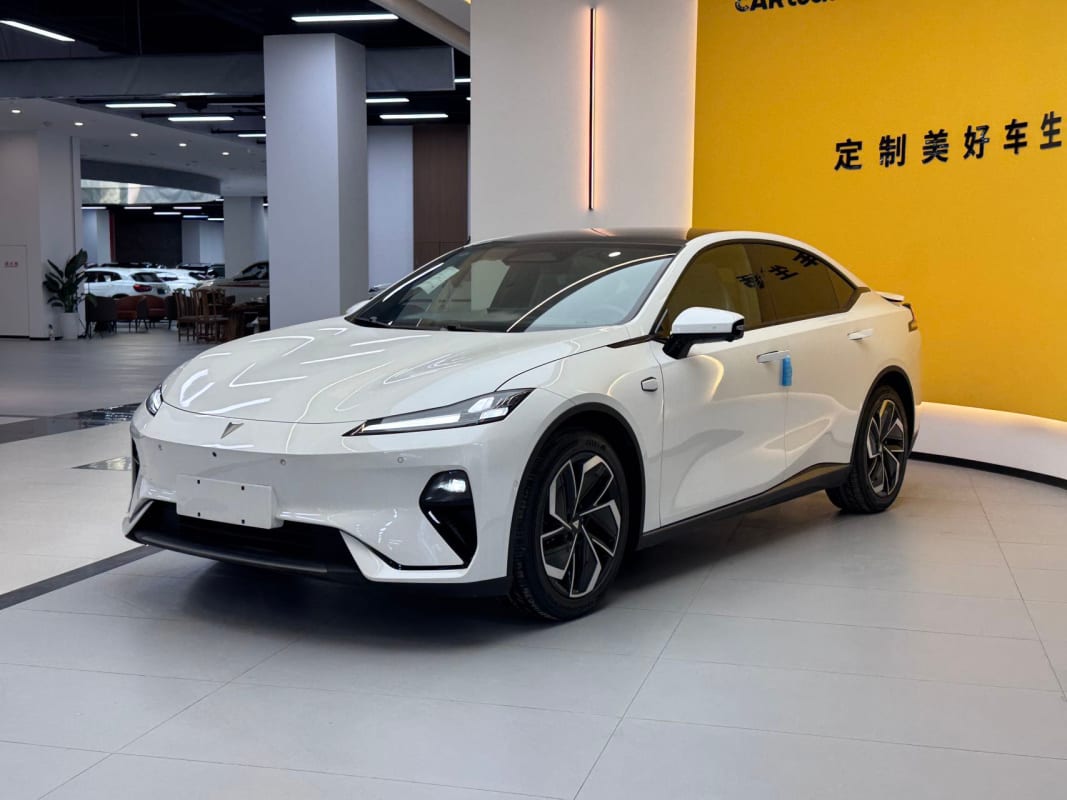
One Sedan, Two Very Different Answers
The Deepal L07 is a mid-size five-door liftback from Changan's new-energy brand, and the 2026 model year offers the same body with two completely different ways of moving it. The 550Ultra is a pure battery-electric car. The 240Ultra is a range-extender electric vehicle: a smaller battery, a 1.5-litre petrol engine that generates electricity, and a fuel tank.
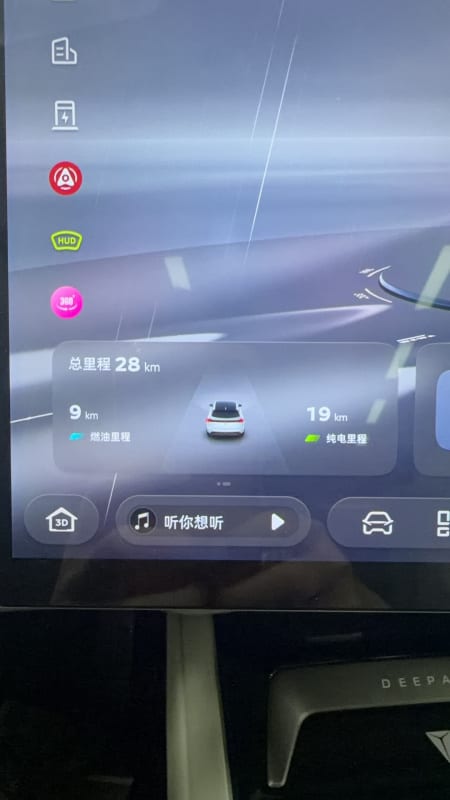
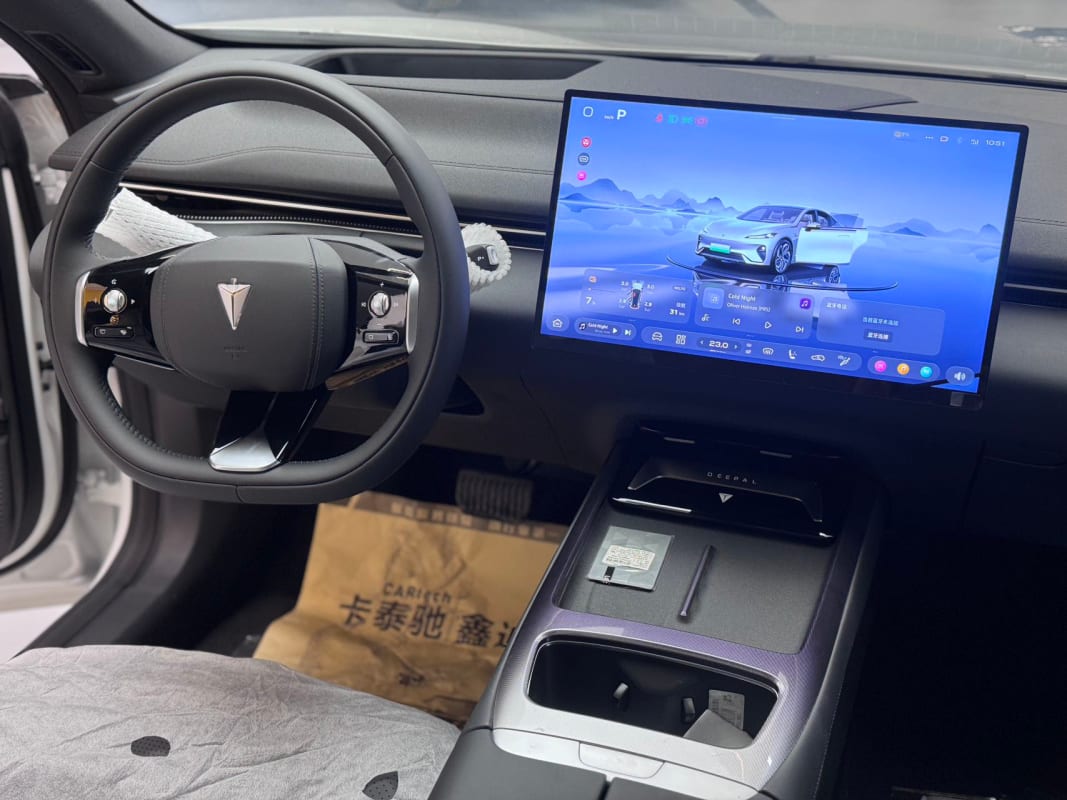
The two cars photographed for this guide are a 2026 L07 550Ultra in white and a 2026 L07 240Ultra in grey. They share the body, the wheelbase, the cabin architecture, the suspension and the Huawei Qiankun ADS SE assistance package. The difference is underneath: battery capacity, motor output, charging behaviour, fuel system and weight.
For an export buyer, that difference is more important than trim. A pure EV depends on charging infrastructure and charging standards. A range extender can run on petrol when no charger is available, but it carries an engine, an exhaust and a fuel system that must be serviced and homologated. The right answer depends on where the car will live, not on which version is newer.
What Deepal and the L07 Are
Deepal is Changan's electrification brand, positioned below the premium Avatr line and above the core Changan models. It sells battery-electric and range-extender cars in China and is expanding into Southeast Asia, the Middle East, Latin America and Europe through Changan's export network.
The L07 is a mid-size liftback sedan, not an SUV. It measures 4,875 mm long, 1,890 mm wide and 1,480 mm high on a 2,900 mm wheelbase, with five seats and a 473-litre boot that expands to 1,180 litres with the rear seats folded. The body has a sloping roofline, a liftback tailgate and an active rear spoiler.
The 2026 model year was launched in August 2025 with six trims: 240Max and 240Ultra range-extenders, and 550Max, 550Ultra, 660Max and 660Ultra pure-electric cars. The photographed cars are the two Ultra trims, which add the more complete equipment package and the Huawei ADS SE assistance system.
The Shared Car: Chassis, Cabin and Equipment
Both cars use a MacPherson front suspension and an H-arm multi-link rear, with FSD adaptive dampers and HRS rebound stoppers. Kerb weight is around 1,820 to 1,890 kg depending on the powertrain. The battery sits under the floor, which keeps the centre of gravity low and the cabin flat.
The cabin is modern and screen-led: a large central touchscreen, a slim instrument display, a two-spoke steering wheel, a wireless charging pad and a clean centre console. The liftback tailgate opens to a square cargo area, and the rear seats fold in a 60/40 split. The active spoiler is a visual feature, not a meaningful aero device at legal speeds.
The Huawei Qiankun ADS SE system provides driver assistance rather than full autonomy. It uses cameras and radar, not a roof-mounted lidar, and its functions depend on software, maps and regional availability. Test every assistance function on the exact car and confirm what works where the car will be registered.
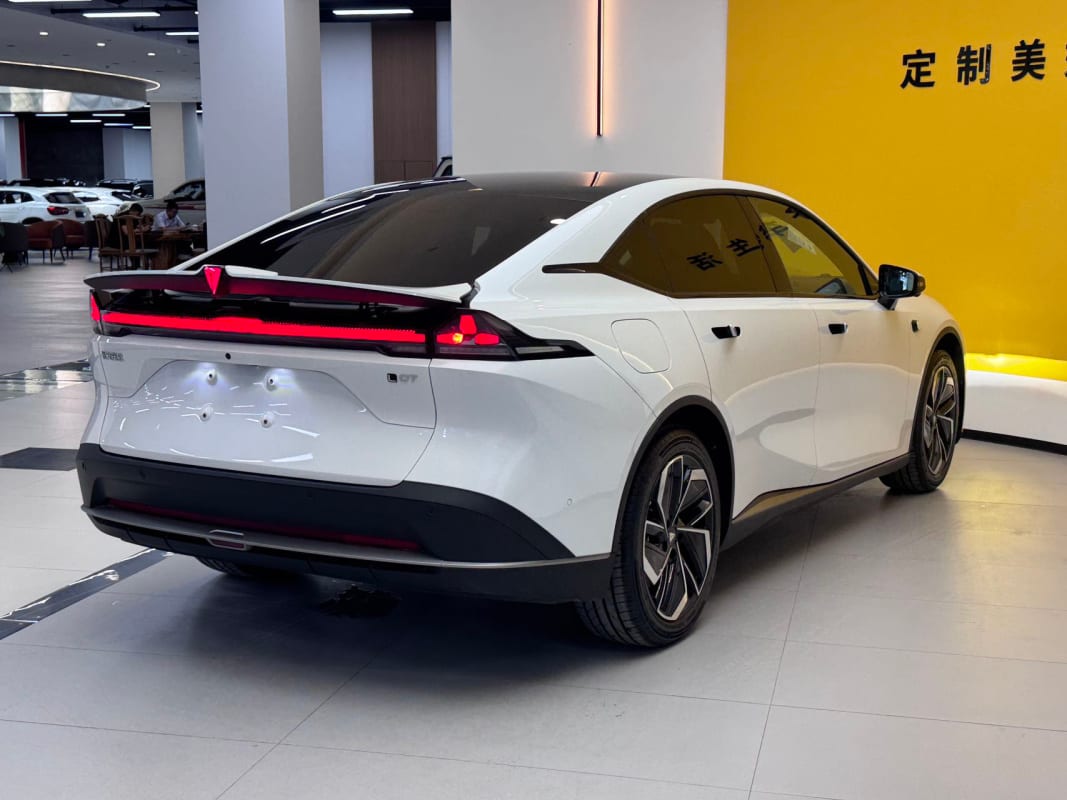
550Ultra: The Pure Electric Version
The 550Ultra uses a 56.12 kWh lithium iron phosphate battery and a 200 kW rear motor producing 290 Nm. Deepal quotes 0-100 km/h in 6.2 seconds, a top speed of 185 km/h, CLTC range of 550 km and consumption of about 12.0 kWh per 100 km.
The battery supports 3C charging, with a 30-80% DC fast charge in about 15 minutes on a compatible charger. That is quick by the standards of the class, but it assumes a charger that speaks the car's protocol. Chinese-market cars use the GB/T standard, which is not the same as CCS2, Type 2 or NACS used in many export markets.
The pure-electric version is the simpler mechanical package: no engine, no exhaust, no fuel tank, no oil changes. It is also the version that depends most heavily on the destination. A market with reliable home charging and a growing DC network suits it. A market with sparse charging, long distances or uncertain electricity does not.
240Ultra: The Range-Extender Version
The 240Ultra uses a smaller 28.39 kWh LFP battery, a 175 kW rear motor producing 290 Nm, and a 1.5-litre petrol engine that acts as a generator. Deepal quotes 0-100 km/h in 7.4 seconds, a top speed of 180 km/h, 240 km CLTC electric range (175 km WLTC) and a combined CLTC range of 1,500 km with a 45-litre tank.
The engine does not drive the wheels directly in normal operation; it generates electricity for the motor and battery. Fuel consumption with a depleted battery is quoted at 3.48 litres per 100 km on the NEDC cycle and 4.4 litres per 100 km on WLTC. It runs on 92-octane petrol, which is an advantage in markets where high-octane fuel is scarce.
The range extender is the more flexible choice for export markets with weak charging. It can do short urban trips on electricity and long intercity runs on petrol, without depending on a fast-charging network. The trade-off is complexity: an engine, cooling system, exhaust, fuel tank and additional electronics that all need servicing and inspection.
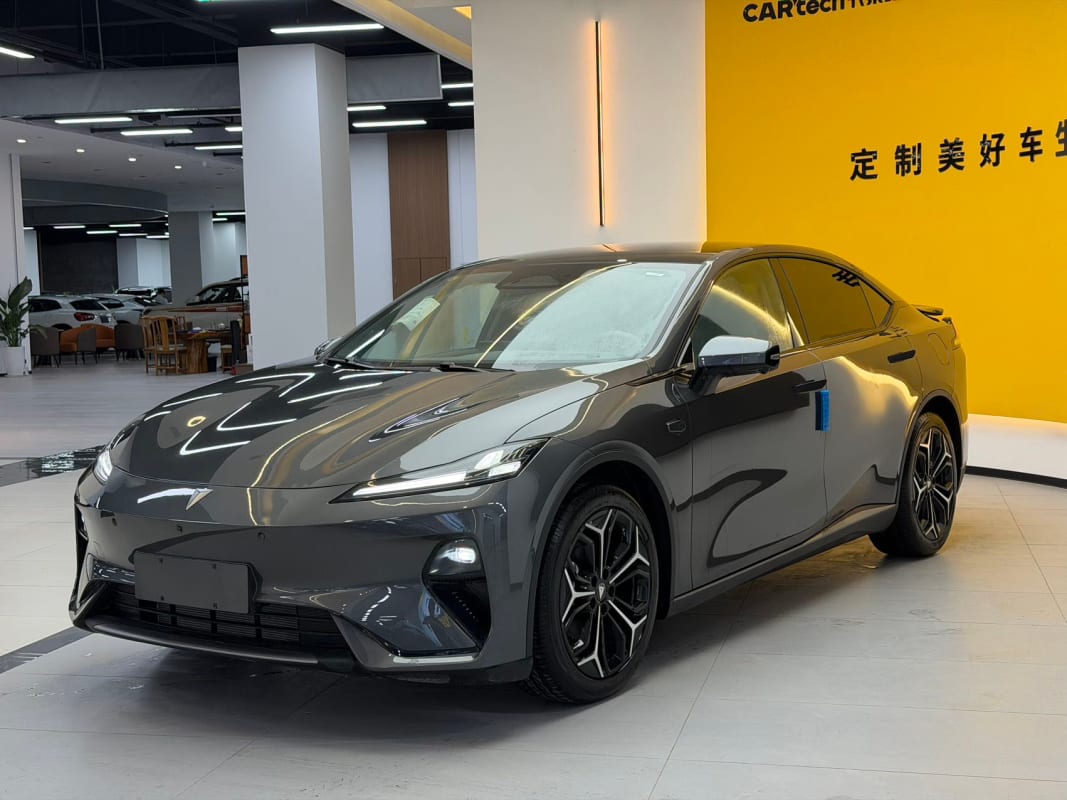
The Two Cars Side by Side
| Item | 550Ultra BEV | 240Ultra EREV |
|---|---|---|
| Battery | 56.12 kWh LFP | 28.39 kWh LFP |
| Motor | 200 kW / 290 Nm, rear | 175 kW / 290 Nm, rear |
| 0-100 km/h | 6.2 s | 7.4 s |
| Top speed | 185 km/h | 180 km/h |
| Electric range | 550 km CLTC | 240 km CLTC / 175 km WLTC |
| Combined range | 550 km | 1,500 km CLTC |
| Fuel | None | 45 L tank, 92-octane |
| DC fast charge | 30-80% in about 15 min | 30-80% in about 15 min |
| Kerb weight | about 1,820-1,860 kg | about 1,860-1,890 kg |
The table shows the central trade-off. The BEV is quicker, simpler and cheaper to run where electricity is cheap. The EREV gives up some electric range and performance but removes the charging dependency and adds a 45-litre fuel reserve.
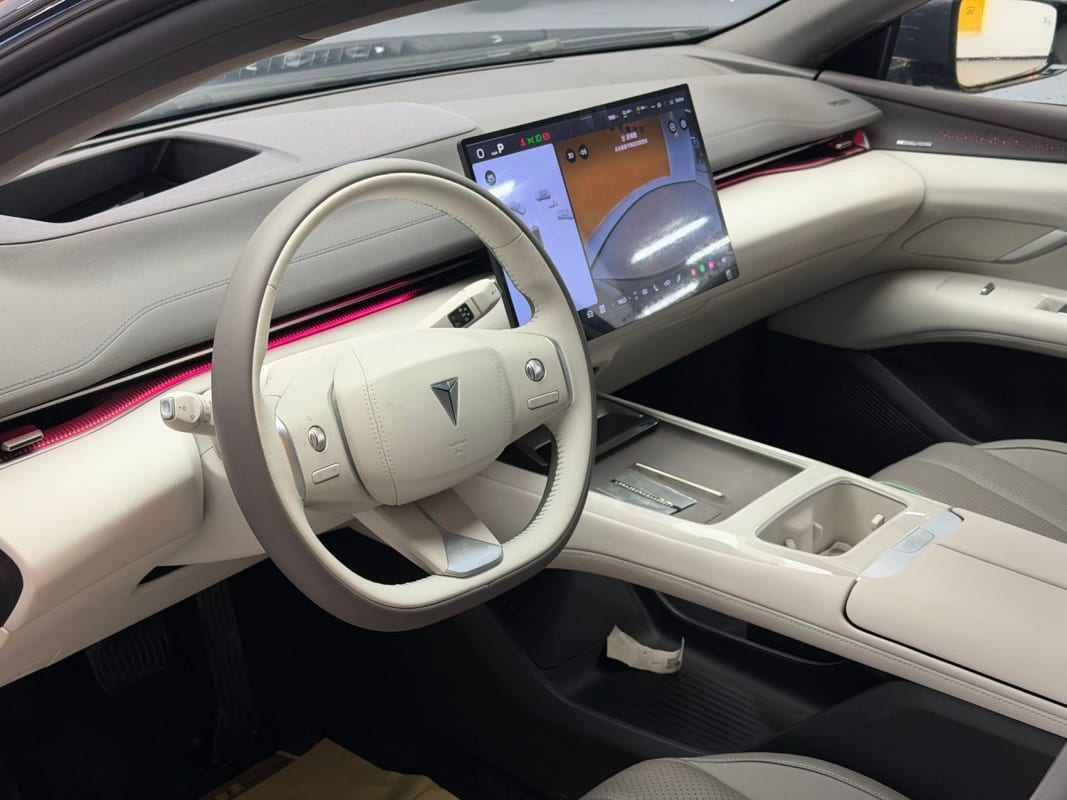
Charging, Fuel and Infrastructure
The charging standard is the most important practical issue for an exported Chinese EV. Chinese-market cars use GB/T connectors for AC and DC charging. Many destination markets use Type 2 for AC and CCS2 or NACS for DC. An adapter can solve some AC cases, but DC fast charging requires communication between the car and the charger, and a passive adapter often does not provide it.
Before shipping, establish exactly what charging the car supports, what the destination uses, and whether a compatible adapter or onboard charger modification exists. Do not assume that a Chinese EV will fast-charge on the destination's network just because the connector looks similar.
The range extender avoids this problem for long journeys, but it still uses the same GB/T port for home and public AC charging. Its petrol engine needs 92-octane fuel, regular oil and filter changes, and an exhaust system that meets the destination's emissions rules.
What a Used L07 Inspection Must Cover
Battery health and charging. Ask for a battery state-of-health report from a Deepal or Changan dealer, charge the car to 100% and test a DC fast charge if possible. Check for cell imbalance, thermal-management faults, charging interruptions and unusual noise from the battery cooling system.
Range extender (240Ultra). Start the engine from cold, listen for abnormal noise, check for oil and coolant leaks, inspect the exhaust and confirm the fuel system and tank are intact. Verify that the engine starts under load and that the transition between electric and generator modes is smooth.
Body and structure. Inspect panel gaps, paint match, the liftback tailgate, the active spoiler, the glass roof and the underbody for impact damage. The battery pack is under the floor; a hard impact can damage the pack or its cooling circuit without obvious body damage.
Suspension, steering and brakes. Check bushes, ball joints, dampers, springs and the rear H-arm for wear and leaks. Measure discs and pads, confirm the tyres match and inspect the spare or repair kit. Regenerative braking reduces pad wear but does not eliminate it.
Electrics and software. Test every screen, camera, sensor, seat motor, window, lock, light and assistance function twice. Check the OTA status, the account region and the infotainment language. Scan for stored faults.
History and identity. Match the VIN, model year, trim, battery capacity and motor to the documents. Verify the mileage against service records and check for rental, fleet or ride-hailing use, accident repair and battery replacement.
Export Paperwork and Homologation
Chinese-market L07s are left-hand drive, which suits many export destinations in principle. The practical barriers are charging standards, software regionalization, battery transport and homologation.
Lithium batteries are classified as dangerous goods for transport. Expect to provide UN38.3 test summaries, material safety data sheets, a state-of-charge declaration and, for some routes, a reduced-SoC shipping requirement. RoRo and container shipping have different rules; confirm them with the forwarder before booking.
The BEV needs destination homologation as an electric vehicle. The EREV also has a petrol engine, so it may need emissions and fuel-system certification and may be taxed as a hybrid or an ICE vehicle in some markets. Check the rules for the exact model and powertrain, not for the L07 name in general. Software is a separate risk: map data, connected services and OTA updates can be region-locked, so verify Huawei ADS SE support locally.
The export file should include the registration certificate, factory specification sheet, purchase invoice, export licence documentation, customs declaration, battery documents, service records and an independent inspection report, with photographs of the VIN plate, motor number and odometer.
Buyer Questions
Is the 550 km range realistic? CLTC is optimistic. Expect roughly 400-470 km in mixed real-world use, less in cold weather, at high speed or with a full load. The EREV's 240 km CLTC electric range translates to roughly 170-200 km in similar conditions before the engine starts.
Can I fast-charge it in my country? Only if the car and charger share a protocol or a working adapter exists. Chinese-market cars use GB/T; many markets use CCS2, Type 2 or NACS. Confirm this before purchase, not after shipping.
What is the biggest used-buying risk? Battery damage or degradation, charging incompatibility and software regionalization. A dealer battery health report and a real charging test are worth more than a short drive.
Next Step
Tell us which L07 you are considering and where it will be used — city transport, intercity fleet, ride-hailing or private car — and we will send the file for that specific unit: a full inspection report, battery health report, factory specification sheet, cold-start and charging video, close-ups of the battery pack, underbody and charging port, an honest assessment of the charging and homologation route in your country, and the export documents we hold. If you are deciding between the two cars in these photographs, say so: we will walk through the differences against your daily distance, your charging access and your fuel supply.
Lexus LX Buyer Guide: 2019 LX 570 V8 vs 2022 LX 600 Twin-Turbo
Product Research Team
Range Rover Buyer Guide: 2019 Supercharged V6 vs 2022 Ingenium Inline-Six
Product Research Team
Land Rover Defender Buyer Guide: 2023 HSE vs 2025 X-Dynamic Black Compared
Product Research Team