Cadillac XT4 Buyer Guide: 2020 Leading vs 2023 Fengshang
Two white China-market Cadillac XT4s show why model year alone does not determine the better car. The 2023 28T Fengshang adds a 48V mild-hybrid system, while the 2020 facelift 28T Leading has a different equipment position. Shared 2.0T and 9AT hardware, generation changes, inspection priorities, connected-service limitations and export documents explained.
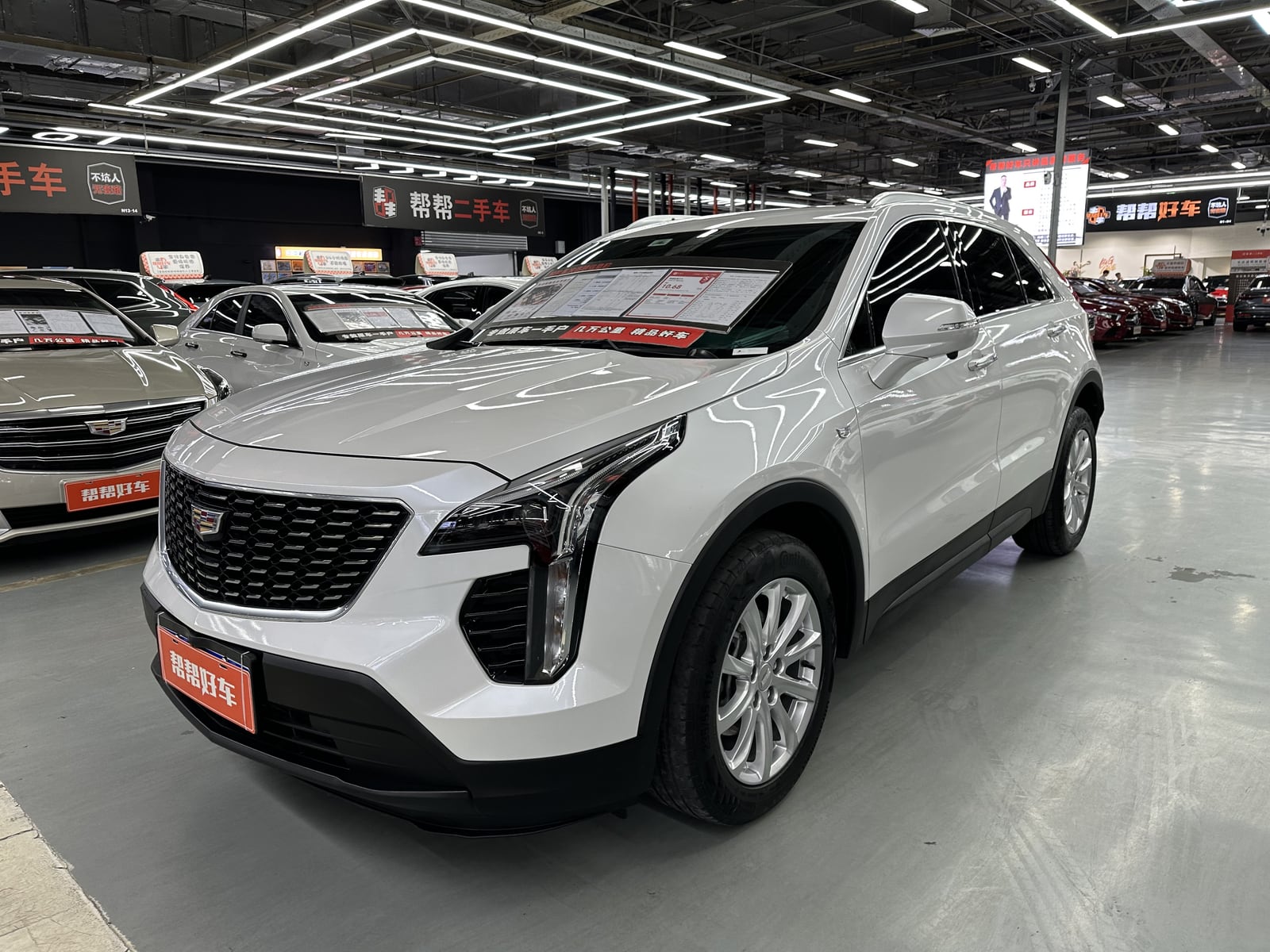
One XT4, Two Different Buying Decisions
The Cadillac XT4 sits in the compact premium SUV class, but a buyer comparing two used examples needs to look beyond the badge and model year. A newer car can have a simpler equipment grade, while an older car can offer more comfort or driver-assistance features. Powertrain revisions also matter, even when the engine badge stays the same.
The two white cars photographed for this guide are a 2023 XT4 28T two-wheel-drive Fengshang and a 2020 facelift XT4 28T two-wheel-drive Leading. They share the same basic body and most of their mechanical layout. The important distinction is that the 2023 car uses a 48-volt mild-hybrid system, whereas the 2020 car does not. Their trim positions are different too.
For an export buyer, the right comparison is therefore not simply 2023 versus 2020. It is generation, engine code, equipment, condition and destination support, considered together.
💡Key Insight: A newer model year does not automatically mean a higher trim level or more safety equipment. Confirm the individual vehicle rather than filling gaps from a general XT4 brochure.
Generation, Facelift and the 28T Badge
Both photographed cars belong to the first XT4 generation. The later 2024-model-year refresh introduced updated exterior details and a 33-inch curved cabin display in markets where that version was offered. That technology should not be attributed to either of these earlier cars. The 2020 and 2023 vehicles discussed here use the earlier dashboard architecture, with a separate instrument cluster and central infotainment screen.
The Chinese trim name also needs to be read in full. “Facelift” in the 2020 car's listing identifies a running update within the same generation; it does not make it equivalent to the later 2024 refresh. Likewise, 28T does not mean a 2.8-litre engine. Both cars have a 1,998 cc turbocharged four-cylinder petrol engine.
Two-wheel drive in these listings means front-wheel drive. Other XT4 variants were offered with all-wheel drive, but a buyer should not infer it from the model name alone. There is no transfer case or rear-drive hardware to inspect on the two cars covered here.
*2023 Cadillac XT4 28T two-wheel-drive Fengshang, white.*
The Mechanical Baseline They Share
Cadillac's Chinese-market specifications show how much these two model years have in common.
| Item | 2020 28T Leading | 2023 28T Fengshang |
|---|---|---|
| Engine | 1,998 cc turbo petrol, LSY | 1,998 cc turbo petrol, LXH |
| Maximum power | 174 kW at 5,000 rpm | 174 kW at 5,000 rpm |
| Peak torque | 350 Nm at 1,500–4,000 rpm | 350 Nm at 1,500–4,000 rpm |
| Transmission | Nine-speed automatic | Nine-speed automatic |
| Driven wheels | Front wheels | Front wheels |
| Length / width / height | 4,600 / 1,881 / 1,627 mm | 4,600 / 1,881 / 1,627 mm |
| Wheelbase | 2,779 mm | 2,779 mm |
| Seating | Five | Five |
| Factory tyre size | 235/55 R18 | 235/55 R18 |
| Mild-hybrid system | Not fitted | 48V system fitted |
The identical headline output does not make the cars identical in every detail. Engine management, emissions equipment, stop-start behaviour and some service parts changed with the engine code. This matters when ordering components or diagnosing a fault: use the vehicle's own engine identification and parts catalogue, not just “XT4 28T”.
The shared body dimensions also mean that cabin packaging is fundamentally similar. A 2023 car does not offer more passenger room simply because it is newer. Rear-seat comfort, luggage access and ease of parking should be assessed on the actual car, with the seats in their normal driving positions.
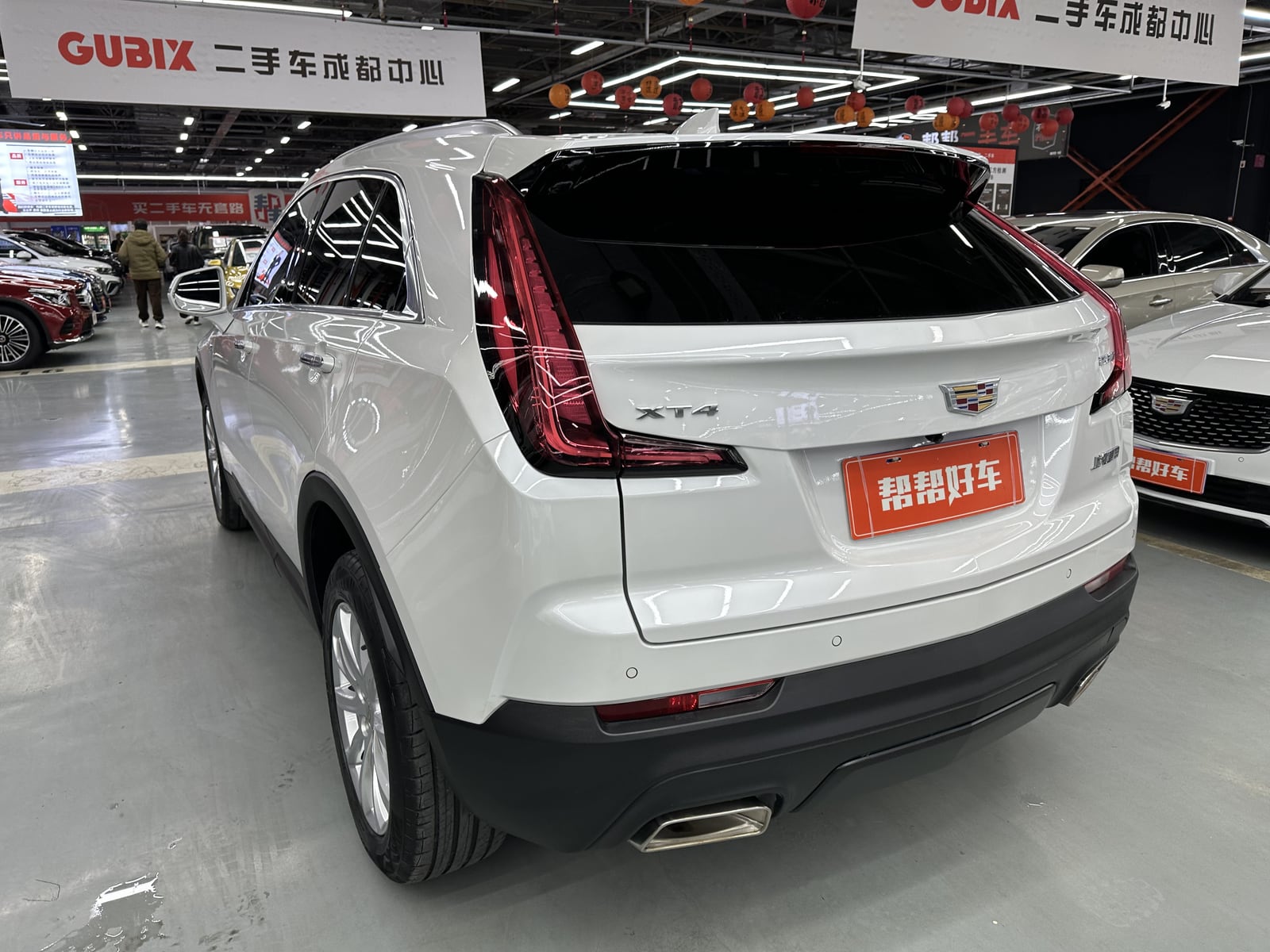
*2023 Cadillac XT4 28T two-wheel-drive Fengshang, white.*
What the 48V System Changes
The 2023 car's LXH powertrain adds a 48-volt mild-hybrid system. It is designed to assist the petrol engine and refine functions such as stop-start and energy recovery. It is not a plug-in hybrid, and it does not turn the XT4 into an electric vehicle. There is no external charging routine and no need to plan the journey around charging stations.
For the owner, the practical differences are subtler than a large change in power or torque. The official figures remain 174 kW and 350 Nm. The system may alter how the car pulls away, restarts and recovers energy, but a test drive should focus on smoothness and warning messages rather than assuming a particular fuel-saving result. Traffic, temperature, fuel and driving style still dominate real consumption.
Inspection requires a separate checklist. On the 2023 car, confirm that the mild-hybrid system has no stored faults, that stop-start operates predictably and that both conventional and 48-volt electrical systems are healthy. A generic engine scan may not cover every hybrid-related module. On the 2020 car, do not search for 48-volt components or assume that later parts are retrofitted.
When sourcing parts abroad, treat the LSY and LXH as related but distinct powertrains. Belts, control modules, electrical components and software procedures may differ. Ask for the exact engine code before ordering anything beyond ordinary service items.
Trim Position: Newer Does Not Mean Higher
The photographed 2020 car is a facelift 28T two-wheel-drive Leading, finished in white. The 2023 car is a 28T two-wheel-drive Fengshang, also white. Their similar paint and bodywork make the comparison useful: most meaningful differences sit inside the specification, not in the silhouette.
Chinese-market configuration tables place these trims at different equipment levels. In particular, the 2023 Fengshang table does not list automatic emergency braking or lane-keeping assistance, so those functions must not be assumed from the Cadillac badge or from photographs of the windscreen. The 2020 Leading's catalogue includes a different set of comfort and convenience equipment. That does not prove that every individual car has every catalogue item, because market changes and previous repairs can alter what is fitted.
Check the physical switches, menus and operation of each feature. A button marked with a driver-assistance symbol is useful evidence; a working demonstration on the road is better. The same applies to a panoramic roof, powered tailgate, seat heating, steering-wheel controls, parking sensors and camera views. Never describe a feature as present merely because it appears in an online XT4 advertisement.
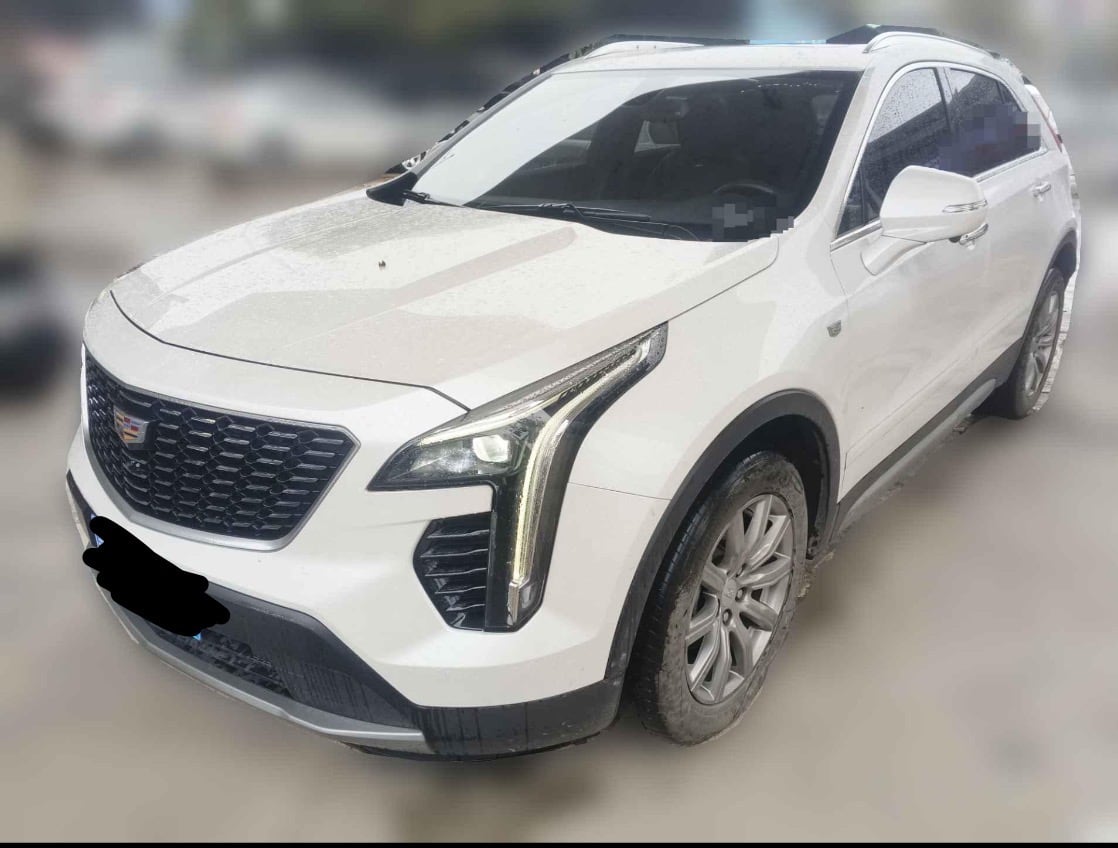
*2020 facelift Cadillac XT4 28T two-wheel-drive Leading, white.*
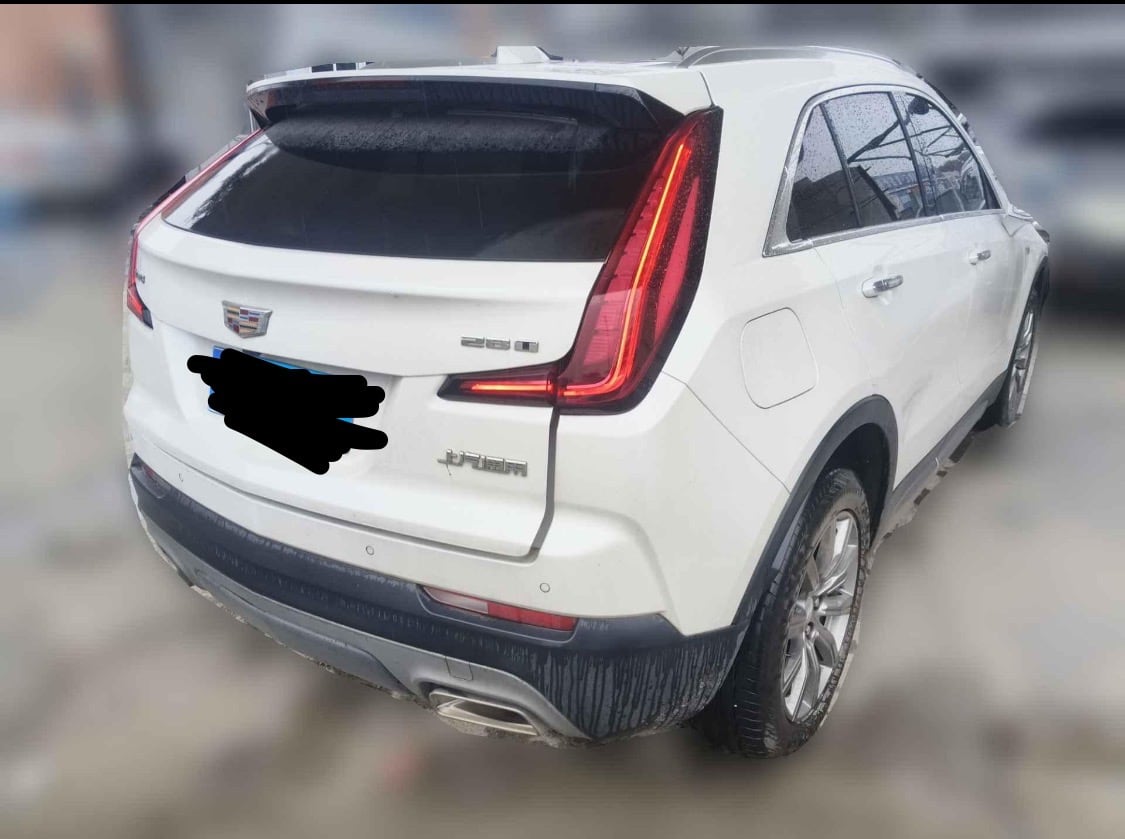
*2020 facelift Cadillac XT4 28T two-wheel-drive Leading, white.*
Cabin, Connectivity and Everyday Use
The XT4's five-seat layout suits buyers who want a compact footprint without moving to a saloon. The raised seating position helps visibility, while the rear bench and split load area make the car adaptable for family or business luggage. Before shipping, measure the items that matter to the buyer rather than relying only on a published boot figure.
The older dashboard design has a useful advantage: many functions remain accessible through physical controls. Test them all. Climate controls, steering-wheel buttons, the rotary infotainment controller and seat adjustments should work without intermittent response. Inspect the seat bolsters, carpets and load bay for water ingress, especially on a car with a panoramic roof.
Connectivity needs particular attention on a China-market vehicle. CUE, MyCadillac services, online navigation, voice recognition, account login and the built-in data connection may depend on Chinese servers, a local SIM or a Chinese user account. Some functions may work only partially after export. Ask for a demonstration with the vehicle disconnected from the seller's phone or workshop Wi-Fi, and find out whether the interface language can be changed.
Smartphone integration should be tested with the buyer's own device. Do not promise that downloaded maps, real-time traffic, remote locking or app-based vehicle status will function in the destination. Treat those as separate verification items, not as permanent features of the car.
Inspection Priorities for a Used XT4
Cold start and engine bay. Start the engine after it has rested, listen for abnormal rattles and watch for smoke or unstable idle. Look for oil residue around the engine, coolant staining around hoses and signs of recent steam cleaning that could conceal leaks. Confirm that the engine cover and surrounding fasteners have not been disturbed without explanation.
Turbocharger and fuelling. During a road test, acceleration should be progressive and free of repeated hesitation. Unusual whistling, misfires or a flashing engine warning require diagnosis. The Chinese catalogue specifies 95 RON petrol; verify the fuel requirement on the car and compare it with the octane rating and fuel quality available at the destination.
Nine-speed automatic. Test from cold and fully warm. Engagement from Park to Drive or Reverse should be prompt, low-speed manoeuvres should be controlled, and gear changes should not produce repeated bangs or shudder. A short drive around the block is not enough to reveal every heat-related issue.
Mild-hybrid equipment on the 2023 car. Cycle stop-start several times, watch for charging or hybrid warnings and scan the relevant control modules. Check battery condition and ask for documentation of electrical repairs. On the 2020 car, focus on the conventional battery, alternator and stop-start system instead.
Steering, suspension and brakes. Drive over uneven surfaces and listen for knocks. The steering should remain centred without vibration, and braking should not pull the car to one side. Measure pad and disc condition, check brake-fluid age where records exist and inspect the backs of the wheels for damage.
Tyres and alignment. Both factory specifications call for 235/55 R18 tyres, but the actual cars may now wear different brands or production dates. Mixed tyres can indicate piecemeal replacement. Inspect tread across the full width, sidewall repairs and uneven wear that may point to alignment or suspension problems.
Body and structure. Compare panel gaps and paint colour in neutral light. Inspect the bonnet, wings, doors and tailgate bolts for tool marks, then check the inner seams and floor rather than relying on polished exterior panels. An independent paint-thickness reading and lift inspection should support the written condition report.
Electronics and water leaks. Operate every camera, parking sensor, window, mirror, lock, light and seat motor. Test the air conditioning at full load. Check the panoramic roof drains, headlining, footwells and spare-wheel area for dampness. A clean cabin can still hide water beneath the carpet.
Export Documents and Destination Preparation
The paperwork must describe the exact car being shipped. Registration records, the purchase and export file, customs declaration and inspection report should agree on the vehicle identity, model description and dates. Keep clear photographs of the identification plates and any required inspection stamps. Resolve inconsistencies before transport booking rather than at the border.
Emissions compliance is vehicle- and destination-specific. Do not infer eligibility from “China VI”, the model year or the engine badge alone. The importer should confirm the destination's age limit, emissions standard, inspection procedure and left-hand-drive rule against official requirements and the documents attached to that vehicle.
Parts planning should begin before shipment. Filters and ordinary brake components are only part of the picture. Identify suppliers for the correct LSY or LXH engine code, body panels, lamps, infotainment modules and, for the 2023 car, mild-hybrid electrical components. A workshop with suitable GM diagnostic access is more useful than a general promise that any garage can service a turbo petrol SUV.
Finally, clarify software and warranty support. A China-market connected account or application may not transfer to another country, and a local warranty may not apply after export. Record which services will be handled by the exporter, the importer and the receiving workshop so that ownership does not begin with an unresolved account or diagnostic problem.
Which Kind of Buyer Does Each Car Suit?
The 2023 Fengshang makes sense for a buyer who specifically wants the later LXH and 48-volt powertrain, accepts its equipment grade and has verified the features that matter. It should be chosen for that mechanical specification, not for an assumption that every newer system is more capable.
The 2020 Leading suits a buyer who prioritises its particular equipment position and is comfortable with the earlier LSY powertrain without the 48-volt system. Its condition and demonstrated features matter more than its age in isolation.
Neither car is the right answer for someone who needs seven seats, a plug-in drivetrain or serious off-road hardware. Buyers requiring automatic emergency braking or lane-keeping assistance should verify those functions on the exact vehicle before going any further.
Questions Buyers Ask
Does 28T mean a 2.8-litre engine? No. In these China-market cars it identifies a 1,998 cc turbocharged petrol powertrain.
Is the 2023 XT4 a plug-in hybrid? No. Its 48-volt mild-hybrid system works with the petrol engine and does not require external charging.
Are the 2020 and 2023 cars different generations? No. They are versions within the first XT4 generation. The later 2024 refresh with the 33-inch cabin display is a separate reference point.
Is the newer car automatically better equipped? No. Fengshang and Leading describe different trim positions. Confirm safety, comfort and connectivity features individually.
Can routine maintenance be done outside China? The petrol engine and automatic transmission are conventional service items, but engine-code-specific parts, diagnostic access and the 2023 mild-hybrid system need planning. Connected services are a separate regional issue.
Next Step
Tell us which XT4 version you are considering and the country where it will be registered. We can then structure the vehicle-specific file around the exact trim and engine code: cold-start and driving footage, diagnostic results, operation of the equipment you care about, underbody and paint inspection, available service records and the export documents required for your destination.
Specification note: Figures and equipment descriptions in this guide are based on the cited China-market model-year documentation. Always re-confirm the engine, equipment and registration details against the individual vehicle's own registration and export documents before purchase.
Lexus LX Buyer Guide: 2019 LX 570 V8 vs 2022 LX 600 Twin-Turbo
Product Research Team

Range Rover Buyer Guide: 2019 Supercharged V6 vs 2022 Ingenium Inline-Six
Product Research Team

Land Rover Defender Buyer Guide: 2023 HSE vs 2025 X-Dynamic Black Compared
Product Research Team