BMW 6 Series GT Buyer Guide: 2020 vs 2022 630i M Sport
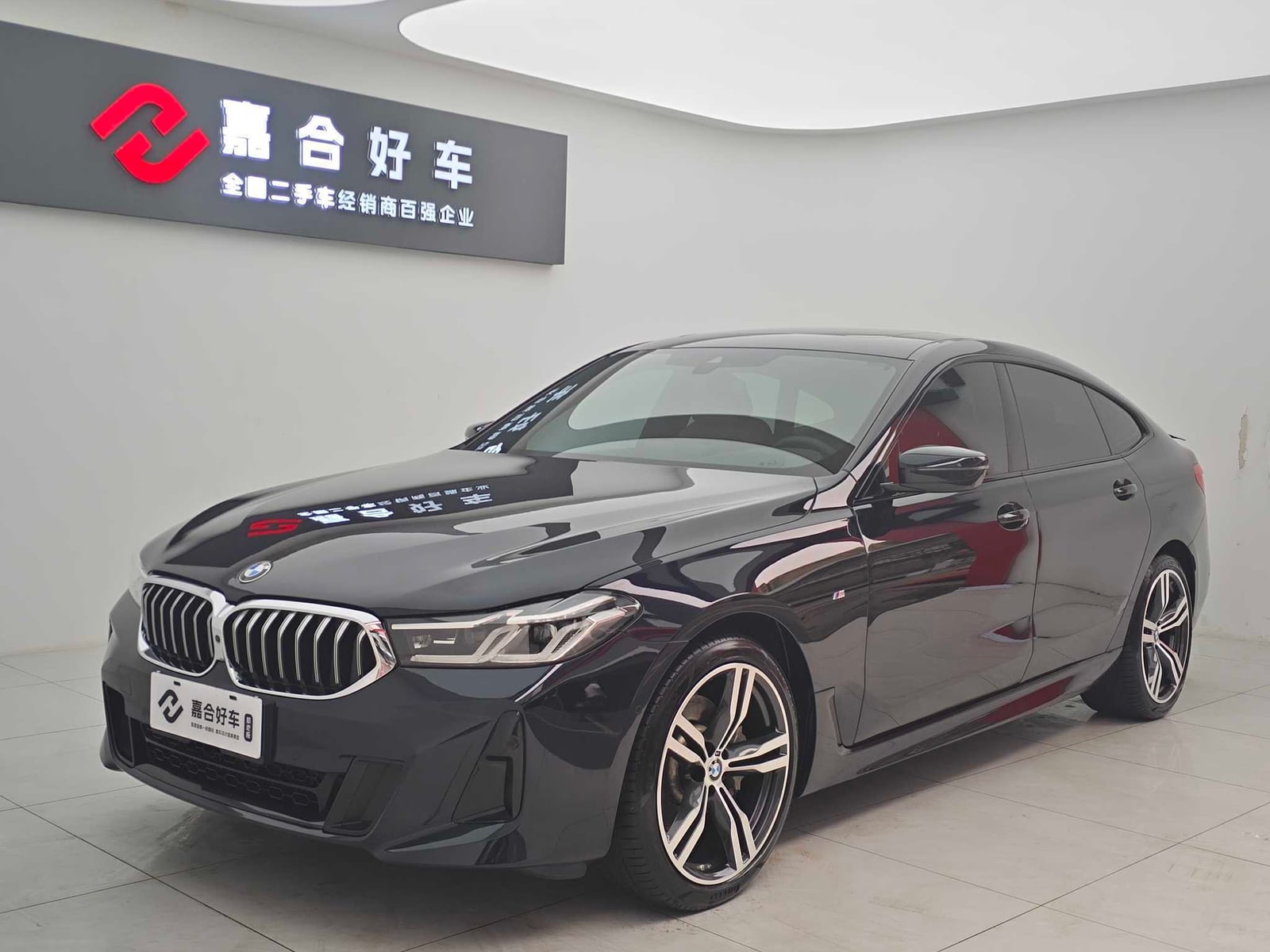
A dark grey 2020 BMW 630i M Sport and a black 2022 example show why the same badge does not guarantee the same factory specification. China-market documents list 190 kW for the earlier car and 180 kW for the later one, with 400 Nm in both. G32 generation, body practicality, model-year versus production date, inspection priorities and export paperwork explained.
Why the 6 Series GT Needs a Different Kind of Comparison
The BMW 6 Series Gran Turismo is easy to misclassify. It has a saloon-like nose, a long roof and a hatchback rather than a conventional boot. It is not an SUV, not a two-door 6 Series coupé and not an M6. Its appeal is the combination of a long-wheelbase cabin, rear-wheel-drive BMW mechanicals and a large opening for luggage.
The two cars photographed for this guide are a 2020 630i M Sport in dark grey and a 2022 630i M Sport in black. At first glance they appear to be the same specification two years apart. China-market documents reveal a more useful comparison: the 2020 version is listed with 190 kW, while the 2022 version is listed with 180 kW, and both produce 400 Nm.
For an export buyer, that makes three questions more important than the badge. Which exact China-market variant is being offered? Which factory calibration appears in its documents? And how does the car's condition compare with the small difference in factory output?
💡Key Insight: Use the model-year and market-specific specification, not a generic overseas 630i page. A figure that is correct for one country or model year can be wrong for the vehicle being shipped.
G32, the Facelift and the M Sport Badge
The 6 Series GT is the G32, launched in 2017 and updated with a facelift in 2020. BMW's global press material for that update described revised exterior details and cabin technology. Both photographed cars have the facelifted front-end appearance and the later digital instrument layout, but they should still be identified by their China-market model-year documentation rather than by appearance alone.
The M Sport designation describes an equipment and styling package. It does not turn the car into an M model and does not by itself indicate a more powerful engine. The 630i remains a four-cylinder petrol version in both cases. Other engines and all-wheel-drive variants existed in the wider G32 range, but these two cars are rear-wheel drive.
Model year and production date are separate fields. A vehicle described as a 2022 model can have been built later, just as a 2020 model-year description does not tell you the month it left the factory. Registration, customs and shipping documents should preserve that distinction. Do not silently change a car's model year to match a later production date, or describe the production year as if it were the model year.
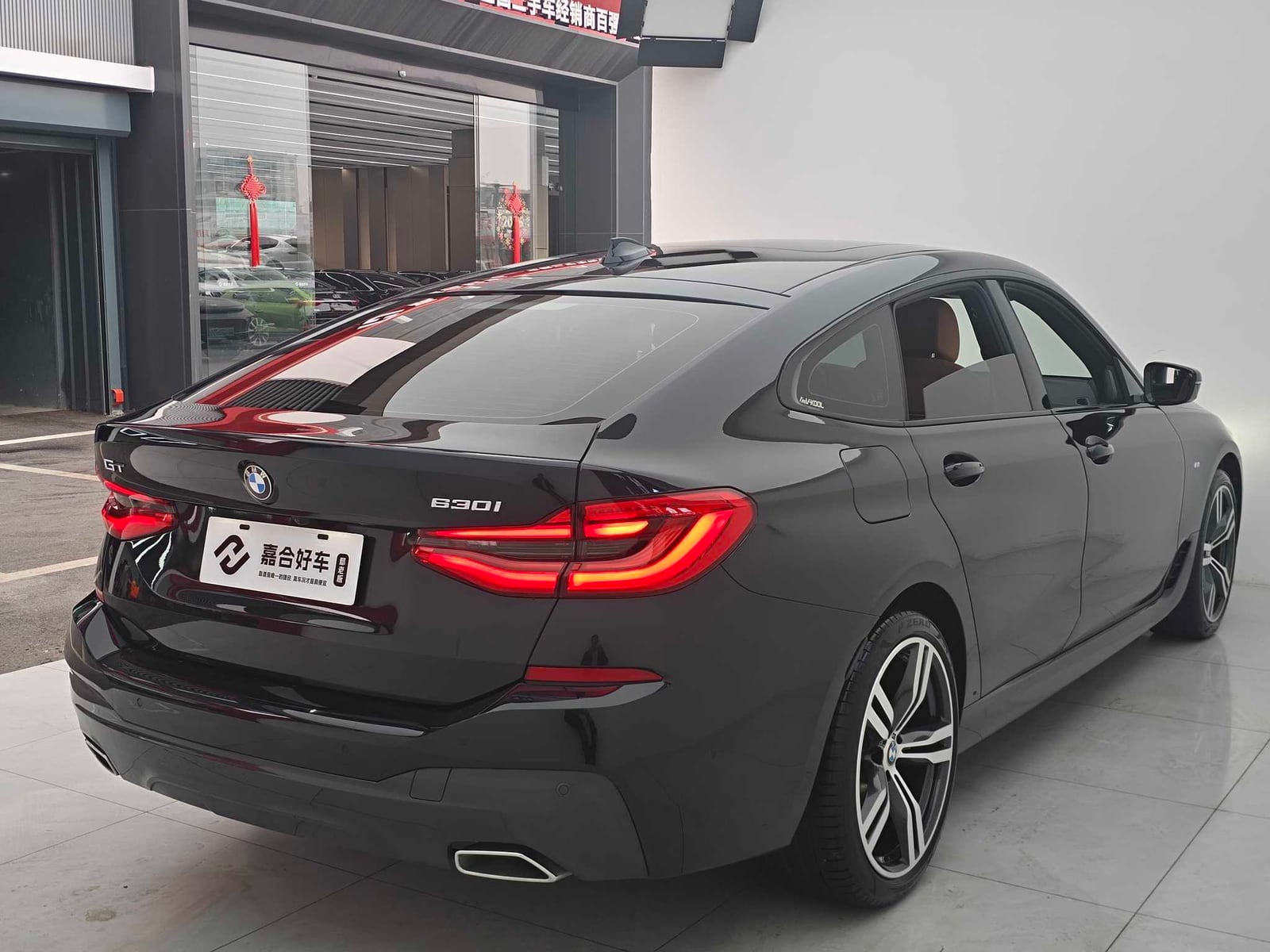
*2022 BMW 630i M Sport, black.*
China-Market Specifications: What Changed and What Did Not
| Item | 2020 630i M Sport | 2022 630i M Sport |
|---|---|---|
| Engine family | B48B20B | B48B20B |
| Displacement | 1,998 cc, four-cylinder turbo | 1,998 cc, four-cylinder turbo |
| Listed maximum power | 190 kW | 180 kW |
| Listed peak torque | 400 Nm | 400 Nm |
| Torque range in model documentation | 1,550–4,000 rpm | 1,600–4,000 rpm |
| Transmission | Eight-speed automatic | Eight-speed automatic |
| Drive layout | Rear-wheel drive | Rear-wheel drive |
| Length / width / height | 5,103 / 1,904 / 1,550 mm | 5,103 / 1,904 / 1,550 mm |
| Wheelbase | 3,070 mm | 3,070 mm |
| Seats | Five | Five |
The shared dimensions and engine family explain the similarity. The different power listing explains why a buyer should not assume that the newer car has simply received more of everything. Both cars keep the same torque headline, so this is not a comparison between a four-cylinder and a six-cylinder, or between rear-wheel drive and xDrive.
There is also a market warning. BMW material for some other countries lists a 630i with 190 kW. That does not prove that every China-market 2022 car has the same rating. Chinese model-specific pages for the 2022 car and BMW China's later specification sheet use 180 kW. For parts, diagnostics and export declarations, the vehicle's own plate and registration data take priority.
The published torque ranges differ slightly as well. On paper, the 2020 car's range starts at 1,550 rpm and the 2022 car's at 1,600 rpm. That is not a reason to predict a noticeable difference in isolation. Intake condition, fuel quality, service history, transmission behaviour and software can all affect how the engine feels.
*2022 BMW 630i M Sport, black.*
Does the 10 kW Difference Matter?
A difference of 10 kW should be documented, but it should not dominate the buying decision. Both engines have the same displacement and the same quoted torque. In normal road use, the condition of the individual car and the way the automatic gearbox responds are likely to reveal more than the numerical gap.
Do not invent a reason for the change. Emissions rules, engine management and model-year specifications can differ, but the documents reviewed for these two cars do not, by themselves, establish why BMW used different ratings. A seller who claims that one car is simply a de-tuned version of the other should be asked for factory evidence.
During a road test, compare like with like. Start both cars cold if possible, check warm idle, and use the same road and fuel grade. Acceleration should be smooth without misfire or repeated hesitation. Boost should build progressively, and the gearbox should not hunt aggressively between ratios. If one car feels substantially weaker than expected, investigate its fault codes, service state and fuel before blaming the published rating.
The Chinese model documentation specifies 95 RON petrol. Export buyers should confirm the requirement on the actual vehicle and compare it with local octane labels and reliable fuel supply. Poor fuel can distort any comparison between two otherwise similar turbocharged cars.
Body, Cabin and Everyday Practicality
The long wheelbase is central to the 6 GT's character. It gives rear passengers more room than a typical compact fastback while leaving the driver in a saloon-like position. This is a car for people who regularly use the rear seats but do not want a tall SUV.
The hatch is equally important. A conventional saloon boot limits the height and shape of luggage; the GT's rear opening makes bulky items easier to load. Check the actual items the owner expects to carry, including their width and height with the rear seats in place. A large opening does not make every item suitable, and the sloping roof still shapes the load area.
Both cars have frameless side windows. They contribute to the coupé-like appearance but add inspection points. The glass should align correctly with the roof seals, close without abnormal resistance and remain free of persistent wind noise. Water marks on the rear belts, carpets or door trims deserve investigation.
Rear-seat mechanisms, the parcel area and the tailgate should all be operated. The hatch is heavy and relies on seals, wiring and powered assistance where fitted. Test it repeatedly from the key, the cabin control and the exterior handle. Listen for strained operation and check that it closes flush without trapping the rear glass seal.
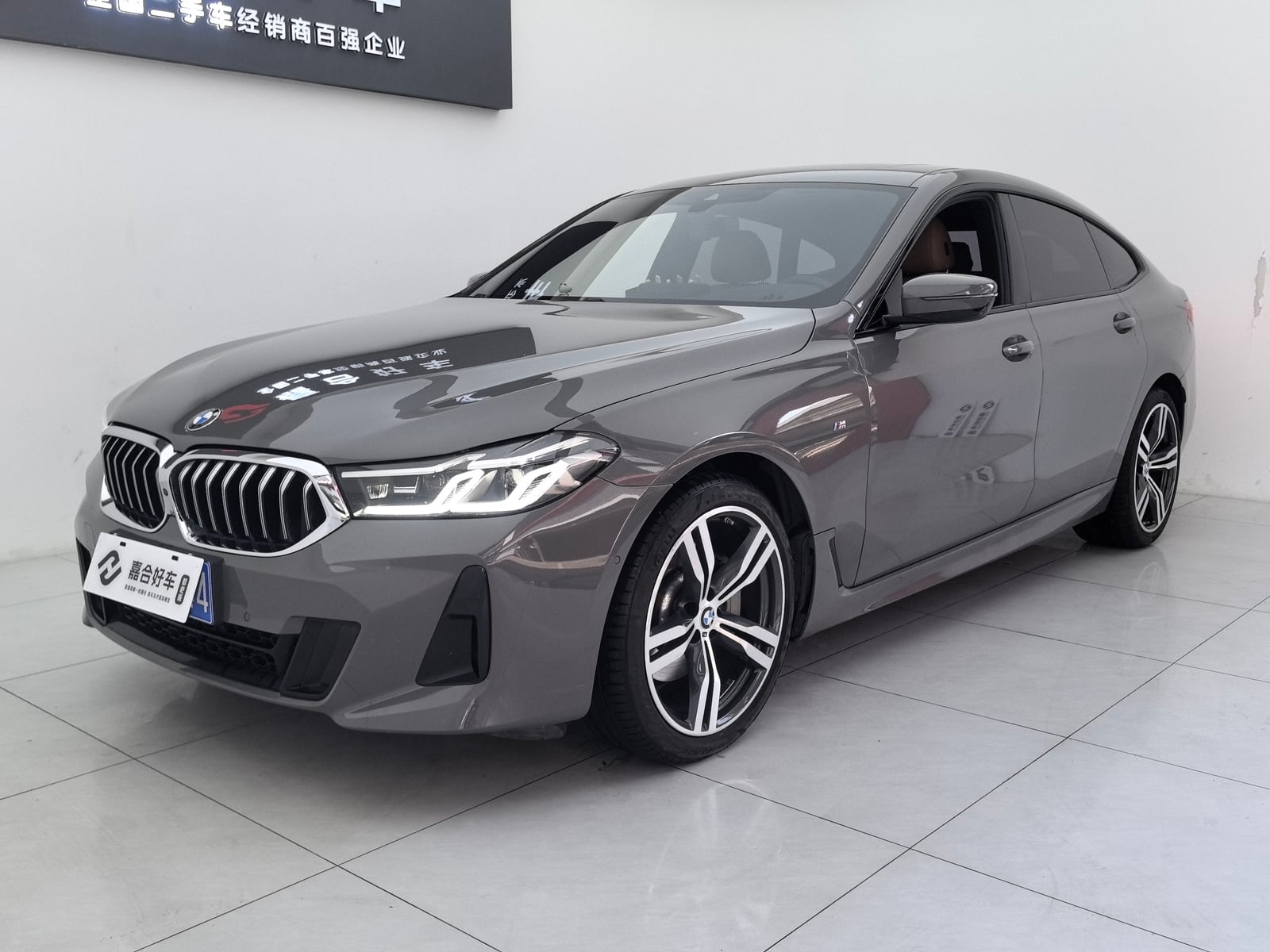
*2020 BMW 630i M Sport, dark grey.*
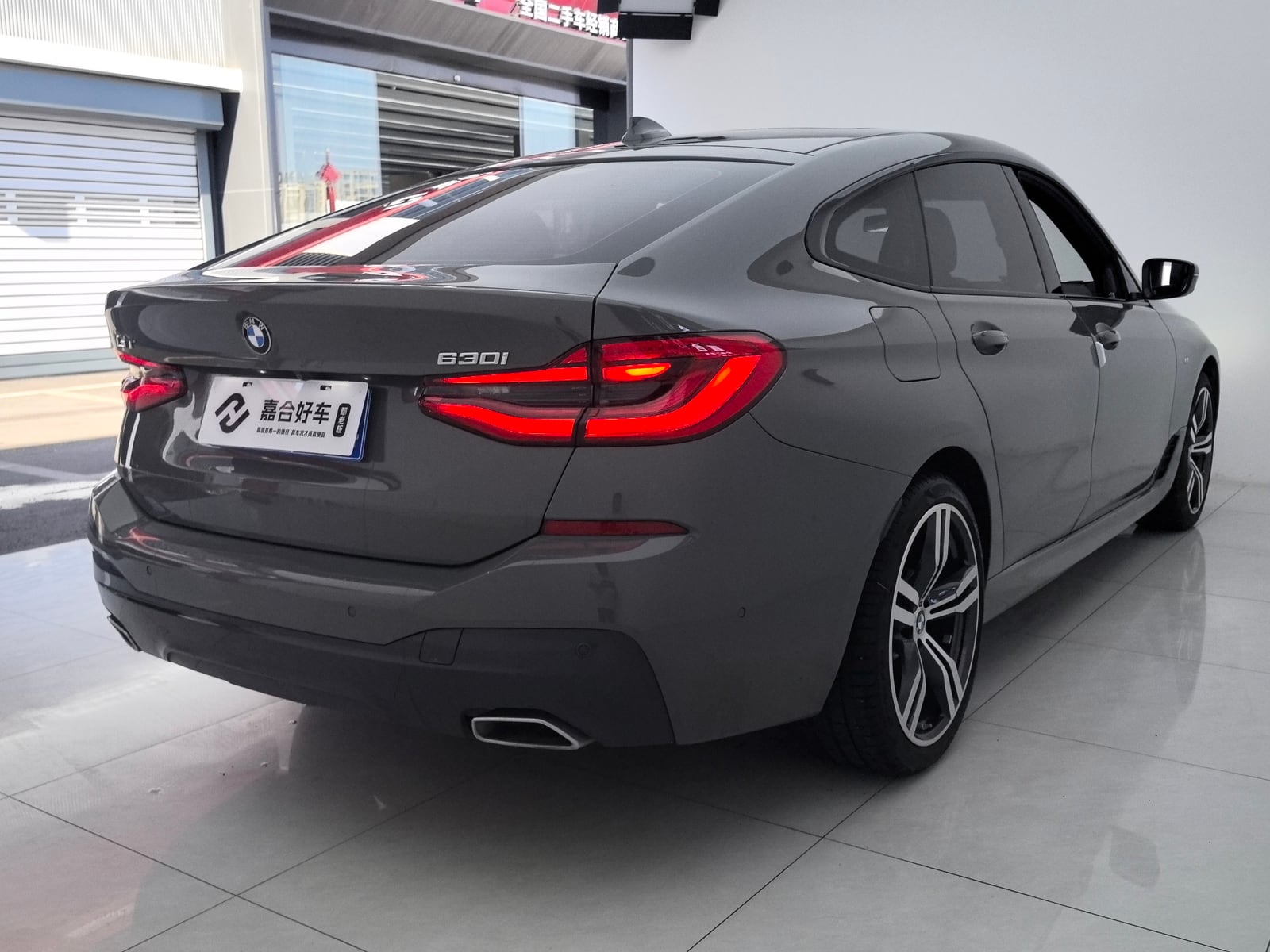
*2020 BMW 630i M Sport, dark grey.*
Equipment and Software: Verify the Car, Not the Package Name
The two cabins show the later digital dashboard, central infotainment screen and head-up display. Even with similar visible hardware, do not use that observation to assume every driver-assistance function or connected service is active. M Sport tells you about the package, not the complete option list.
Test the features individually: camera views, parking sensors, adaptive lights where fitted, seat adjustment, steering-wheel controls, climate zones and the head-up display. Check whether warning messages appear after the car has been stationary and whether they return during a drive. A screen that works in a showroom can still hide stored faults.
BMW ConnectedDrive, online navigation, voice services, remote functions and account login may be region-dependent on a China-market car. Maps and real-time services may not transfer to the destination. Ask which functions work without the previous owner's account and whether the menu language can be changed. Treat smartphone integration as a separate test with the buyer's own phone.
Factory options also affect parts. Headlamps, instrument displays, seat modules and driver-assistance sensors should be ordered from the exact vehicle configuration, not from a generic G32 catalogue entry.
Inspection Priorities for a Used 630i GT
Engine and cooling. Inspect for oil residue around the top and sides of the engine, coolant marks around hoses and evidence of recent cleaning. Listen for cold-start rattles and check for unstable idle, smoke or repeated misfire. Service records should identify oil specification and maintenance dates rather than simply saying “recently serviced”.
Turbocharger and fuelling. Road-test with the engine fully warm. Abnormal whistles, fluctuating boost or warning lights need diagnosis. Read stored and pending fault codes, not only the active dashboard display.
Eight-speed automatic and rear driveline. Engagement into Drive and Reverse should be prompt. Low-speed shifts should be controlled, without repeated bangs or shudder. Inspect for oil leaks and listen for differential or wheel-bearing noise during a steady drive.
Suspension, steering and brakes. Drive over uneven surfaces and listen for knocks from either end. If the vehicle has air suspension equipment, test height changes and check for warnings or uneven resting height. Measure brake components and inspect for vibration, pulling or uneven tyre wear.
Hatch, spoiler and frameless doors. Operate the powered tailgate and any movable rear spoiler equipment where fitted. Look for water at the rear seal and damaged wiring in the hinge area. Check every window's drop and final closing position, the door seals and wind noise.
Body and structure. Compare panel gaps and paint under neutral light. Inspect fasteners on the bonnet, wings, doors and tailgate, then examine the inner seams and floor. Paint-thickness readings and a lift inspection are more useful than polished photographs.
Electronics and water ingress. Test every seat motor, screen, camera, mirror, lock, lamp and climate function. Inspect the headlining, footwells and luggage floor for dampness. A panoramic roof and frameless windows both make drain and seal checks important.
Export Documents and Destination Preparation
Factory plates for the photographed vehicles identify BMW production in Dingolfing, Germany. That origin can matter for a customs file, but it does not replace the Chinese registration and export records. Keep the origin, engine code, model year, production date and vehicle identity consistent across every document.
The export file should include the available registration records, purchase and customs documents, inspection report and clear photographs of the required identification plates. Resolve differences in model description before booking transport. A “2022 model” and a later production month can both be correct if they are entered in their proper fields.
Emissions and age eligibility must be checked against the destination's official rules and the individual car's documents. Do not infer them from the G32 generation or from a global press release. Left-hand-drive suitability, lighting requirements and any local inspection process should be settled before shipment.
Parts support needs to be planned by engine code and option level. Routine service items are only the beginning; tailgate components, frameless-window seals, digital displays and body panels may need to be sourced internationally. Identify a workshop with BMW-compatible diagnostics and clarify which connected services will cease to work after export.
Which Buyer Does Each Car Suit?
The 2020 630i M Sport suits a buyer who specifically wants the earlier China-market 190 kW listing and finds a car whose service history and road test support it. The 2022 630i M Sport suits a buyer who prioritises the later model year and accepts its documented 180 kW calibration.
Neither choice should be made from that one number. A clean inspection, correct paperwork and usable software in the destination are more important. Buyers who need seven seats, a high SUV seating position or a six-cylinder engine should compare a different vehicle entirely.
Questions Buyers Ask
Are these cars six-cylinder models? No. Both 630i versions covered here use a 1,998 cc four-cylinder turbo engine.
Does M Sport mean M6 performance? No. M Sport is an equipment and styling package, not the M6 model.
Are the 2020 and 2022 cars different generations? No. They are China-market versions within the G32 family and share the facelift-era layout.
Is every 2022 630i rated at 190 kW? No. China-market 2022 documentation reviewed for this guide lists 180 kW. Always use the individual car's own records.
Can the production year differ from the model year? Yes. Record both separately in registration and export documents.
Next Step
Tell us which 630i GT you are considering and where it will be registered. We can structure the vehicle-specific file around its engine code, model year and production date: cold-start and driving footage, diagnostic results, transmission behaviour, hatch and frameless-window operation, underbody and paint inspection, available service records and the export documents required for the destination.
Specification note: Figures in this guide come from the cited China-market model-year documents and the vehicles' factory information. Always re-confirm engine output, equipment, model year and production date against the individual vehicle's registration and export documents before purchase.
Lexus LX Buyer Guide: 2019 LX 570 V8 vs 2022 LX 600 Twin-Turbo
Product Research Team

Range Rover Buyer Guide: 2019 Supercharged V6 vs 2022 Ingenium Inline-Six
Product Research Team
Land Rover Defender Buyer Guide: 2023 HSE vs 2025 X-Dynamic Black Compared
Product Research Team