Bentley Bentayga Buyer Guide: 2018 V8 Standard Wheelbase vs 2023 V8 EWB
Comparing a 2018 Bentley Bentayga 4.0 V8 in white with a 2023 Bentayga Extended Wheelbase in gold, both photographed for this guide: why the two cars share a 550 PS twin-turbo V8, an eight-speed automatic and all-wheel drive but differ in wheelbase, rear cabin and infotainment, what the EWB's extra 180 mm and airline-seat rear compartment change, what a used Bentayga must be inspected for, and how emissions, parts and destination rules shape the export decision.
The SUV That Made a Luxury Brand Useful
The Bentley Bentayga arrived in 2015 as a W12 luxury SUV, and the 4.0-litre twin-turbo V8 followed in 2018. The V8 is the version that makes the car usable every day: lighter, less complex and less expensive to run than the W12, while keeping the refinement and performance that define the brand.
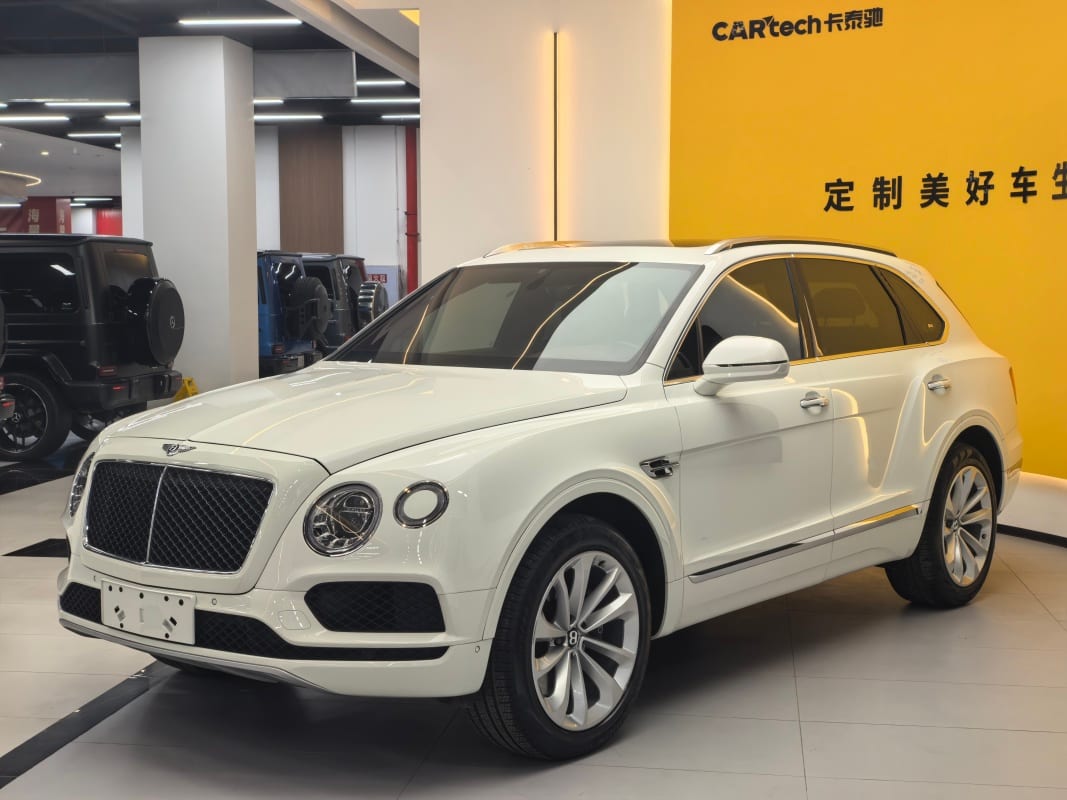
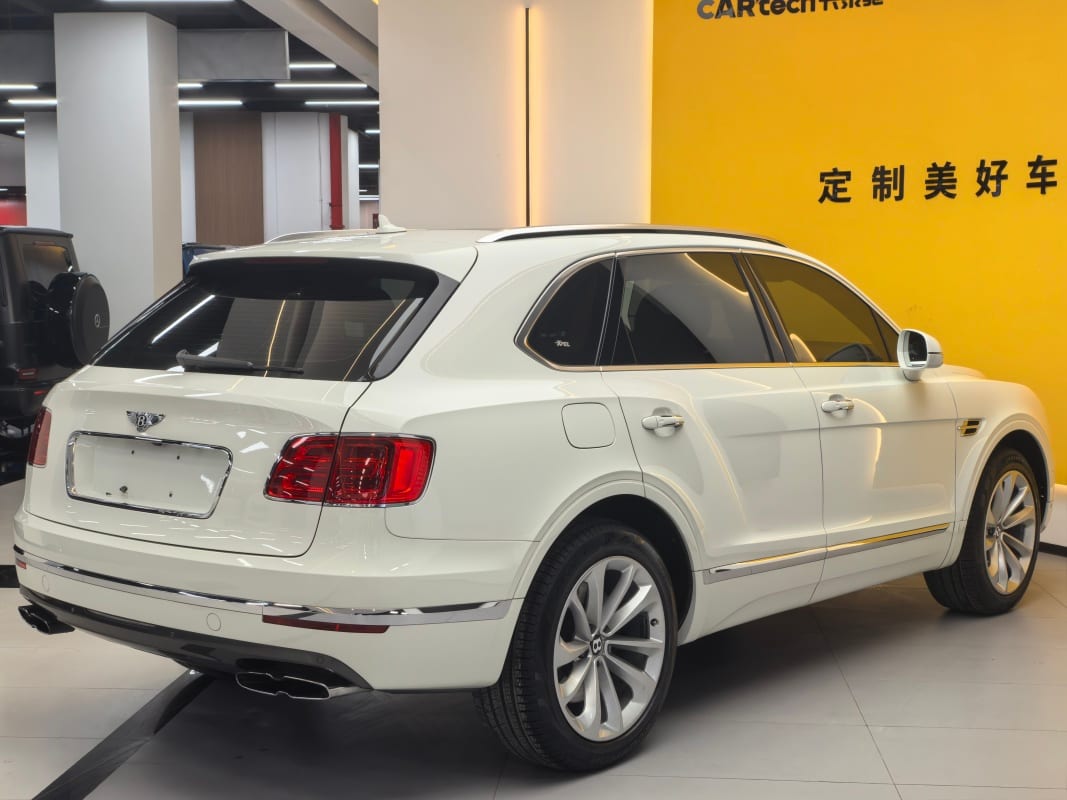
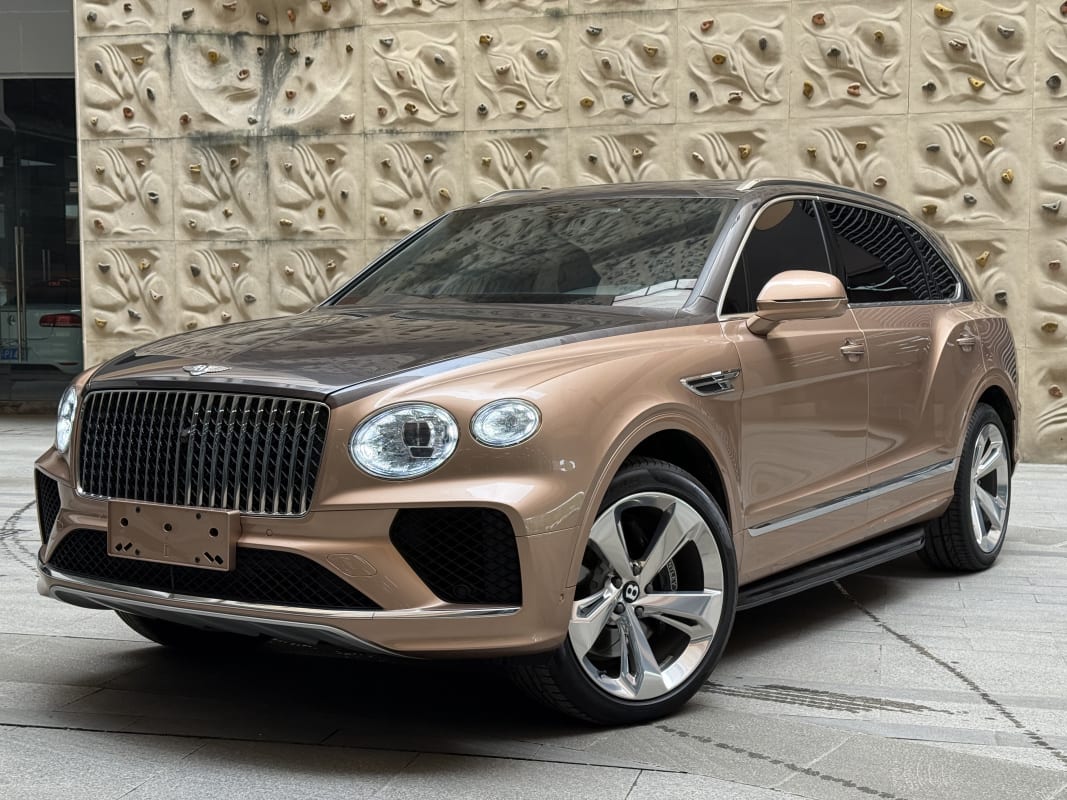
The two cars photographed for this guide are a 2018 Bentayga 4.0 V8 in white and a 2023 Bentayga Extended Wheelbase in gold. They share the same engine, the same eight-speed automatic and all-wheel drive, but they are aimed at different buyers. The 2018 car is a standard-wheelbase, pre-facelift Bentayga with an older cabin. The 2023 EWB is the long-wheelbase version with 180 mm more between the axles, a rear compartment designed around passengers, and the newer infotainment.
For an export buyer, that is a more useful distinction than model year. One is a driver's luxury SUV; the other is a chauffeur's. The engine is the same, so the decision is about rear space, technology, condition and the level of service support at the destination.
The Bentayga Generations
The Bentayga line is easy to read if you separate three things: engine, facelift and wheelbase.
- 2015-2018: first generation, launched with the 6.0-litre W12. The 4.0 V8 arrived in 2018, and a V8 Speed and other variants followed.
- 2020-2021 facelift: new lights, a new grille, a revised interior with a larger 10.9-inch central screen, digital instruments and updated connectivity.
- 2022 onward (2023 model year): the Extended Wheelbase version added 180 mm to the wheelbase, from 2,995 mm to 3,175 mm, and stretched the body from 5,125 mm to 5,305 mm. Most of the added length sits in the rear door and the rear cabin.
The 2018 car here is a V8 from before the facelift. The 2023 car is an EWB with the facelift's technology. A 2021 or 2022 standard-wheelbase car would be the middle point: facelifted cabin, standard rear space.
Engine and Drivetrain: Same V8 in Both
Both cars use the 4.0-litre, 32-valve, twin-turbocharged V8 producing 550 PS (404 kW) and 770 Nm, with cylinder deactivation and stop-start. The 2018 car reaches 100 km/h in 4.5 seconds and 290 km/h; the EWB is marginally slower off the line because of its extra weight, quoted around 4.6 seconds, with the same 290 km/h top speed.
The gearbox is an eight-speed automatic driving all four wheels through a Torsen-based all-wheel-drive system. The V8 is smoother and quieter than the W12 at low speed and uses less fuel, but it is still a heavy, powerful SUV: official combined consumption for the 2018 V8 was about 11.4 litres per 100 km, and real-world use in city traffic will be higher.
Both require high-octane petrol. In markets where 95-octane is not reliably available, that is a real ownership issue: performance, knock control and long-term engine health all depend on fuel quality.
Chassis, Brakes and Ride
Air suspension is standard on the Bentayga, with adaptive dampers and multiple drive modes. The system gives the car its dual character: soft and isolated in comfort mode, much more controlled in sport. Bentley's 48-volt active anti-roll system, Bentley Dynamic Ride, was available as an option, and all-wheel steering is offered on the EWB.
The 2018 car is already a heavy SUV at around 2.4 tonnes, and the EWB is heavier still. Brakes and tyres are therefore consumables that matter. Optional carbon-ceramic brakes reduce unsprung mass and improve fade resistance, but replacement discs and pads are expensive. Inspect disc condition, pad thickness and tyre matching carefully on any used example.
All-wheel steering on the EWB reduces the turning circle and makes the longer body easier to place in town, but it adds another system that needs inspection and calibration after suspension work.
Standard Wheelbase Versus EWB
The EWB's extra 180 mm is not a styling exercise. It transforms the rear compartment. Rear legroom increases substantially, the rear doors are longer, and Bentley offers airline-style rear seats with extended recline, ventilation, massage and individual climate control. A four-seat layout turns the EWB into a genuine chauffeur car; a five-seat layout keeps it practical for a family.
The standard-wheelbase car has a more conventional rear bench and a larger, squarer boot. The EWB's boot is smaller, around 380 litres versus roughly 484 litres for the standard car, because the longer rear cabin takes space. If luggage capacity matters more than rear legroom, the standard car is the better package.
The EWB is also harder to park and slightly less agile. The standard car is the better driver's car; the EWB is the better passenger's car. That is the central choice.
Cabin and Technology
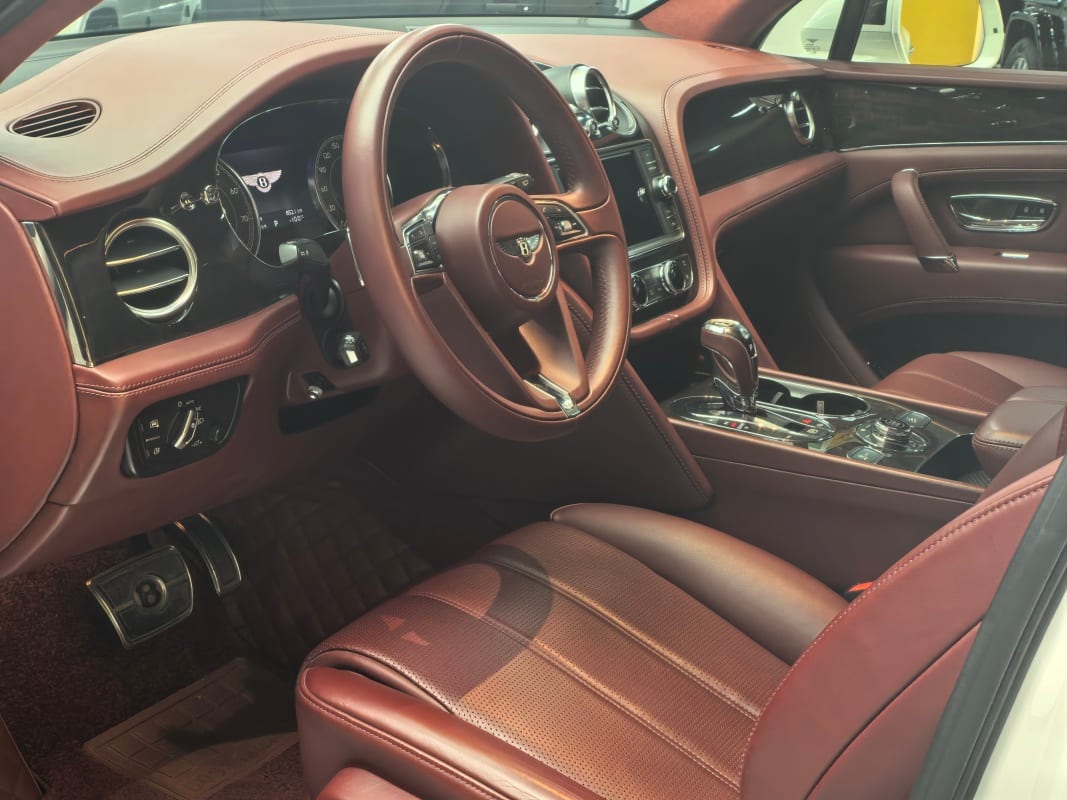
The 2018 cabin is pre-facelift: analog instruments, an 8-inch central screen, physical buttons for most functions and the older infotainment architecture. It is beautifully finished but technologically dated. Check whether navigation, phone integration and online services work in the destination, because some functions were designed for the Chinese market.
The 2023 EWB uses the facelift's technology: a 10.9-inch central touchscreen, digital instruments, updated connectivity and a cleaner interface. The rear compartment adds its own controls and, on some cars, entertainment screens and airline-seat adjustment. These are expensive components, and a faulty rear mechanism can cost as much to repair as an engine sensor.
Both cabins use expensive materials. Leather, veneer, stitching, chrome and glass are durable but costly to repair. Inspect seat bolsters, door cards, switchgear and the headliner for wear, and check the panoramic roof and sunshades for leaks and operation.
What a Used Bentayga Inspection Must Cover
Air suspension and steering. Check ride height at all four corners, listen for the compressor, look for leaking struts and confirm there are no suspension warnings. On the EWB, test all-wheel steering operation and confirm the system has been calibrated after any suspension work.
V8 engine. Check for oil leaks at the cam covers, timing covers, sump and turbochargers, coolant leaks at the radiator, hoses and water pump, and listen for turbo noise, exhaust leaks and misfires. Confirm the oil specification and service history, and scan for stored faults.
Transmission and driveline. Test the eight-speed automatic from cold and warm, at low speed and under load. Check for delayed engagement, shudder and harsh shifts. Inspect the transfer case, prop shafts and differentials for leaks and noise.
Brakes, tyres and wheels. Measure discs and pads, check for uneven wear and confirm the tyres match. On carbon-ceramic cars, inspect the discs for chips and surface damage; replacement is costly.
Body and structure. Check panel gaps, paint match, overspray and repair marks. Inspect the roof, A-pillars and sills for accident repair. On the EWB, check the longer rear doors for alignment and seal condition.
Electrics and cabin. Test every screen, camera, sensor, seat motor, window, lock, climate zone and audio function twice. On the EWB, test the rear-seat recline, ventilation, massage and rear entertainment systems.
History and identity. Match the VIN, model year, engine, wheelbase and options to the documents. Verify the mileage against service records and check for accident damage, rental or fleet use, and repeated paintwork.
Export Paperwork and Destination Rules
Chinese-market Bentayga cars are left-hand drive, which suits the Middle East, Central Asia, Africa, Russia and Latin America in principle. Eligibility depends on each destination's emissions, age and registration rules, and those rules can differ by city as well as by country.
The export file should include the registration certificate, factory specification sheet, purchase invoice, export licence documentation, customs declaration, service records and an independent inspection report, with photographs of the VIN plate, engine number and odometer.
Parts and diagnostics are the practical constraint. Bentley has a global network, but Bentayga-specific body panels, lights, air suspension components and electronic modules are expensive and may need to be ordered. A destination without a Bentley dealer needs an independent workshop with appropriate diagnostic equipment, particularly for the EWB's newer electronics.
Fuel quality matters: both cars require high-octane petrol. In markets where that is not reliably available, the owner should plan for octane boosters or accept reduced performance and potential knock.
Buyer Questions
Is the EWB mechanically different from the standard car? The engine, gearbox and all-wheel-drive system are essentially the same. The differences are the longer wheelbase and body, the rear cabin, the weight and the newer infotainment and options.
Which is better for export? If the car will be driven by its owner, the standard-wheelbase car is simpler, more agile and has a bigger boot. If it will be used with a driver or for executive transport, the EWB's rear cabin is the reason to buy it.
V8 or W12? The V8 is lighter, less complex and cheaper to run, with performance that is more than adequate. The W12 offers more character and top-end performance but higher fuel and maintenance costs.
Pre-facelift or facelift? The facelift brings a much better infotainment system and digital instruments. The pre-facelift car is mechanically familiar and well supported by independent specialists.
What is the biggest used-buying risk? Air suspension faults, hidden accident repair, neglected transmission service and expensive cabin electronics. A pre-purchase inspection by a Bentley specialist is worth the cost.
Next Step
Tell us which Bentayga you are considering and how you intend to use it — owner-driven, chauffeur-driven, family transport or collection car — and we will send the file for that specific unit: a full inspection report, factory specification sheet, cold-start and driving video, close-ups of the air suspension, brakes, underbody and rear-cabin mechanisms, an honest assessment of the emissions and registration route in your country, and the export documents we hold. If you are deciding between the two cars in these photographs, say so: we will walk through the differences against your passengers, your roads and your workshop support.
Lexus LX Buyer Guide: 2019 LX 570 V8 vs 2022 LX 600 Twin-Turbo
Product Research Team
Range Rover Buyer Guide: 2019 Supercharged V6 vs 2022 Ingenium Inline-Six
Product Research Team
Land Rover Defender Buyer Guide: 2023 HSE vs 2025 X-Dynamic Black Compared
Product Research Team