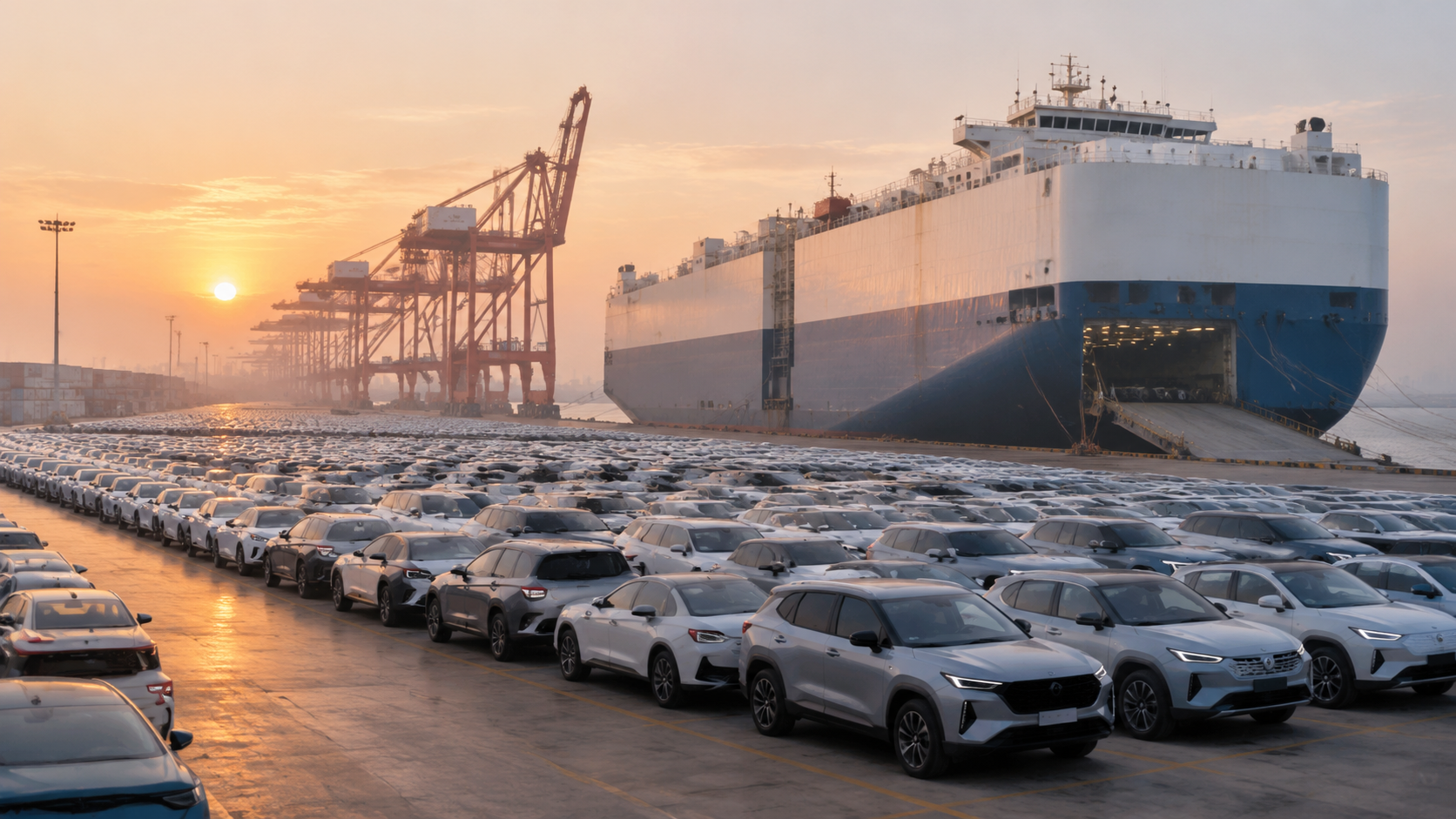
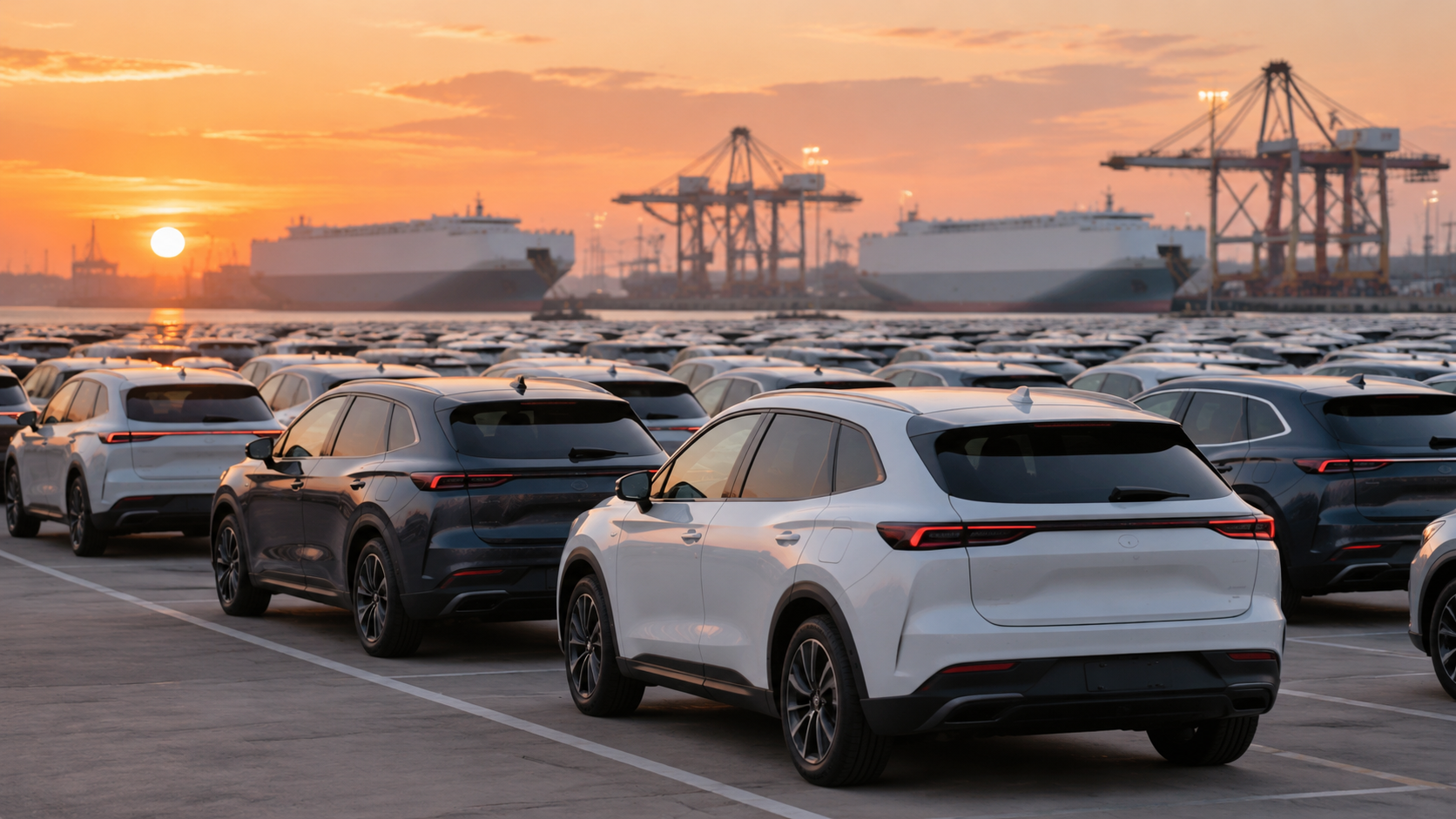
China's 4 November Recall Wave: More Than 800,000 Vehicles and What Buyers Should Know
On 4 November 2026 China's market regulator published a group of recall notices covering more than 800,000 vehicles, according to a tally by Cailianshe. The largest single campaign covers 388,258 domestic Audi Q3s built from June 2018 to September 2025, where a right-side bolt fixing the subframe to the steering gear can corrode and break; the free remedy does not begin until 15 January 2027. Toyota filed four campaigns the same day, including 47,347 Prado hybrids and 8,130 Lexus GX550h hybrids for a fuel-line connector that can come loose after a regulator investigation, plus software and fastener recalls on its bZ electric models. MINI, Lotus and Jeep were also named. For used-car buyers and exporters the practical question is not the headline total but whether a specific car has had its remedy, and whether a China-market campaign will ever reach a car that leaves the country.
What Happened
On 4 November 2026 China's State Administration for Market Regulation (SAMR) published a group of vehicle recall notices on the same day. A tally by the financial news service Cailianshe put the combined scope at more than 800,000 vehicles.
The brands named in the notices include Audi and Volkswagen (imported and joint-venture), Toyota and Lexus through their China ventures, MINI, Lotus and Jeep. The defects range from a corroding steering bolt and a fuel-line connector to software calibration and fastener torque.
Two numbers make the total easier to understand. The Volkswagen Group filings alone cover about 610,000 vehicles according to Chinese automotive press, and Toyota's four campaigns total 176,737. The remainder comes from the other brands.
The Largest Campaign: Audi Q3 and a Steering Bolt
The single biggest filing is FAW-Volkswagen campaign S2026M0141V: 388,258 domestic Audi Q3s built between 20 June 2018 and 15 September 2025.
The defect is a right-side bolt that fixes the subframe to the steering gear. According to the notice, water and road salt can corrode the bolt until it breaks. If it breaks, the right-hand connection between the steering gear and the subframe is lost, and steering becomes restricted.
The remedy is a free replacement with an improved bolt. Owners are advised to stop driving if they hear abnormal metal knocking from the front axle or notice unusual steering behaviour.
The timing matters: the recall begins on 15 January 2027, more than two months after the notice. Until then, affected cars on the road have no official remedy available.
Other Volkswagen Group filings that day cover the imported Golf and 途威 (22,036), the 途昂, 途昂X, 威然 and Audi Q6 (a combined 170,739), and the 揽境 (29,264). The same bolt issue also exists outside China: US safety regulators list campaign 26V590 for the same subframe-to-steering-gear bolt on 2018-2019 Volkswagen Atlas, 2018 Tiguan and 2019-2021 Audi Q3 vehicles.
Toyota: Fuel Line, Fastener and Software
Toyota's China entities filed four campaigns on 4 November, totaling 176,737 vehicles:
- FAW Toyota (Chengdu) S2026M0133I — 47,347 Prado hybrids built from 15 July 2024 to 6 October 2026.
- Toyota Motor (China) S2026M0134I — 8,130 imported Lexus GX550h hybrids built from 28 February 2024 to 1 October 2026.
- GAC Toyota — 100,175 bZ3X electric SUVs, for a front stabiliser-link nut whose design did not account for loosening.
- GAC Toyota — 21,085 bZ7 electric sedans, split between a Comfort Stop software calibration and a camera over-the-air update that could cause unintended steering-wheel movement.
For the Prado and GX550h, the defect is a retainer on a fuel-pipe quick connector that can be lifted by external force. In an extreme case the fuel pipe can come loose and leak. The remedy is a free inspection, the addition of a retaining cover plate, and replacement of the fuel pipe assembly if anything is abnormal.
Notably, the Prado and Lexus campaigns were opened after SAMR started a defect investigation, rather than as a purely voluntary filing.
Why the Dates Matter More Than the Total
A recall notice is not the same as a repaired car. Three details decide what a buyer actually faces:
The remedy may start months later. The Audi Q3 bolt campaign begins on 15 January 2027. A car can be sold, exported or driven thousands of kilometres between the notice and the fix.
The remedy may require a dealer visit. Software campaigns can be delivered over the air, but a bolt, a fuel pipe or a stabiliser nut cannot. In China the work is free; outside China it depends entirely on the local brand network.
The campaign is market-specific. A China-market recall is filed for vehicles sold in China. An identical model exported as a used car is generally not in that campaign database, and the Chinese dealer network has no obligation to perform the work abroad.
What This Means for Used-Car Buyers
If you are buying a used Q3, Prado, GX550h, bZ3X or bZ7 in China, treat the recall as a pre-purchase item, not a footnote:
- Check the VIN against the notices. The recall filings publish production date ranges. A car built inside the range is affected; one built outside it is not.
- Ask for the recall completion record. A dealer can confirm whether the remedy has been performed. For the Audi Q3 nothing can have been done before 15 January 2027, because the campaign has not started.
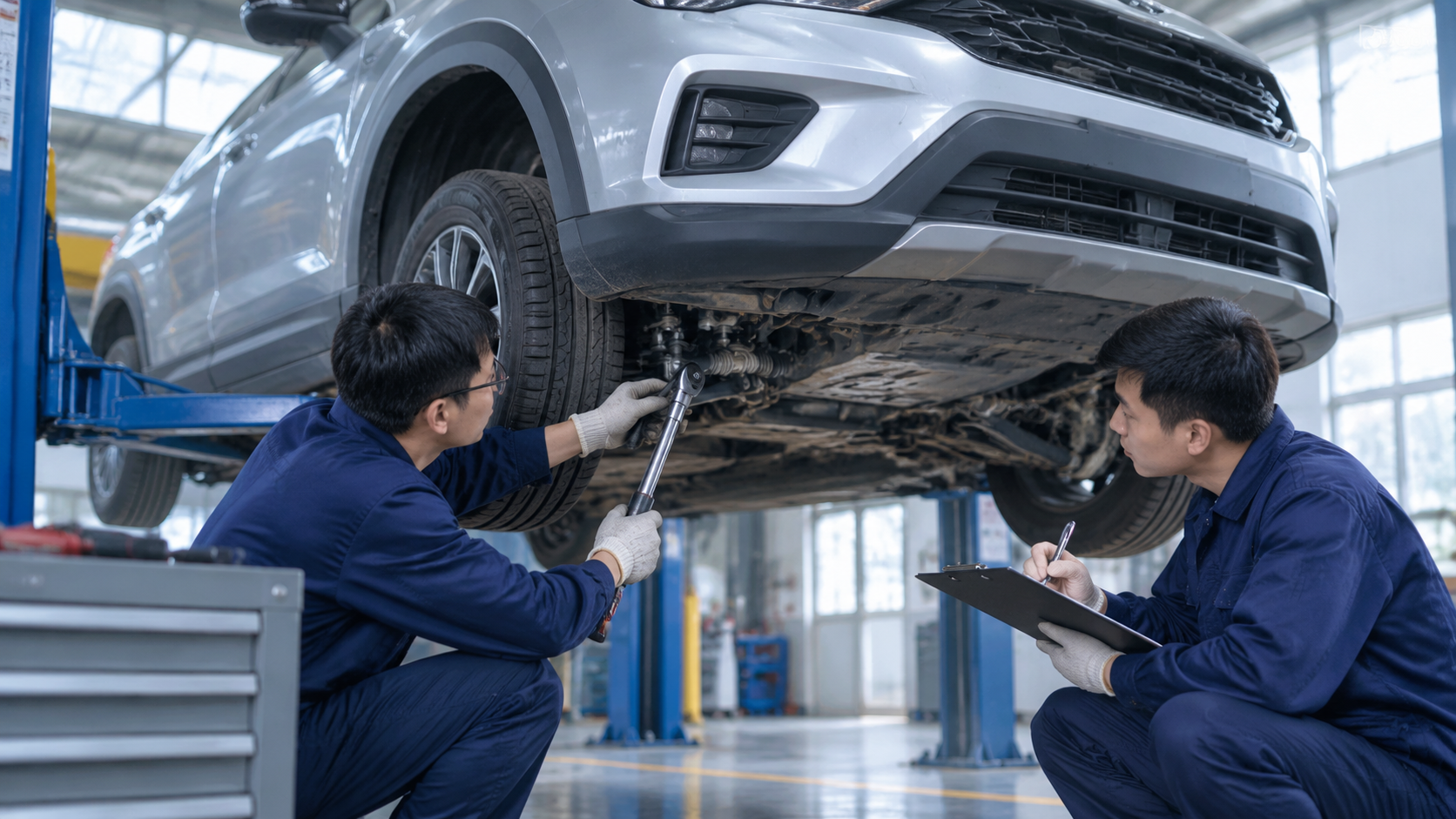
- Inspect the specific part. On the Q3, look at the right-side subframe-to-steering-gear bolt for corrosion. On the Prado and GX550h, look at the fuel-pipe quick connector and its retainer.
- Listen before you buy. Abnormal metal knocking from the front axle under low-speed manoeuvring is the warning sign named in the Q3 notice.
- Do not accept a verbal assurance. A printed recall status from an authorised dealer is worth more than a seller's word.
What This Means for Exporters
For a used-car exporter, the recall wave creates work on both sides of the shipment.
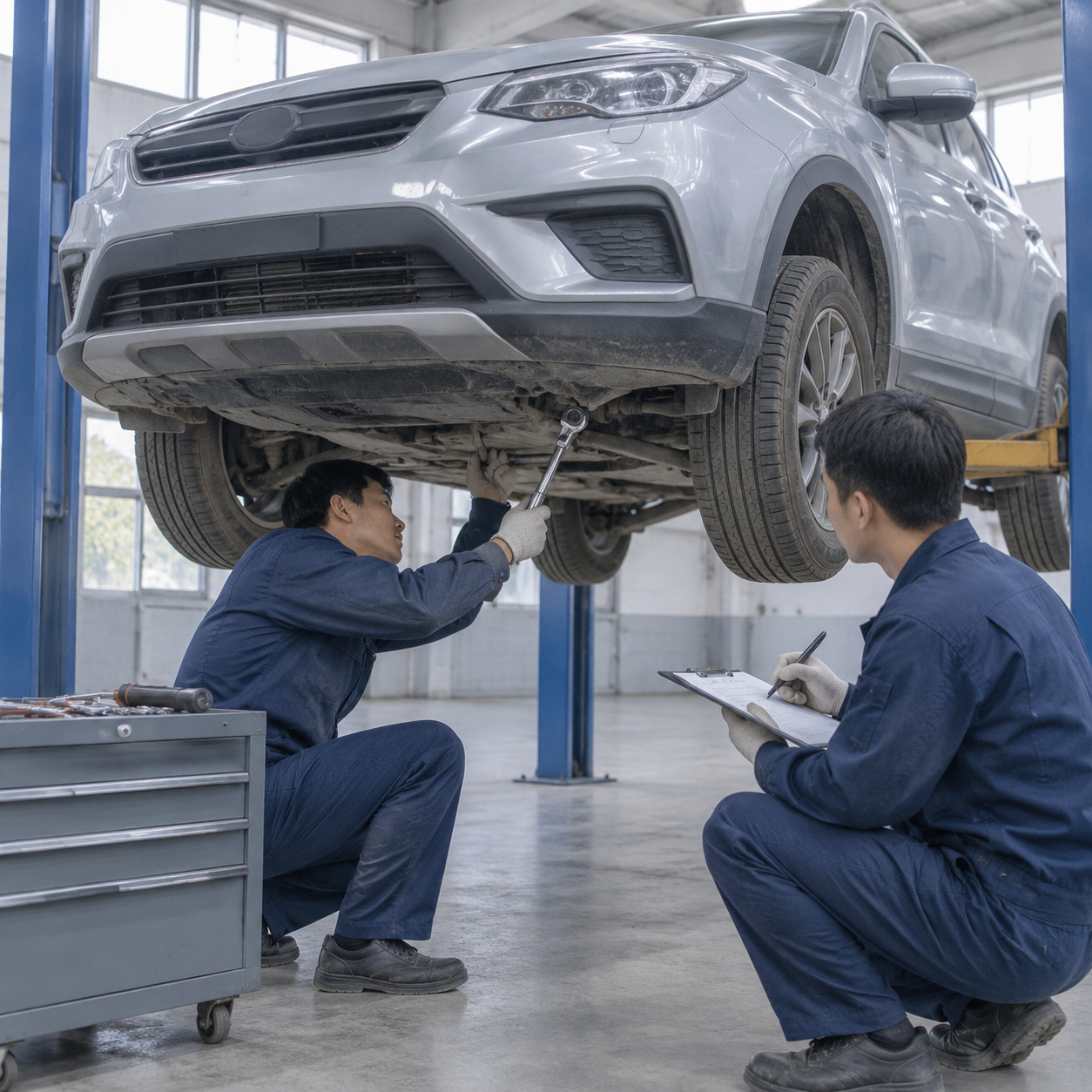
Before export. Confirm the recall status of each unit and photograph the relevant component. If the remedy has not been performed and cannot be performed before shipping, disclose it in the listing. A buyer who discovers an open safety campaign after the container arrives is a dispute, not a sale.
Parts and labour. A bolt replacement is inexpensive; a steering gear or a fuel pipe assembly is not. Price the remedy into the car, and confirm that the destination market can source the improved part.
Documentation. Keep the VIN, build date and recall status in the export file. Some destination markets ask for proof that open safety campaigns have been addressed, and insurers increasingly ask the same question.
Local campaigns are separate. Do not assume that a Chinese recall automatically triggers a campaign in the destination country, or the reverse. The US campaign for the same bolt is a separate filing by a separate entity.
The Bigger Pattern
The 4 November notices fit a pattern that has been visible all year: Chinese regulators are pushing safety campaigns harder, and more of them are being opened after investigations rather than volunteered by manufacturers.
For the used-car trade, that has a straightforward consequence. Recall history is becoming part of a car's condition record, alongside mileage, accident history and battery health. A car with an open safety campaign is not unsaleable, but it is a car that needs a documented plan.
Sources and Scope
- Primary source: SAMR recall notices published on 4 November 2026, including FAW-Volkswagen S2026M0140V and S2026M0141V, FAW Toyota (Chengdu) S2026M0133I and Toyota Motor (China) S2026M0134I.
- Cross-check: Cailianshe report of 4 November 2026 putting the combined scope above 800,000 vehicles; 证券之星 and 汽车之家 reports on the Volkswagen Group filings (about 610,000 vehicles); iXBT and CarNewsChina summaries of the Toyota bZ3X and bZ7 campaigns (176,737 Toyota vehicles in total).
- US reference: NHTSA campaign 26V590, covering the same subframe-to-steering-gear bolt on 2018-2019 Volkswagen Atlas, 2018 Tiguan and 2019-2021 Audi Q3.
- Caliber note: the 800,000 figure is a media tally of the day's notices, not an official SAMR total. Vehicle counts are as stated in the filings. Production date ranges define which cars are affected; this article does not estimate how many of those cars are in the used market or have been exported.
- Caveat: this article does not give repair prices, and does not claim that any particular car is defective. Confirm recall status by VIN with an authorised dealer.