CAAM Forecasts China Auto Exports Above 10 Million in 2026
Speaking on 3 November 2026 at the transport forum of the World Internet of Things Convention, CAAM deputy secretary-general Chen Xu said China's full-year vehicle exports are expected to exceed 10 million units. CAAM data put January-September exports at 8.205 million vehicles, up 65.8% year on year, with more than 4 million new-energy vehicles exported, roughly 1.3 times the year-earlier level; monthly exports have topped one million for four consecutive months, which CAAM says has not happened before. The 10 million figure is a forecast, not a final result, and other statistical calibers such as customs data run higher. Chen also urged companies to build brands and local service networks, put safety first and resist traffic bubbles and price competition.
What Was Said
On 3 November 2026, at the second transport and vehicle connectivity forum of the World Internet of Things Convention, Chen Xu, deputy secretary-general of the China Association of Automobile Manufacturers (CAAM), gave the industry association's latest view of the export market.
His headline message: China's total vehicle exports for 2026 are expected to exceed 10 million units. That is a forecast for the full year, made with two months of data still to come, not a final statistical result.
He also used the platform to argue that Chinese manufacturers should focus on brand-building, local service networks and product safety, and should resist what he called traffic bubbles and pure price competition.
The Numbers and Their Caliber
The export figures Chen cited come from CAAM's own tracking of member companies:
- January-September 2026 vehicle exports: 8.205 million units, up 65.8% year on year.
- New-energy vehicle exports: more than 4 million units, about 1.3 times the year-earlier level.
- Monthly exports have exceeded one million units for four consecutive months, which CAAM describes as a first.
- Vehicle production and sales in January-September: 23.246 million and 23.271 million units respectively, which CAAM describes as broadly stable.
Two points about statistical caliber matter here. First, CAAM's export series is an industry-association measure based on company-reported exports; customs statistics and other trackers use different definitions and typically report higher totals for the same period, so the figures are not directly interchangeable. Second, 8.205 million for nine months does not arithmetically guarantee 10 million for the year: the forecast assumes the current monthly run-rate holds through November and December.
The new-energy share is the part most relevant to export buyers. CAAM's figure implies that roughly half of all vehicles exported in the first nine months were electrified, a much higher share than in the overall domestic market.
Why the Forecast Matters
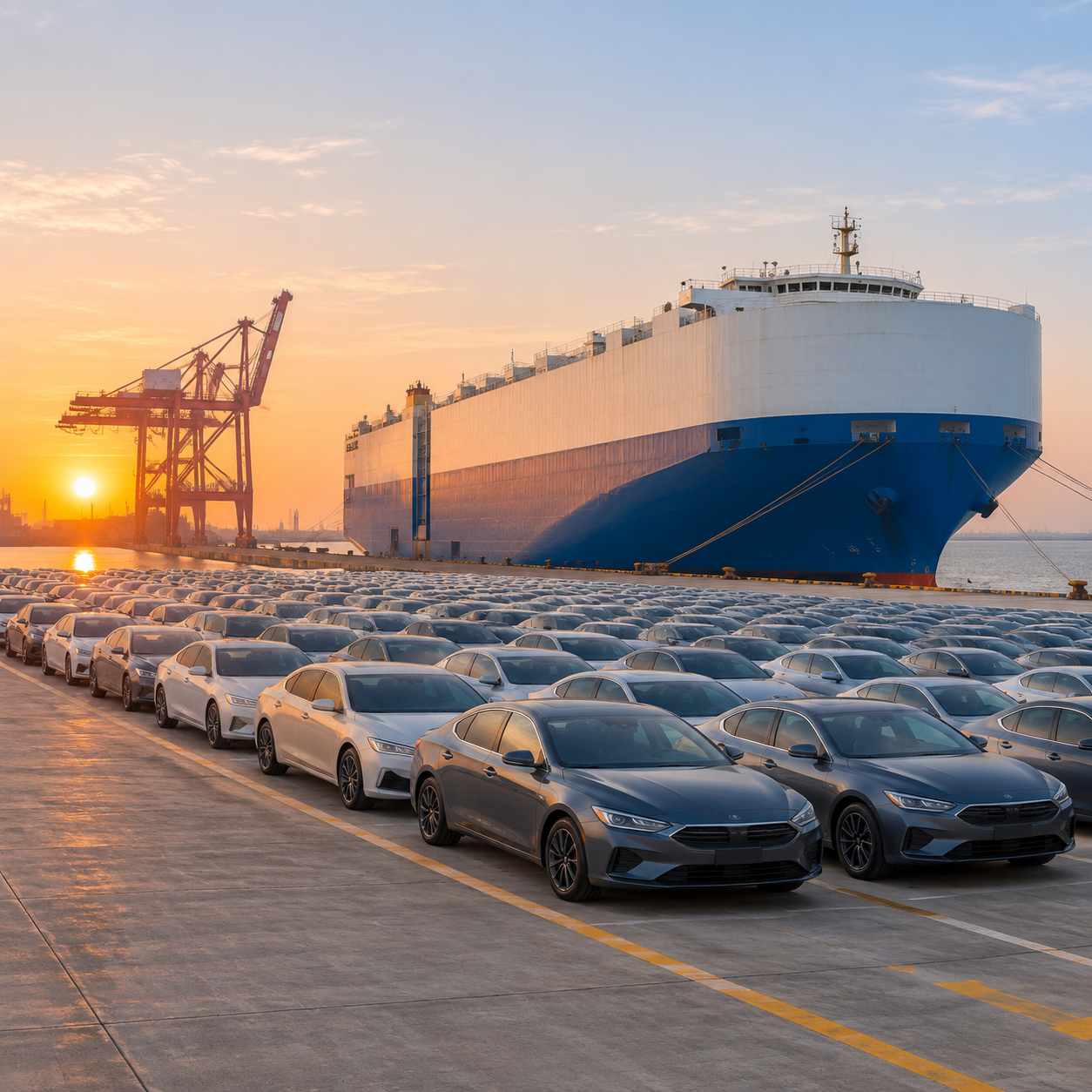
A 10-million-unit year would be a step change for the global used and new car trade. It means Chinese factories are producing far more than the domestic market absorbs, and export channels are becoming the primary outlet for that capacity.
For buyers in destination markets, the practical effects are already visible: more choice in the small and mid-size segments, shorter model cycles and aggressive pricing from new brands. For exporters, the same conditions bring thinner margins, more competition from factory-backed channels and greater scrutiny from destination-market regulators.
The Message Behind the Number
Chen's remarks went beyond the forecast. According to reports of the forum, he argued that:
- Safety is the first attribute of a car, and companies should respect the industrial policies and consumer habits of each market.
- Local service systems need to be built, not just sales channels, with more cooperation with local partners.
- Brand reputation should be protected collectively, and companies should resist traffic bubbles and price competition.
This is the same theme that has run through Chinese industry events in 2026: exports have passed the volume threshold, and the next phase is about after-sales, parts supply, compliance and resale value. Speakers at other forums, including the Chengmai export conference in early November, made similar points about data compliance, insurance and service networks.
What It Means for Used-Car Exporters
A used-car export business reads this news in two ways.
Supply. Strong new-car export volumes mean more trade-ins and more off-lease and dealer stock returning to the domestic market, which supports used-car supply. It also means faster depreciation for models that are being replaced by an export-focused facelift.
Competition. Factory-backed export channels can undercut independent used-car exporters on price for near-new cars. The counter is what the association itself is urging: documentation, inspection, after-sales support and a credible warranty story.
Policy risk. The same volume growth is what drives destination-market tariffs, local-content rules and import licensing. Buyers should assume that rules can change quickly, and should confirm the import regime of the destination country before committing to a shipment.
What to Watch
- The final full-year export figure. CAAM will publish December data in January. The 10 million number is a forecast until then.
- Monthly run-rate. Whether exports stay above one million units in November and December is the test of the forecast.
- Policy response in destination markets. Tariffs, local-content rules and licensing requirements tend to follow volume growth.
- Used-car export rules in China. Licensing, inspection and after-sales requirements for used-car exporters continue to tighten, and the association's emphasis on service quality points in the same direction.
Sources and Scope
- Primary event: Chen Xu, deputy secretary-general of CAAM, speaking at the second transport and vehicle connectivity forum of the 2026 World Internet of Things Convention on 3 November 2026.
- Cross-check: 每日经济新闻 report published 3-4 November 2026 (republished by Sina Finance) and 新京报贝壳财经 report of the same forum, both quoting the same export forecast and January-September figures. Both attribute the statistics to CAAM.
- Caliber note: all export figures in this article are CAAM industry-association data. Customs-based and other third-party series use different definitions and are not directly comparable.
- Caveat: the 10 million figure is a forecast. This article does not estimate prices, sales by model or the size of the used-car export market.