Twenty Minutes to Export-Ready: How Hulunbuir Built a Used-Car Corridor to Russia and Mongolia
An Economic Daily feature published 27 October profiles the China-Russia-Mongolia International Auto Park in Hailar, Hulunbuir — one of Inner Mongolia's first certified used-car export bases. Transfer-for-export paperwork takes about 20 minutes at an on-site window, roughly 90% of cars go to Russia, and since August 2026 Russian buyers have been asking for new-energy vehicles. Local government figures put the base's cumulative exports at 1,873 cars worth about 240 million yuan.

A Base on the Steppe
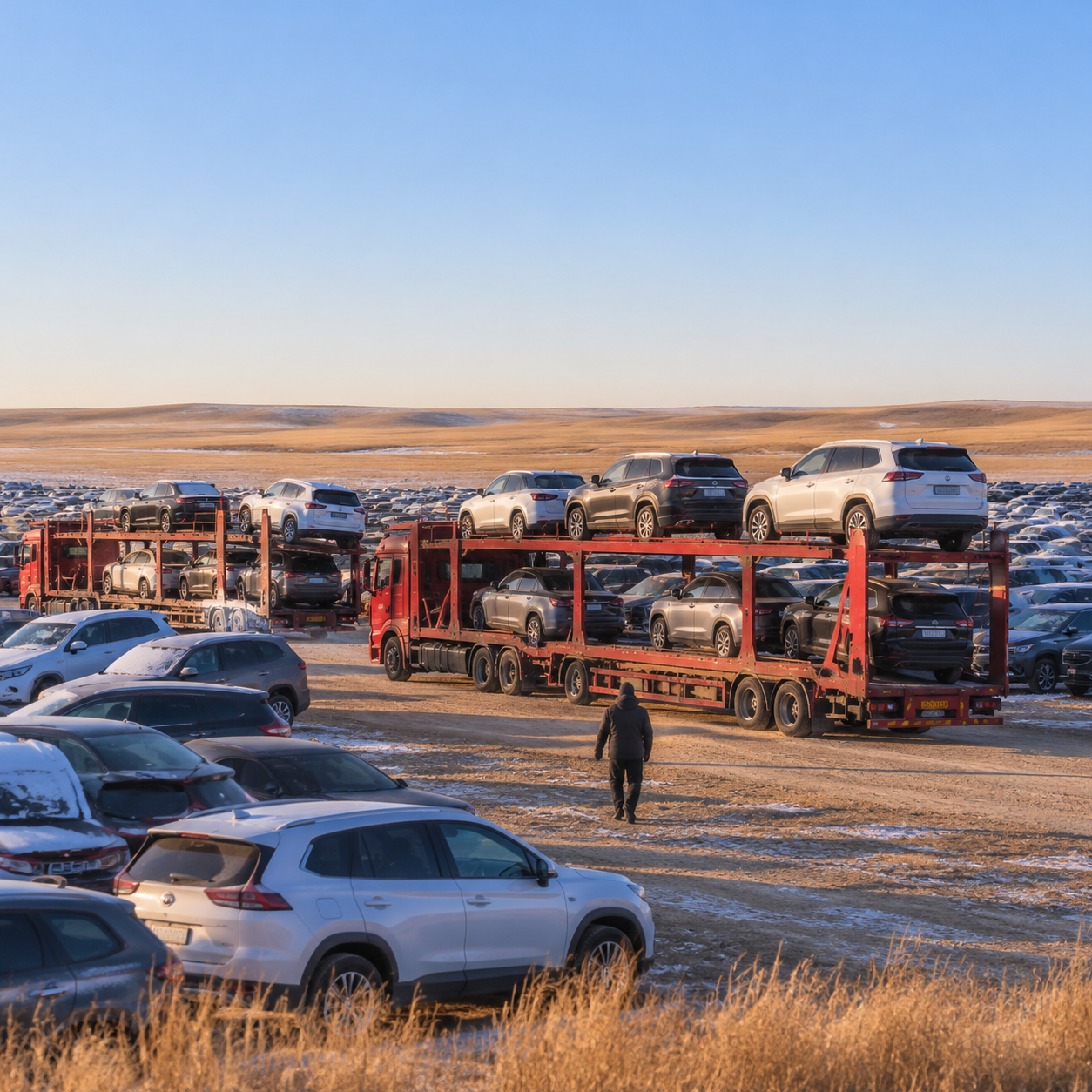
On 27 October 2026, Economic Daily published a feature on the China-Russia-Mongolia International Auto Park in Hailar District, Hulunbuir, Inner Mongolia — a city better known for grasslands than for car trading. The park was certified in 2024 as one of Inner Mongolia's first used-car export bases, and it has turned a geographic fact — sitting on China's northern border with Mongolia, with Russia just beyond — into a business.
The park is large: a planned area of about 760,000 square metres, with roughly 368,000 square metres already built out. But the number that matters is a smaller one.
The 20-Minute Window
The park hosts an on-site vehicle-administration service window. According to the Economic Daily report, a single transfer-for-export transaction — deregistering a car from its Chinese owner and re-registering it as awaiting export — takes about 20 minutes at that window.
Anyone who has watched China's used-car export business develop knows why this matters. The paperwork chain for export has been the classic bottleneck of the trade: registration cancellation, export licensing, customs declaration, each at a different desk in a different building. Compressing the first link of that chain to the length of a coffee break is the kind of unglamorous infrastructure that decides which hubs grow.
Where the Cars Go
The destination split, per the report:
- Around 90% of exports go to Russia, covering multiple regions of the country.
- Around 10% go to Mongolia — Ulaanbaatar and the eastern provinces of Dornod and Khentii.
The mix is mostly Chinese domestic-brand passenger cars, with light trucks and other commercial vehicles alongside. To feed the channel, the operator has built a physical and digital network on the far side of the border: 86 information offices inside Russia, plus independent online sales sites aimed separately at Russian and Mongolian buyers.
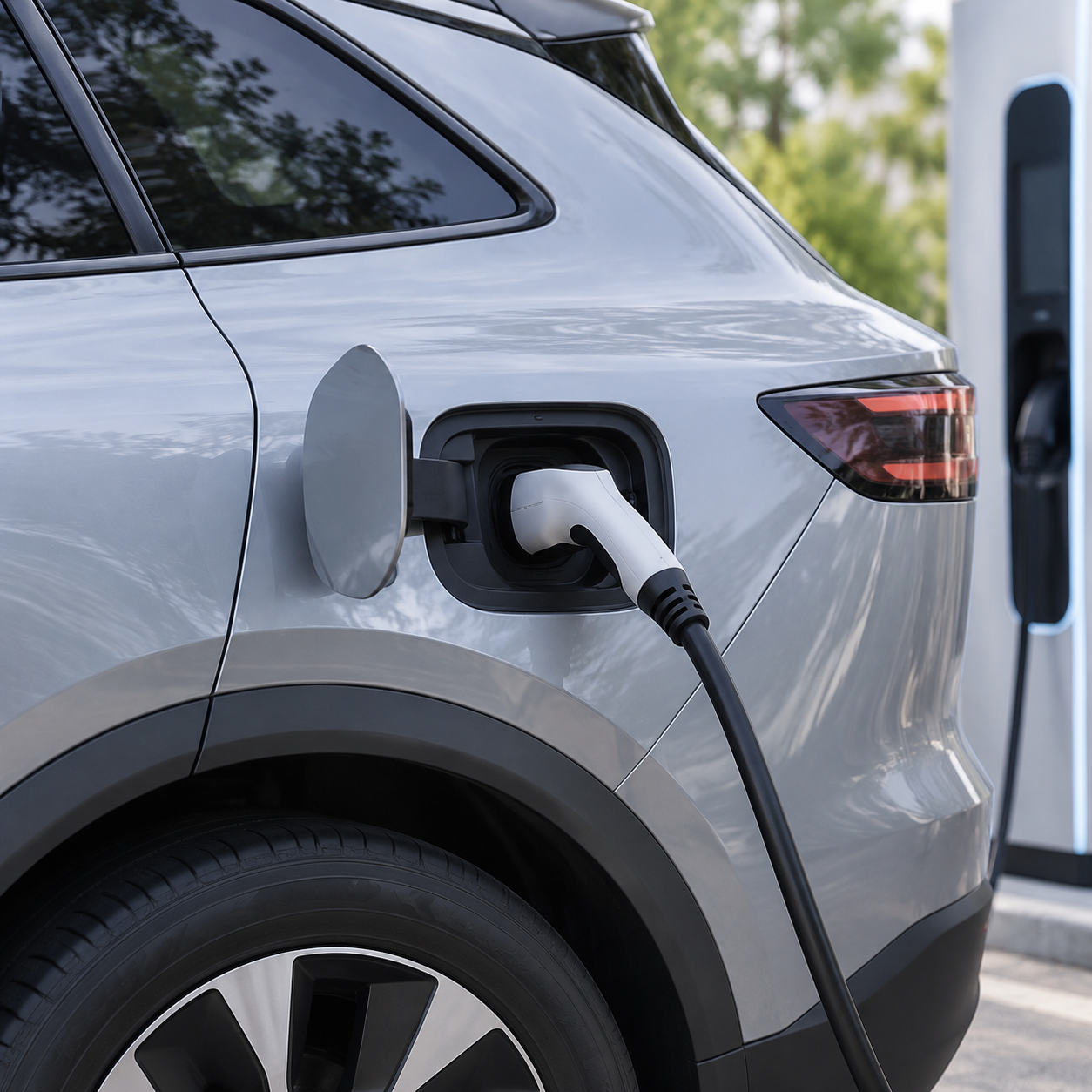
And the mix is shifting. Since August 2026, Russian customer interest in new-energy vehicles has noticeably increased, the report says — a small but telling signal from a market whose appetite has so far been built on petrol cars.
The Official Numbers
A reply published by the Hailar District People's Government in September 2026 (answering a local people's congress proposal) gives the base's operating figures. The operator is Inner Mongolia Fengfan International Trade Co., certified in August 2024 as one of the autonomous region's first used-car export bases:
- Cumulative exports: 1,873 vehicles, worth about 240 million yuan.
- 2024: 150 vehicles (about 14.5 million yuan).
- 2025: 1,367 vehicles (about 186 million yuan).
- First quarter of 2026: 356 vehicles (about 39.3 million yuan).
The trajectory from 150 cars in 2024 to more than 1,300 in 2025 shows a corridor that found its footing quickly once the licence regime settled.
Why This Matters Beyond Inner Mongolia
China's used-car export map is usually drawn through the big coastal ports and the western rail gateways. Hulunbuir is a reminder that the northern land corridor is its own route with its own logic: short physical distance to the buyer, overland delivery without ocean freight, and a border-region operator handling marketing inside Russia directly rather than waiting for importers to call.
Two things are worth watching from here:
- Whether the Russian NEV signal holds. A shift in Russian buyer preference toward electrified cars would change what northern bases stock, and the first hubs to build charging-aware inspection and battery-health reporting into their process will have an edge.
- Whether the 20-minute model spreads. On-site vehicle-administration windows are a replicable piece of infrastructure; expect other export bases to cite Hailar when lobbying for their own.
Sources: Economic Daily feature "From the doorstep to beyond the border: how fast can Hulunbuir's used cars go overseas", carried by Guangming Daily (politics.gmw.cn), 27 October 2026; Reply of the Hailar District People's Government to Proposal No. 2602012 of the 16th District People's Congress, September 2026.