China's October Vehicle Exports Top One Million for a Fifth Month, Up 60.2 Percent Year on Year
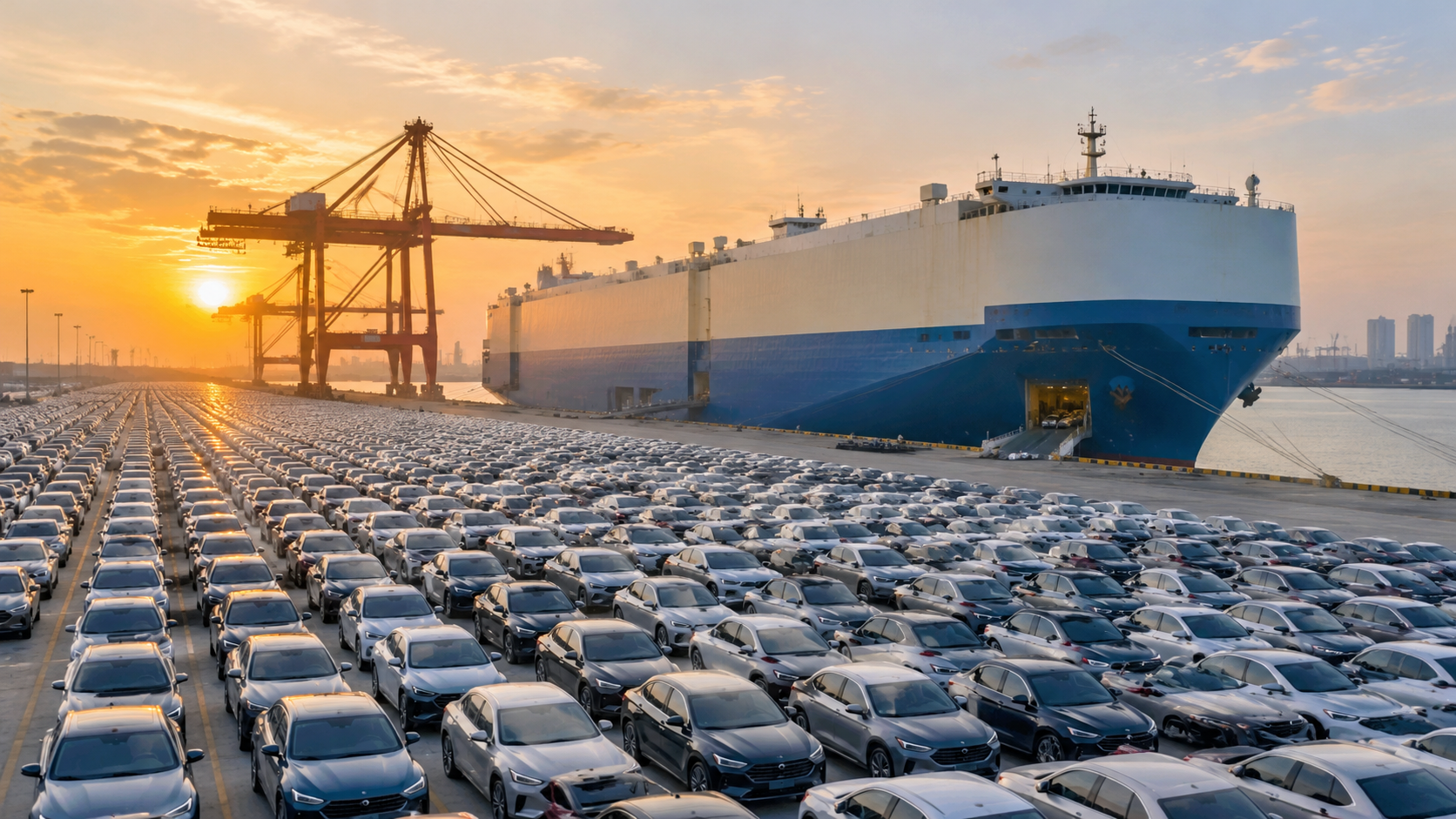
CAAM data released on 12 November 2026 show China exported 1.066 million vehicles in October, up 60.2 percent year on year and 1.3 percent on the month, the fifth consecutive month above one million. January-October exports reached 9.271 million units, up 65.1 percent, including 4.612 million new energy vehicles, up 130 percent; October NEV exports alone hit 606,000, up 140 percent. The boom sits against a shrinking domestic market: October domestic sales fell 26.6 percent, their seventh straight monthly drop above 20 percent, and CAAM now expects full-year domestic passenger vehicle sales below 19 million for the first time since 2014. The figures count complete vehicles through customs and do not separate used from new, so they are a corridor-demand indicator, not used-car sales.
What CAAM Published
On 12 November 2026, the China Association of Automobile Manufacturers released its October industry briefing. The export line is the headline.
- October vehicle exports: 1.066 million units, up 60.2 percent year on year and 1.3 percent on September — the fifth consecutive month above one million.
- January-October exports: 9.271 million units, up 65.1 percent year on year.
- October NEV exports: 606,000 units, up 140 percent year on year, according to CAAM figures reported by Global Times.
- January-October NEV exports: 4.612 million units, up 130 percent. NEVs now make up just under half of all vehicles shipped.
The Domestic Side Is Moving in the Opposite Direction
The export boom is not evidence of a booming home market. CAAM's October figures show output of 3.063 million and sales of 3.016 million vehicles, down 8.8 percent and 9.2 percent year on year. For January to October, output reached 26.318 million and sales 26.286 million, both down about 5 percent.
Domestic sales tell the sharper story:
- October domestic sales: 1.95 million units, down 26.6 percent, the seventh month in a row with a decline exceeding 20 percent.
- January-October domestic sales: 17.014 million, down 22.9 percent.
- New energy vehicles accounted for 64.3 percent of new vehicle sales in October and 54.8 percent across the first ten months; within the domestic passenger car market, NEV penetration exceeded 70 percent in October.
Chen Shihua, CAAM's deputy secretary-general, said the association is reassessing its full-year forecast — initially 34.75 million units, up 1 percent — and that "the situation is not very optimistic". Domestic passenger vehicle sales are now expected to fall below 19 million, which would be the first time since 2014.
Why the Two Diverge
At a China EV100 seminar reported by China Daily, experts framed the domestic weakness as structural adjustment rather than collapse: China passed roughly 150 cars per 1,000 people — the turning point seen in Germany, Japan and South Korea — back in 2019, and about one fifth of 2025 buyers brought purchases forward because of subsidies, hollowing out part of 2026 demand. Replacement and additional purchases already rose from 31 percent of the passenger market in 2022 to 57 percent in 2025.
With demand soft at home, manufacturers are pushing volume abroad, and NEVs are the engine of that push: the 140 percent October NEV export growth more than doubles the total-vehicle rate of 60.2 percent.
The Policy Brake Already Signed
On 12 October 2026, the Ministry of Finance and the State Taxation Administration announced that the VAT export rebate for new energy vehicles will fall from 13 percent to 9 percent on 1 April 2027. CAAM has separately warned that trade investigations, shifting overseas policies and rebate adjustments will pressure export profitability.
Two practical effects follow. First, expect shipments to be pulled forward into the first quarter of 2027 as exporters book under the higher rebate. Second, thinner rebates squeeze new-car NEV export margins, which can widen the price gap between factory-fresh and used electrified vehicles — the gap that used-car exporters sell into.
What This Means for Used-Vehicle Exporters
These are not used-car numbers. CAAM counts complete vehicles crossing customs and does not split used from new. Treat the series as evidence of corridor demand and of the brand, parts and service presence that follows large new-car flows.
Supply at home stays deep. A contracting domestic market means more trade-in and off-lease vehicles entering the wholesale system, which supports sourcing availability even as retail prices adjust.
NEV competence becomes mandatory. With NEVs approaching half of export volume, battery-health reporting, charging-standard documentation and high-voltage handling are becoming baseline requirements rather than specialities.
The long game is localisation. China EV100 experts expect future overseas growth to come increasingly from local manufacturing and value-chain operations rather than trade exports alone. Traders whose value is only moving metal across a port should build inspection, compliance and after-sales capability before that shift accelerates.
Method and Sources
All figures are from CAAM's October 2026 auto industry briefing, published 12 November 2026 and reported by Sina Finance, with NEV export detail reported by Global Times on 11 November and industry analysis by China Daily on 16 November. The rebate change is from the Ministry of Finance and State Taxation Administration notice of 12 October 2026, reported by Xinhua. Percentage shares and growth rates are the publishers' own rounded figures; the data cover complete vehicles in units, do not separate used vehicles, and are neither destination-country registrations nor retail sales.
XPeng's Q3 Overseas Deliveries Surge 153 Percent as It Targets 100,000 Exports in 2026
South Korea Becomes Asia's Biggest Buyer of Chinese EVs, Imports Nearly Double to $3.36 Billion