CADA Annual Conference in Fuzhou: Used-Car Trade Enters "Deep Restructuring", Export Forum Held for the First Time
The China Automobile Dealers Association held its 2026 annual conference in Fuzhou on 11-13 November under the theme "Uphold Fundamentals, Explore New Paths". More than a thousand delegates attended. A used-car domestic-and-foreign-trade dealer forum was held for the first time, covering supply matching, mutual recognition of inspection standards, shared after-sales networks and cross-border compliance. Vice president Luo Lei said the sector is in deep restructuring: used-car transactions have passed 20 million units and rival new-car sales at roughly 1:1, but Q1-Q3 saw rare negative growth, over half of operators earn gross margins below 4 percent, and the used-car manager index has stayed under the boom-bust line for 21 months. The conference also released price-compliance self-regulation measures and two industry yearbooks.
What Happened in Fuzhou
From 11 to 13 November 2026, the China Automobile Dealers Association, known as CADA, held its 2026 annual conference in Fuzhou, Fujian province, under the theme "Uphold Fundamentals, Explore New Paths, Grow Together" (守正拓新 和济致远). Over a thousand delegates from vehicle manufacturers, dealer groups, used-car operators, transaction markets, finance and service providers attended, alongside officials from the competent government departments.
The meeting matters beyond a domestic audience because one of its firsts is aimed squarely at the export channel: a dedicated forum on used-car domestic-and-foreign-trade dealer development, and an Africa-focused used-car innovation session, sat alongside the established domestic forums.
A First-Ever Domestic-Foreign Used-Car Forum
In a preview published on its official account, CADA said the industry is moving from "domestic and foreign trade operating separately, with broken chains" toward an integrated model of linked domestic and overseas operations. The new forum was designed around four practical topics:
- precise matching of used-car supply and demand across borders;
- international mutual recognition of vehicle inspection standards;
- jointly built and shared after-sales networks;
- prevention and control of cross-border compliance risks.
The framing covers the full chain, from sourcing vehicles in China to local operation in destination markets. An export-oriented company invited to the forum summed up the buyer's side bluntly: an overseas buyer thousands of kilometres away can rely only on a verifiable inspection report, transparent trade terms and reliable delivery. That is a useful checklist for any exporter, regardless of what any single company claims about itself.
The Four Numbers Behind "Deep Restructuring"
At the 12 November industry development forum, CADA vice president Luo Lei set out four markers of where the used-car sector stands.
- Annual used-car transactions have passed the 20 million unit threshold.
- The used-to-new vehicle sales ratio is now close to 1:1.
- New-energy used cars have entered a fast-growth lane.
- Overall industry profitability is trending down.
The scale story and the profit story diverge. In the first three quarters of 2026, the used-car market recorded negative growth for the first time in years; inventory cycles keep lengthening; and CADA's quarterly dealer survey found that more than half of used-car operators have a gross margin below 4 percent. The used-car manager index has been below the boom-bust line for 21 consecutive months.
Who Is Leaving, and Who Is Combining
Luo presented survey data from more than a hundred used-car transaction markets showing a structural change in why dealers exit. In 2024, 51.25 percent of market managers attributed departures to people leaving the industry outright, and 21.25 percent to small dealers merging into larger groups. In 2026 those numbers are 36.7 percent and 45 percent respectively: consolidation has replaced exit as the dominant story.
The type of operator has flipped too. Individual merchants used to make up more than 60 percent of the sector; incorporated dealers now exceed 60 percent. Chains are expanding quickly, new-car dealer groups are pushing into used cars as a second profit engine, and some manufacturers have begun authorising independent dealers to run their certified pre-owned business. CADA calls authorised operation, new energy and exports the sector's three upward growth curves.
The New-Car Side: Inventory, Losses and a New Rulebook
The pressure in new-car distribution is even more visible. CADA reported an October dealer composite inventory coefficient of 1.38, down 17.9 percent month on month but still up 17.9 percent year on year, with an inventory warning index of 62.2 percent, above the boom-bust line and 9.6 percentage points higher than a year earlier.
Its 2025 national dealer survey shows only 23.5 percent of dealers were profitable, down from 39.3 percent in 2024, while 55.7 percent ran at a loss; 81.9 percent face price inversion, meaning sale prices below purchase cost, and for 51.5 percent the inversion exceeds 15 percent.
CADA president Xiao Zhengsan called on manufacturers to shift commercial policy from volume targets to quality, shorten rebate payment cycles and abandon inventory-pushing and bundled sales. On 12 November the association released trial self-regulation measures implementing the market regulator's February 2026 automotive pricing compliance guide: three chapters, twenty articles and four scenarios, drafted over nearly nine months. CADA also disclosed that, commissioned by the Ministry of Commerce, it is studying revisions to two management measures and has drafted a model authorisation contract targeting forced inventory, tied sales and irregular terminations. Two publications, the 2026 China Auto Market Yearbook and the 2026 China Used-Car Industry Development Report, were released at the conference.
Why Fuzhou, and the Long View
The host city is not a random choice. In May 2026 Fuzhou was named among China's first batch of pilot cities for automotive circulation and consumption reform, and in June Fujian's commerce department ran a dedicated used-car export capability programme. The conference's location connects domestic circulation policy with the export agenda.
On the long view, Luo noted that used-car transactions equalled only 5.6 percent of the national vehicle parc in 2025, against over 10 percent in developed economies; with the parc now at 370 million vehicles and NEVs making up 13.2 percent of it at mid-year, he sees room for the market to more than double. He called 2026 the first real development year for regulated used-car exports, while cautioning that the export lane does not suit every operator.
What Exporters Should Take Away
- Inspection paperwork is becoming the product. Mutual recognition of inspection standards is now an official industry agenda item, so per-vehicle reports, battery SOH documentation and photo-video records are baseline deliverables, not differentiators.
- Consolidation will reach export traders. As small domestic dealers merge or leave, sourcing will run through larger, more formal counterparties with compliance expectations of their own.
- Margin discipline matters at home and abroad. With most domestic operators under 4 percent gross margin, pressure to move volume cheaply will persist; buyers should expect tighter, more transparent pricing rather than fire-sale stock.
- Africa is on the official agenda. The Africa-focused session signals where association-level attention and possibly future standards work are heading.
Method and Sources
Event facts, themes and forum structure come from CADA's official communications and conference coverage in Sina Finance and Sohu, 15 October to 13 November 2026. Industry figures and speeches are from CADA vice president Luo Lei's 12 November address as reported by Sina Finance, and from the Huaxia Times Fuzhou report of 16 November, which also covers president Xiao Zhengsan's remarks, the self-regulation measures and the 2025 dealer survival survey. The Fuzhou pilot designation and Fujian export programme come from the Fuzhou municipal and Fujian provincial government websites. Survey percentages are CADA's own rounded figures covering its member samples; they describe China's domestic used-car and dealer market, not export volumes or destination-country sales.
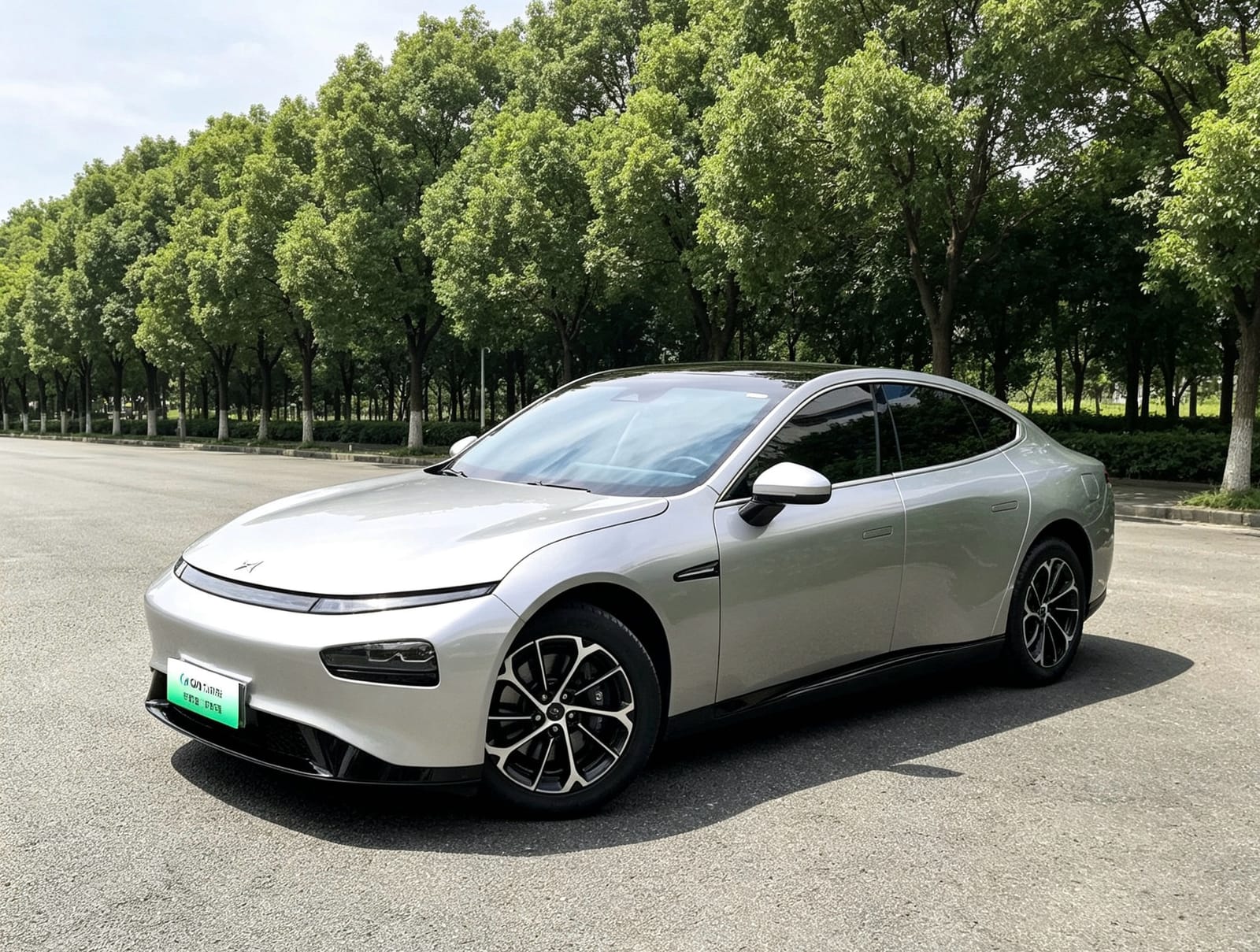
XPeng's Q3 Overseas Deliveries Surge 153 Percent as It Targets 100,000 Exports in 2026
South Korea Becomes Asia's Biggest Buyer of Chinese EVs, Imports Nearly Double to $3.36 Billion