Beijing Targets 65% NEV Share of New Car Registrations and a 2.4 Million NEV Fleet by 2030
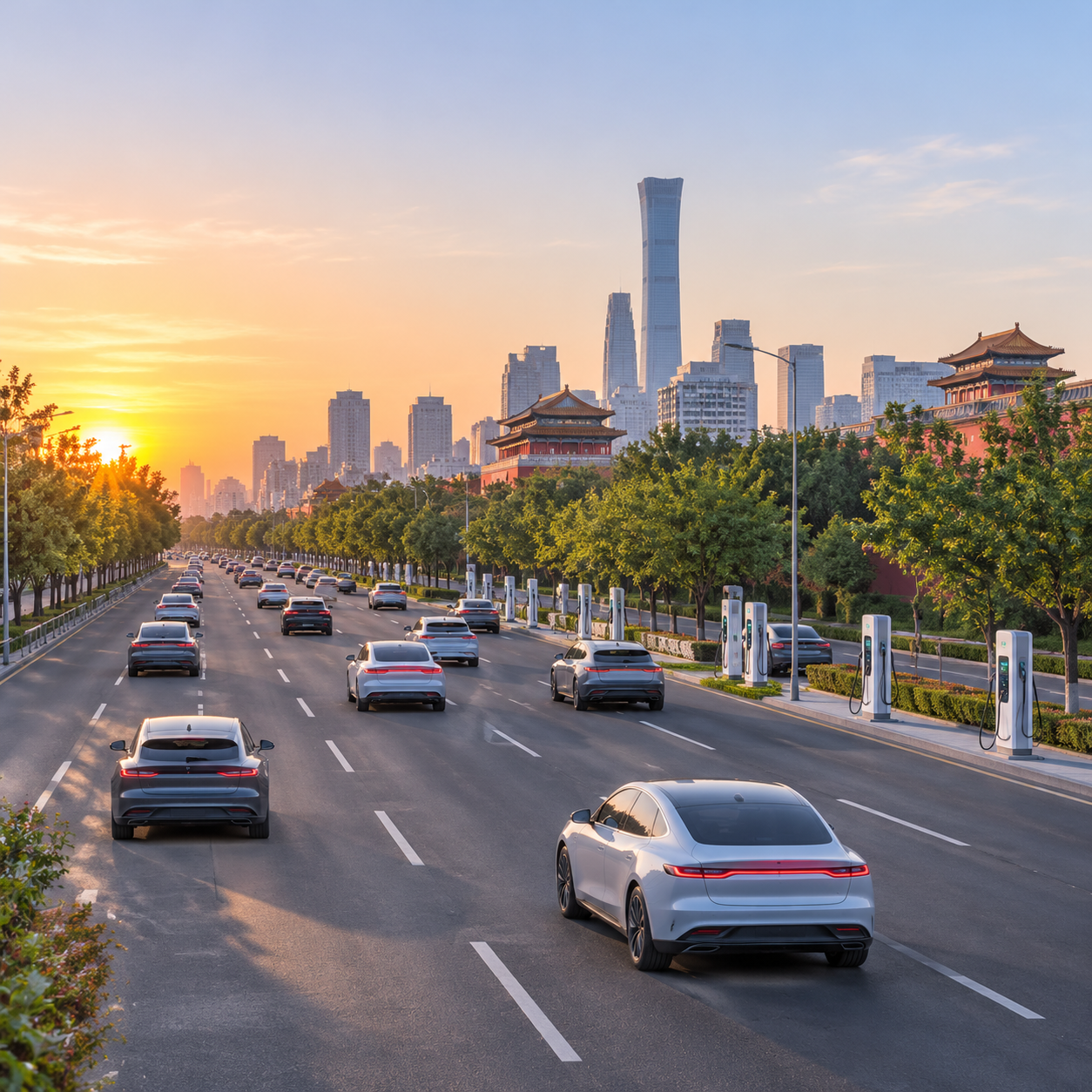
Beijing's newly issued 15th Five-Year energy-system plan sets explicit motorisation targets: new-energy vehicles are to reach 2.4 million units in the city's fleet and 65% of new car registrations by 2030, alongside oil-to-electric and oil-to-hydrogen conversion programmes and a Beijing-Tianjin-Hebei zero-emission freight corridor. For the used-car trade, the capital's fleet turnover points to a growing pipeline of well-maintained petrol cars leaving first-tier cities.
The Capital Puts a Number on the Transition
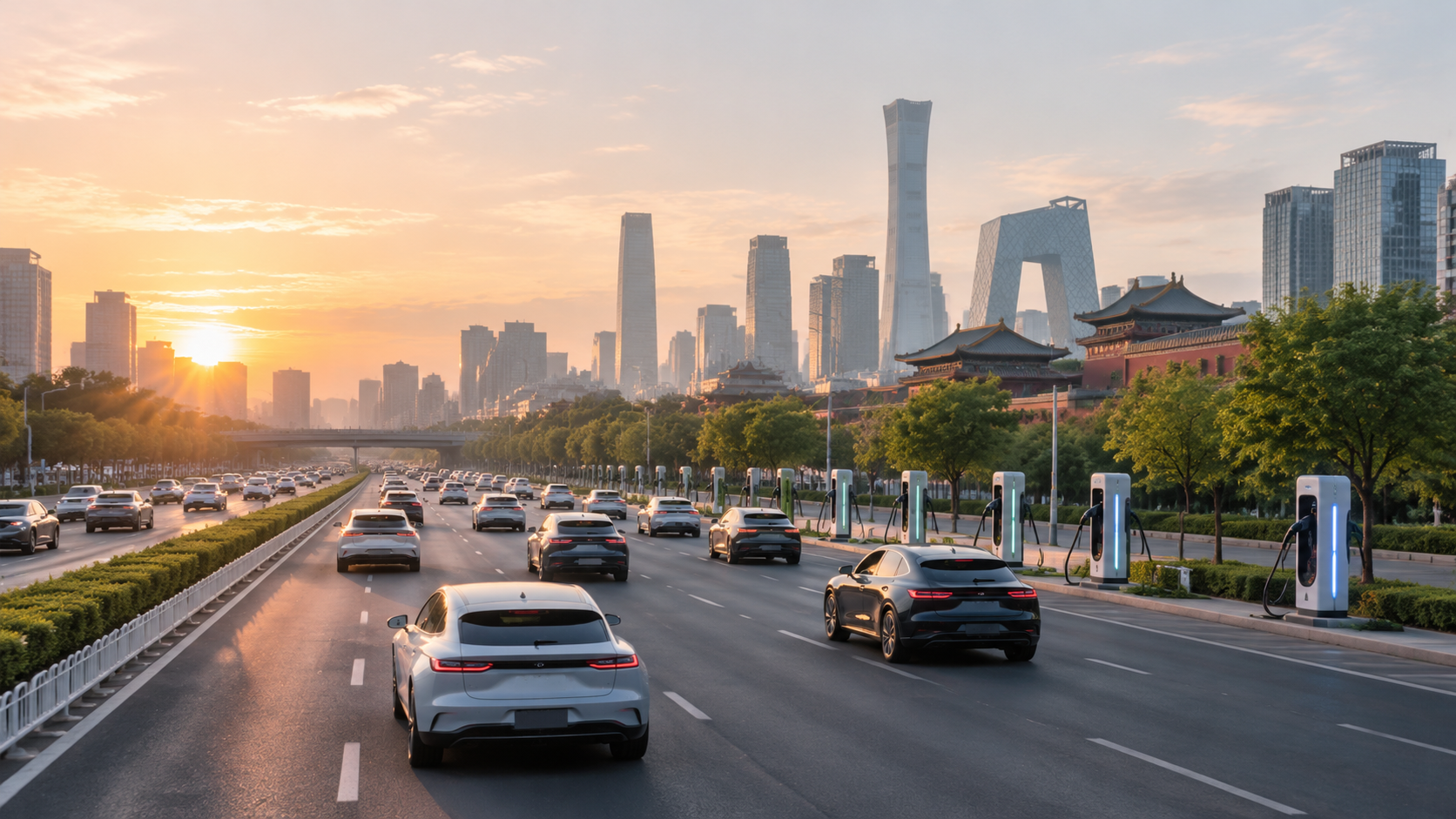
Beijing's municipal government has issued its 15th Five-Year Plan for the New Energy System, and the transport section contains two numbers that frame the next five years of the capital's car market: by 2030, new-energy vehicles are to account for 65% of newly registered cars, and the city's NEV fleet is to reach 2.4 million vehicles. The plan, reported by Cailian Press on 28 October and carried by China National Radio on 30 October, also calls for converting conventional vehicles — oil-to-electric and oil-to-hydrogen programmes — and for a zero-emission freight corridor across the Beijing-Tianjin-Hebei region, with green transport reaching 13% of freight arrivals and departures.
Beijing is not an average Chinese city: its licence-plate lottery has suppressed car ownership for over a decade, and its plate quota already leans heavily towards electric. When the capital writes a 65% registration target into a five-year plan, it is describing the direction of the national first-tier market, not a local experiment.
What the Targets Actually Say
Two readings are worth separating:
- 65% of new registrations is a flow target. It governs what enters the fleet each year. It does not mean 65% of cars on Beijing's roads will be electric by 2030 — the stock target is the separate 2.4 million figure, against a total fleet of several million combustion cars that will still be around.
- The fleet target implies turnover, not disappearance. Reaching 2.4 million NEVs while total car parc stays quota-capped means millions of petrol cars progressively leave Beijing registrations over the plan period. They are not scrapped en masse; they move — to lower-tier cities, to other provinces, and increasingly to export channels.
The plan's freight measures run in parallel: a zero-emission corridor in the Beijing-Tianjin-Hebei cluster and the green-freight ratio target point the same direction for commercial vehicles.
Why This Matters for Vehicle Exporters
- First-tier cities are the best used-car sources in China. Beijing cars typically have full dealer histories, low annual mileage relative to age and strict annual inspection discipline. A plan that accelerates fleet turnover in the capital increases the future supply of exactly this profile of used petrol car.
- The supply is multi-year, not a one-off. Five-year plans work through quotas, procurement and infrastructure rather than a single deadline. Exporters should read this as a steady thickening of first-tier used supply through 2030, not a sudden glut.
- Watch the commercial-vehicle side too. Zero-emission freight corridors mean early retirement or relocation of diesel light trucks and vans in the region. For buyers serving markets where used Chinese commercial vehicles sell well, that is a separate pipeline worth tracking.
- Policy direction remains one-way. Together with the NEV export licensing regime and the scheduled 2027 export-rebate adjustment, Beijing's plan confirms that China's domestic market keeps electrifying — and that the internal-combustion supply feeding the used-export business is structural, not cyclical.
The Accuracy Note
The 65% registration target, the 2.4 million fleet target, the oil-to-electric/oil-to-hydrogen programmes, the zero-emission freight corridor and the 13% green-freight ratio are from Beijing's 15th Five-Year Plan for the New Energy System as reported by Cailian Press (28 October 2026) and China National Radio (30 October 2026); the plan text is published by the Beijing Municipal Government. The targets apply to the plan period ending 2030. No national registration figures are implied by this article.
Sources: Cailian Press report on the Beijing 15th Five-Year New Energy System Plan (28 October 2026); China National Radio auto channel (30 October 2026); Beijing Municipal Government plan publication.