Xpeng P7 Buyer Guide: Reading 480G and 670N+ Before You Import a Used Electric Sedan
A 2023 P7 480G and a 2022 P7 670N+ show how one badge family hides two battery chemistries and two range classes. What the numbers and letters mean, how the original P7 differs from the P7i, what a used EV inspection must cover, and which export documents matter for a Chinese electric sedan.
Why the P7 Matters to Export Buyers
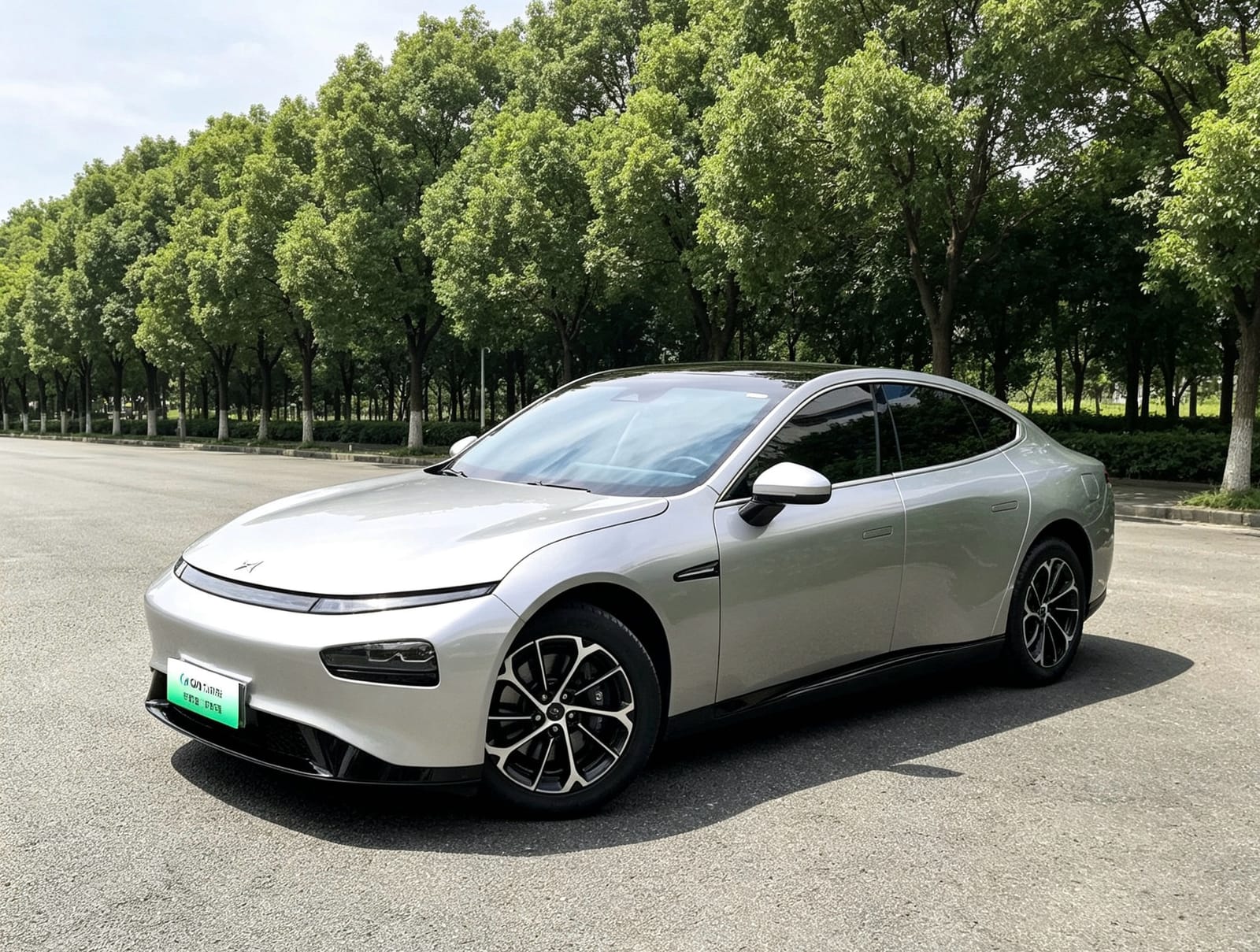
The Xpeng P7 is the model that introduced a wider export audience to the Chinese electric sedan. It arrived in 2020 as Xpeng's first four-door car, following the G3 SUV, and its combination of a low coupe-like silhouette, a large central screen and driver-assistance hardware made it one of the most visible Chinese EVs in international coverage.
For an importer, that visibility cuts both ways. Buyers abroad already know the shape and the brand story, which shortens the sales conversation. But the P7 is also a software-defined car built around Chinese connected services, so the export checklist is different from a petrol sedan: battery evidence, account handling and charging compatibility matter as much as panel gaps.
This guide uses two cars from our own stock to make the variant system concrete: a 2023 P7 480G and a 2022 P7 670N+, both silver, both single-motor rear-wheel drive, but different in battery chemistry and range class.
The Two Cars in Our Photographs
The first car is a 2023 Xpeng P7 480G, silver. The 480 badge puts it in the entry range class, and G is the base equipment letter. These cars use a lithium-iron-phosphate (LFP) battery in the roughly 60-kilowatt-hour class, driving the rear wheels through a single electric motor.
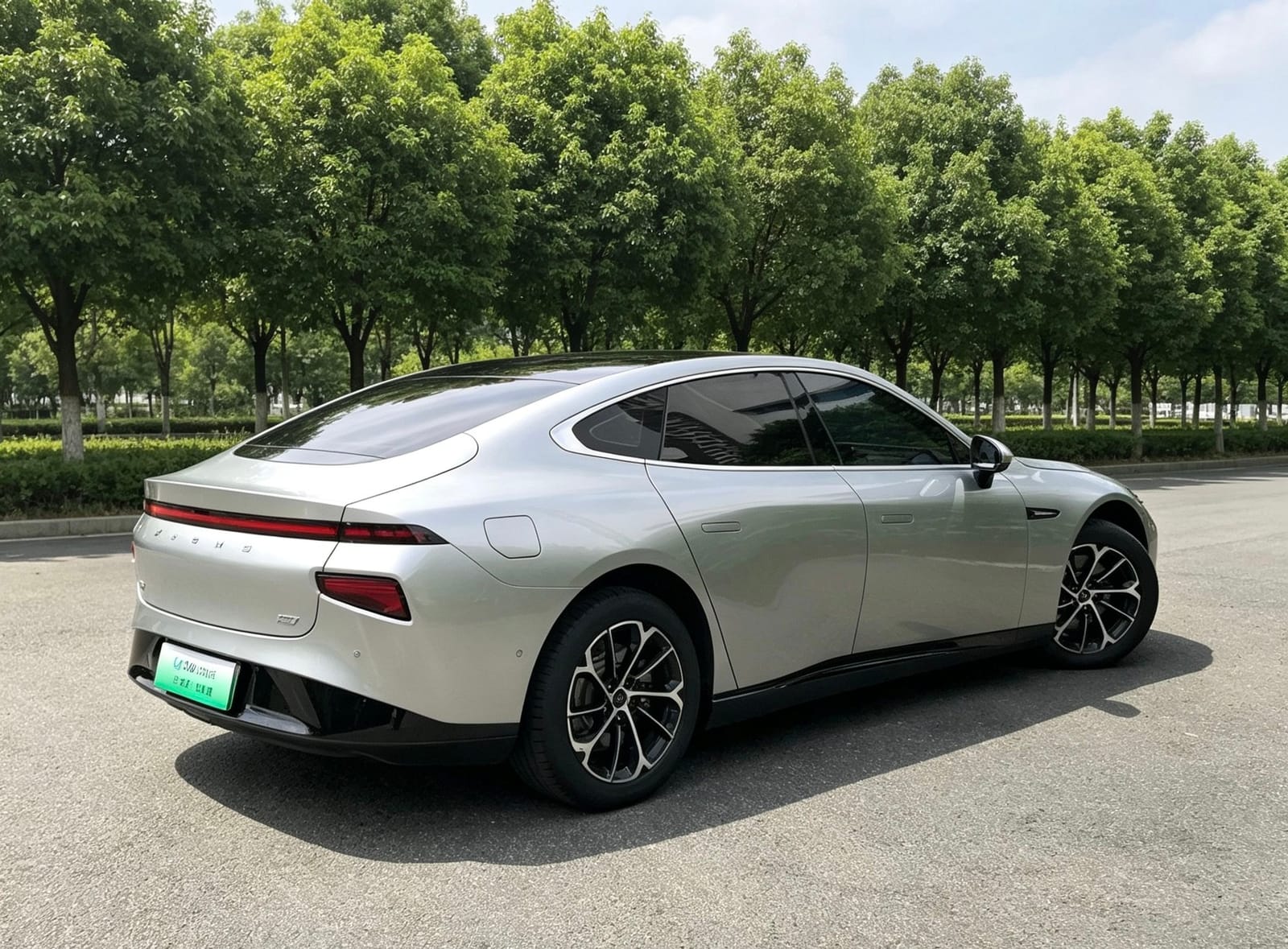
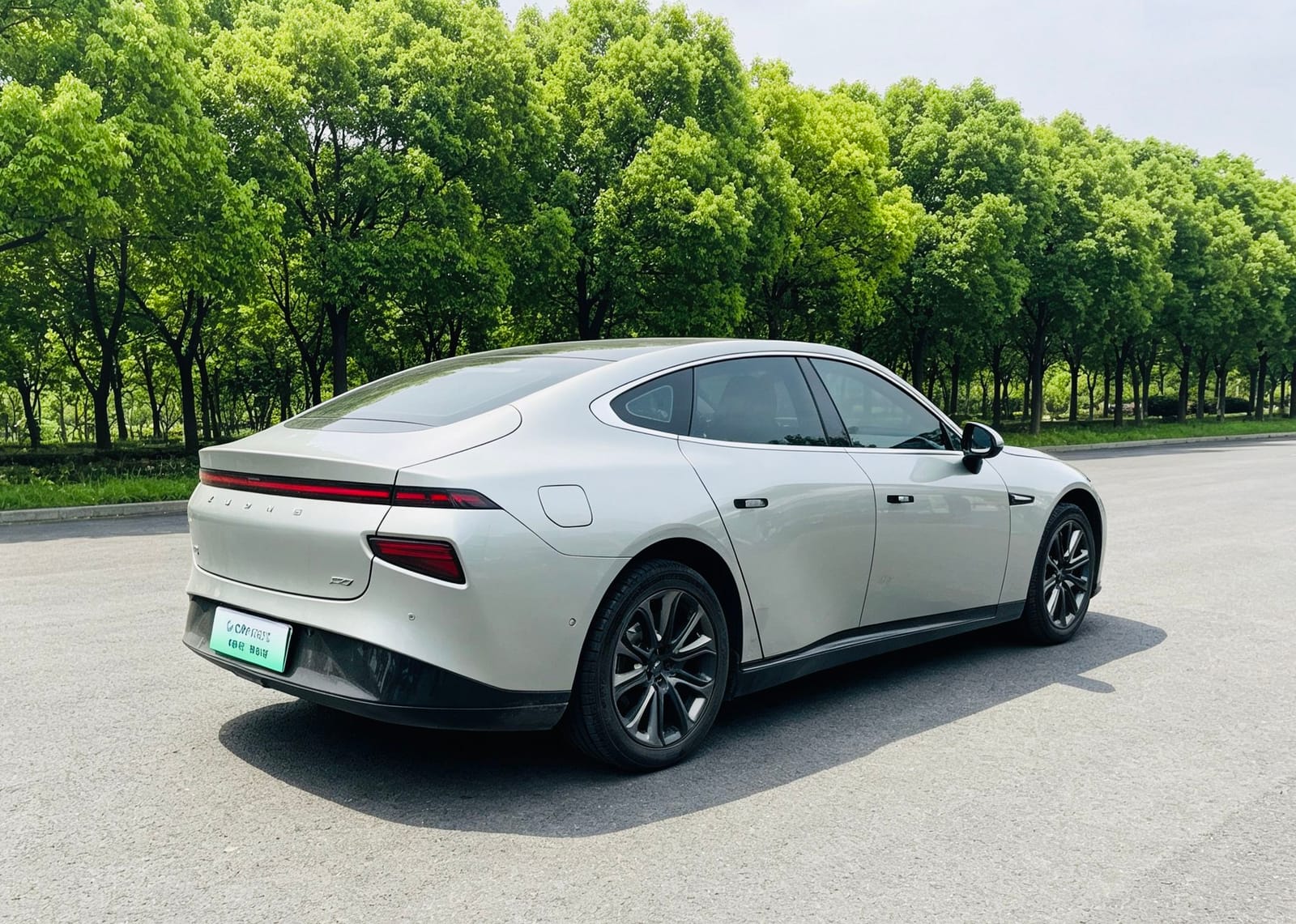
The second car is a 2022 Xpeng P7 670N+, silver. The 670 badge marks the long-range class, the N letter sits above G in the equipment hierarchy, and the plus sign denotes the upgraded hardware package that accompanied higher driver-assistance specification. These cars use a ternary (NCM) battery in the roughly 80-kilowatt-hour class, again with a single rear motor.
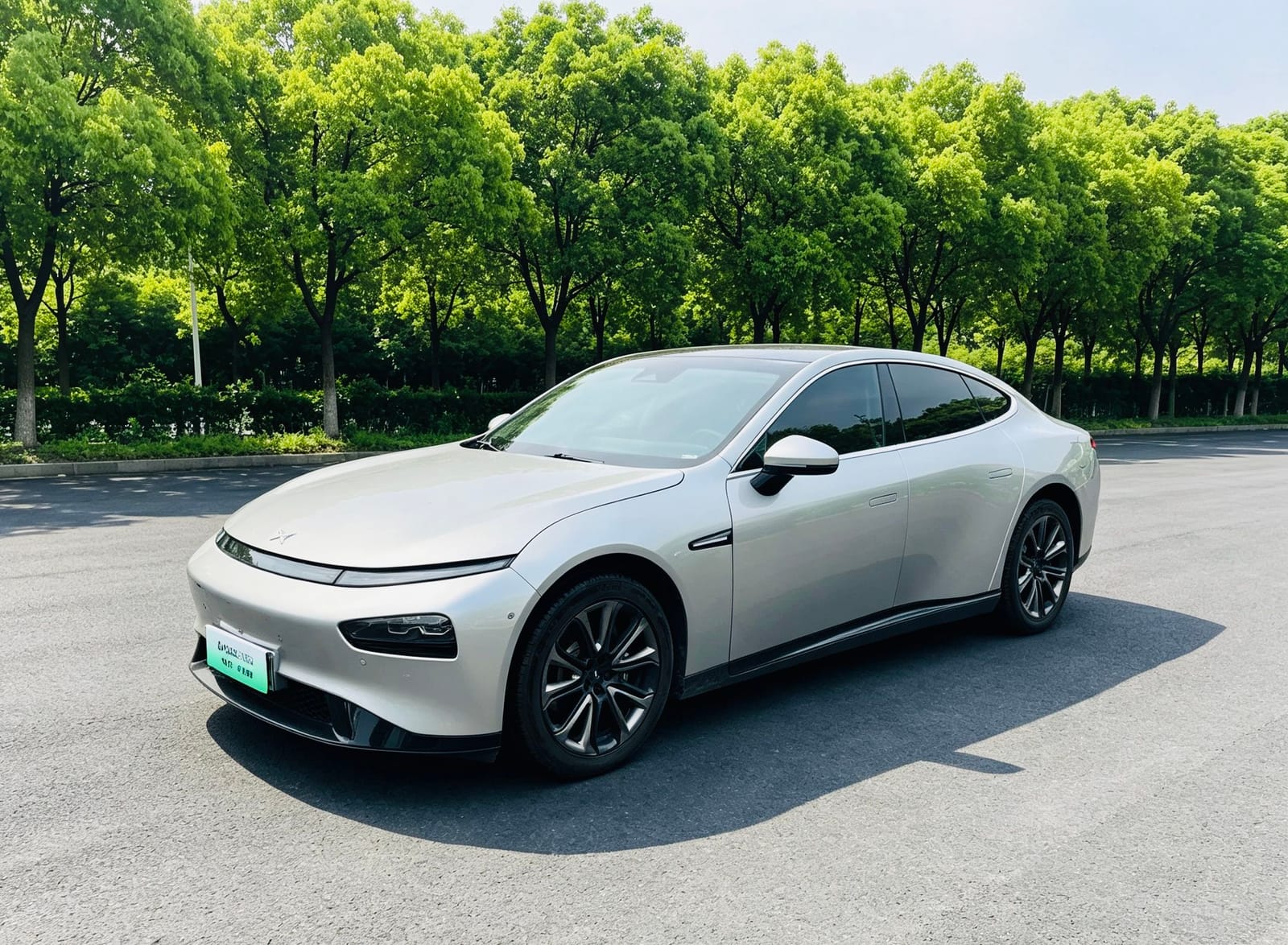
Same body, same screen architecture, same basic driving layout — but different battery weight, different charging behaviour and different used-car risk points. That is why the badge has to be read before anything else.
How to Read the Badge
Xpeng's naming on the original P7 follows a consistent two-part logic.
- The number is a range class, not a precise measurement. 480, 586, 670 and 706 refer to the official Chinese test-cycle range in kilometres, rounded into marketing classes. Two cars with the same number can still differ slightly in delivered range according to wheels, equipment and model year.
- The letter is the equipment grade. G is the entry level, N the middle grade and E the high grade. Interior materials, seat functions, audio and driver-assistance hardware change with the letter.
- A plus sign means upgraded hardware. Cars marked N+ or E+ received the newer assistance package, including the sensor and computing setup for higher-level assisted driving on supported roads.
- Wing and Performance labels are separate. The scissor-door Wing edition and the dual-motor Performance cars are distinct variants; neither of our photographed cars is one, and both are conventional single-motor rear-wheel-drive sedans.
The single most important practical distinction is underneath: 480-class cars are LFP, while 670- and 706-class cars use ternary batteries. That changes inspection priorities, charging habits and long-term degradation behaviour.
Original P7 Versus P7i
In March 2023 Xpeng launched a heavily updated version, badged P7i. Buyers comparing used examples need to know which generation they are looking at.
The original P7, sold from 2020, established the exterior design that still defines the model: the full-width light bar, the flush body sides and the short, low nose. Its assistance system relies on cameras and radar without a roof LiDAR, and its cabin uses the early Xpeng screen layout.
The P7i kept the silhouette but updated the drivetrain, thermal management and electronic architecture, refreshed the interior and added LiDAR hardware on the higher trims. Visually the two are close enough that a casual glance will not separate them, so the model year, the exact sale-type description and the factory configuration sheet must be checked on every car rather than inferred from photos.
Both of our photographed cars are original-generation P7s. A 2023 registration does not automatically mean P7i: the two were sold alongside each other during the transition period, which is precisely why paperwork matters.
Batteries, Range and Charging
The LFP battery in the 480-class cars is the more robust chemistry for deep cycling: it tolerates regular full charges better and is generally less sensitive to high state of charge in hot climates. Its trade-offs are slightly lower energy density — hence the shorter range and a different weight balance — and reduced cold-weather performance.
The ternary battery in the 670-class cars offers higher density and the longer range the badge promises, along with better cold-weather retention. In exchange it is more sensitive to sustained high charge levels, so the usual guidance is to keep everyday charging below a full pack unless a long trip requires it.
Two cautions apply to every quoted range figure. First, the badge number is a laboratory test-cycle value, not a motorway result; real-world range in cold weather, at speed or with heavy air-conditioning use can fall well below it. Second, a used battery no longer performs like a new one, so the only meaningful number for a specific car is a measured state-of-health reading, not the badge on the tail.
On charging, all P7s use the Chinese GB/T DC fast-charging port. Destination markets with CCS or CHAdeMO infrastructure need adapters or compatible charging arrangements confirmed before purchase, not after arrival. AC charging equipment and plug topology should be verified against the destination country's wallbox standards.
Driving Layout and What to Expect
The mainstream P7 line-up — including both photographed cars — is single-motor and rear-wheel drive, with the motor rated around 196 kilowatts. Dual-motor Performance versions add a front motor for all-wheel drive and substantially more power, and they carry their own badging and brake specification.
Rear-wheel drive gives the P7 the balanced, settled feel of a traditional sports sedan rather than the nose-led handling of a front-drive electric crossover. The low battery placement keeps the centre of gravity low, but the trade-off is limited ground clearance: speed bumps, ferry ramps and rough port roads deserve more care than in an SUV, and the undertray should be inspected after every long transport leg.
What a Used P7 Inspection Must Cover
Battery state of health. Ask for a written state-of-health report from the official diagnostic system, with the reading date and the car's identification on the document. A verbal claim of "good battery" is not inspectable.
Real charging test. Observe at least one DC fast-charging session and one AC charge if possible. A car that accepts charge slowly, interrupts the session or throws thermal warnings has a problem that static photos cannot reveal.
Range verification under load. Compare the displayed estimated range against the battery percentage: large jumps in the first few percent of discharge, or a gauge that drops non-linearly, point to cell imbalance.
The 12-volt battery. As on most EVs, the low-voltage battery powers the door systems and boot sequence. A weak 12-volt battery can disable an otherwise healthy high-voltage car and is a cheap fix if identified early.
Body and glass. Check panel gaps, the operation of the frameless doors and their seals, and inspect the panoramic glass and windscreen for stone damage. Low sedans collect front-end chips, and replacement glass for Chinese EVs often has long lead times abroad.
Suspension and undertray. Put the car on a lift. Look for scrapes on the battery tray and front lip, perished suspension bushings and any sign the low underbody has met a ramp.
Cabin electronics. Work through every screen function, the camera views, sensors, seat motors and ambient systems. Software glitches that are trivial in China can become hard to resolve without local service support.
Export Paperwork and Connected-Service Reality
Three export issues are specific to a Chinese EV.
First, the account and connected services. The Xpeng app, remote functions and over-the-air updates are built around the Chinese ecosystem. Before shipment, confirm in writing how the vehicle account is transferred, which functions work outside China and whether the infotainment language can be set to a language your buyers read. Do not assume the car behaves abroad exactly as it does at home.
Second, homologation and charging. An EV needs no emissions certificate, but it still needs type-approval documentation, battery and high-voltage safety paperwork, and a charging solution compatible with the destination network. Insurance classification for repair of a high-voltage vehicle should be checked with the buyer's local insurer in advance.
Third, parts and service. In markets without an official Xpeng presence, body panels, lamps and electronic modules are special-order items. Independent workshops can handle suspension and brakes, but high-voltage diagnosis needs a trained technician and the right diagnostic tool. Identify that workshop before the ship sails.
All Chinese-market P7s are left-hand drive. If your market runs on the left, resolve the question before purchase rather than after arrival.
Buyer Questions
Is the 480G or the 670N+ the better buy? For city and family use in a warm climate with reliable charging, the LFP 480G is the more durable, simpler choice. For long distances, cold regions or buyers who want the higher equipment grade, the 670N+ is the better match — provided its battery health is documented.
Can the range be upgraded by software? No. Range class is fixed by battery hardware. Software updates improve efficiency at the margins but cannot turn a 480-class car into a 670-class car.
Does the P7 need an official dealer for servicing? Routine items do not, but high-voltage work, battery diagnostics and connected-system issues need specialist tools and training. Confirm local capability before committing.
How do I confirm the exact variant? From the sale-type line on the Chinese registration documents, the factory configuration sheet and the badge together. Registration year alone is not enough, because original P7s and P7i overlapped on sale.
What if the destination has no GB/T chargers? Plan adapters and AC charging hardware as part of the landed cost, and confirm the arrangement with a local electrician before offering the car.
Next Step
Tell us which P7 you are considering and we will send material for that exact unit: the battery state-of-health report, a recorded charging session, a full walk-around, close-ups of the badges and factory plate, the documents we hold, and an independent inspection before shipment if you want one.

Latin America Used Car Import Guide 2026: Mexico, Brazil, Chile & Peru
Latin America Market Desk

Central Asia Used Car Import Guide 2026: Kazakhstan, Uzbekistan, Kyrgyzstan & Tajikistan
Central Asia Market Desk

China Used Car Export Policy 2026: Complete Guide
Policy Analysis Team