Xpeng GX Buyer Guide: A Six-Seat Range-Extended Flagship SUV, Explained for Export Buyers
The 2026 Xpeng GX is a large six-seat flagship SUV offered as both a range-extended 1585 and a battery-electric model. Using a 2026 GX EREV 1585 AWD Ultra SE from our own stock, this guide explains how the 1.5T extender and 63.3-kilowatt-hour LFP battery work together, what Ultra and Max grades mean, how the 800-volt architecture changes charging, what a used EREV inspection must cover, and why the model is already being sold across eleven Middle East and Africa markets.
Why the GX Matters
The Xpeng GX is the brand's first large six-seat flagship SUV, launched in 2026 as the top of a passenger-car line previously built around sedans and mid-size SUVs. It matters to export buyers for two reasons. First, its range-extended powertrain removes the charging-infrastructure objection that still blocks pure-electric sales in many emerging markets. Second, it is already an export model rather than a domestic-only one: on 3 November 2026 Xpeng opened sales of the GX and the related G9L across eleven Middle East and African markets, with a stated plan to reach more than twenty countries and over a hundred sales and service outlets in the region within a year.
Xpeng's international footprint now covers seventy-nine countries and regions according to the company, and the G9L's right-hand-drive batch has already been produced for Australia. A flagship launched with global homologation from day one is a different export proposition from a model converted for overseas use later.
The Car in Our Photographs
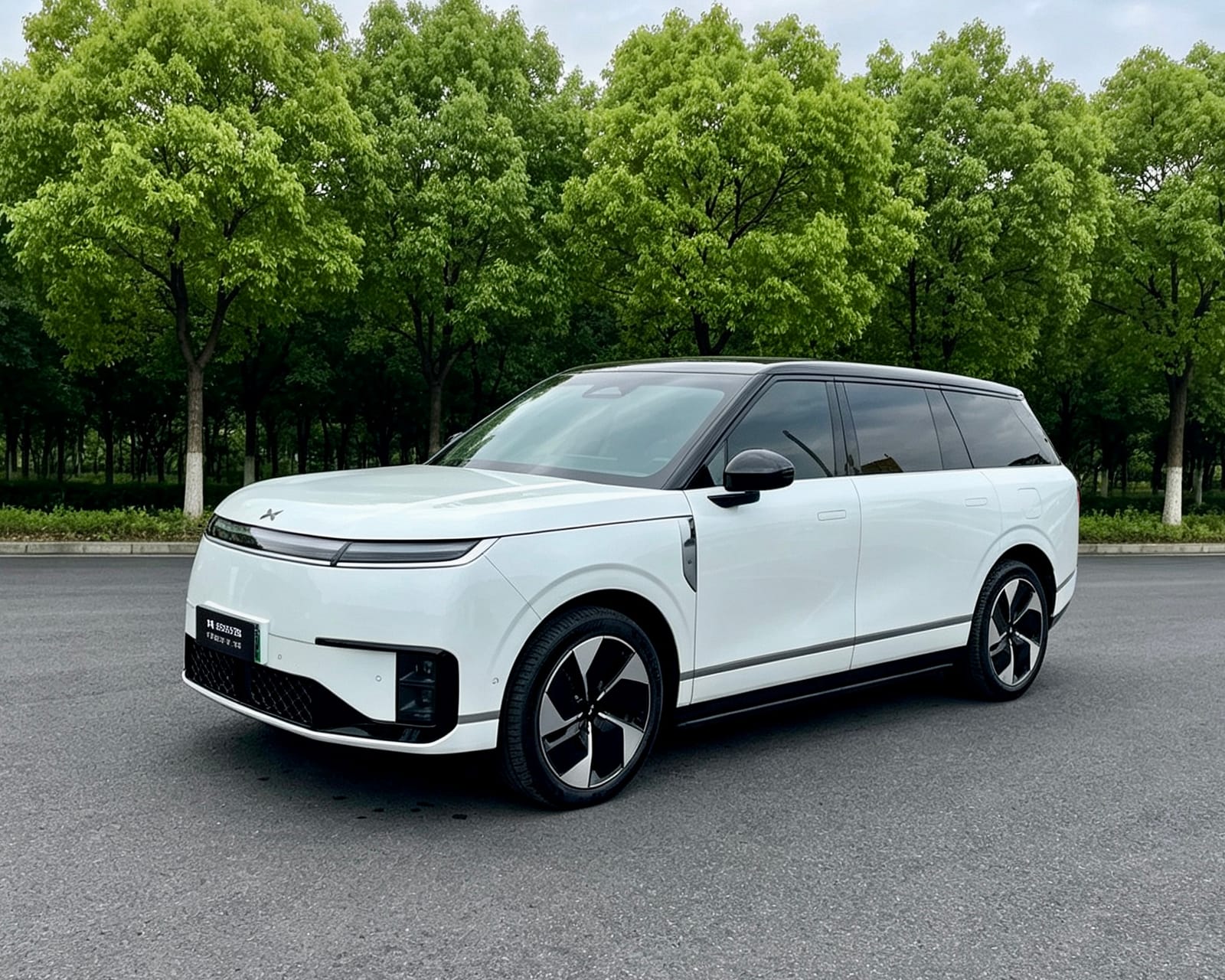
The car photographed is a 2026 Xpeng GX EREV 1585 AWD Ultra SE, white. Decode that line carefully, because almost everything you need to know about the hardware is in it.
- EREV means extended-range electric: the wheels are driven electrically, while a 1.5-litre turbocharged petrol engine works only as a generator to charge the battery when needed.
- 1585 is the CLTC combined range class in kilometres, covering electric driving plus range-extender operation. It is a laboratory marketing figure, not a motorway result.
- AWD confirms dual-motor all-wheel drive, standard across the GX range.
- Ultra is the high hardware tier, above Max, carrying the fuller sensor and computing package for assisted driving. SE is the specific sub-grade on this car; the exact equipment list should always be confirmed against the factory configuration sheet rather than inferred from the badge.
A battery-electric GX also exists in the line-up, in a 665 CLTC range class, so buyers comparing offers must first separate EREV from BEV before comparing grades.
How the Range-Extended Powertrain Works
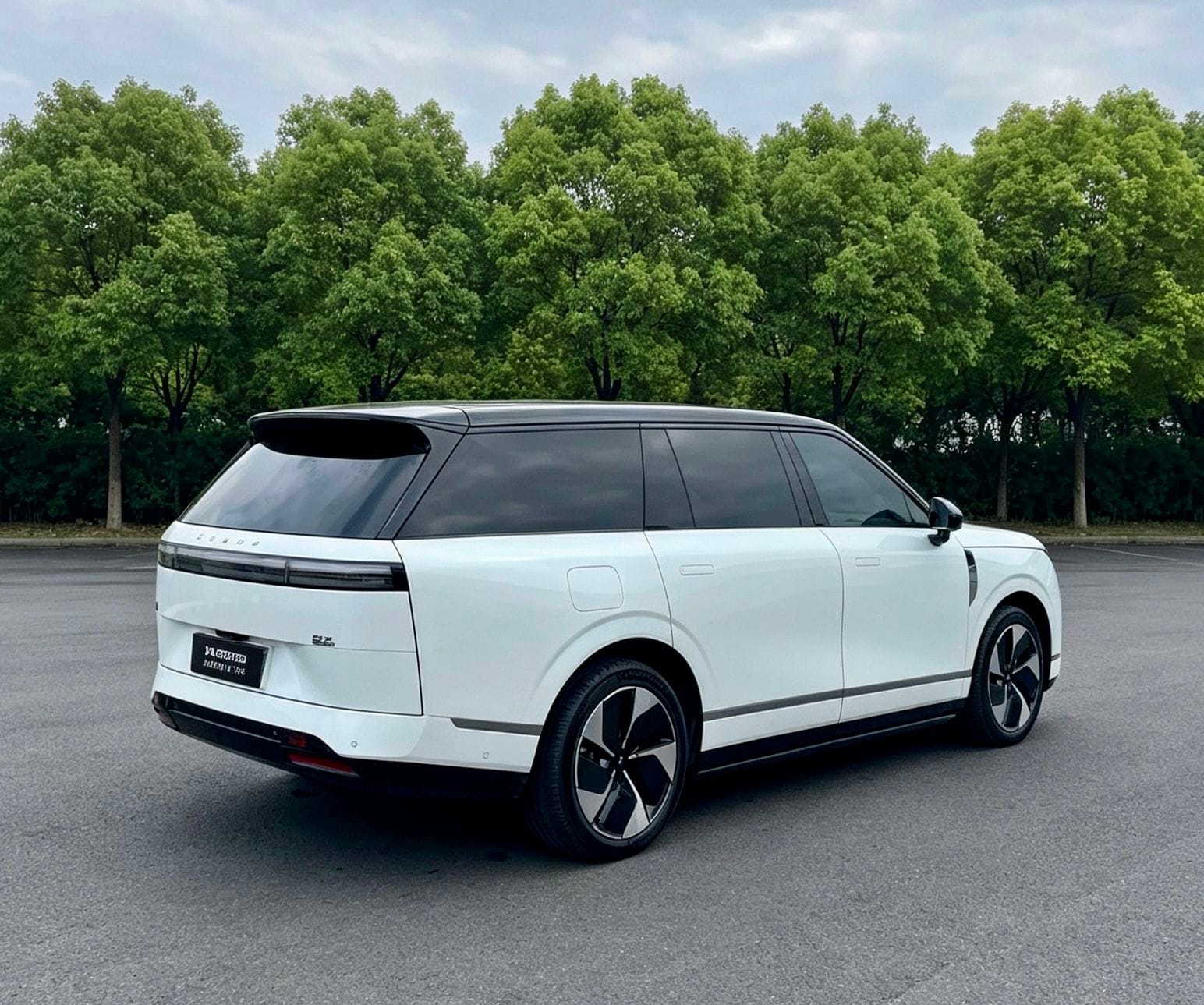
The EREV 1585 pairs a lithium-iron-phosphate battery of about 63.3 kilowatt-hours with a 1.5T range extender and a sixty-litre fuel tank running on regular 92-octane petrol. Official figures put electric-only CLTC range at around 430 kilometres and combined CLTC range at 1,585 kilometres, with a depleted-battery fuel-consumption figure around 6.19 litres per hundred kilometres under WLTC-style testing.
Two drive motors provide all-wheel drive: an asynchronous motor at the front rated around 160 kilowatts and a permanent-magnet motor at the rear around 210 kilowatts, for a system output near 370 kilowatts and a stated zero-to-one-hundred time around five seconds.
For an export buyer the key conceptual point is that an EREV is two systems in one car. It has the battery, charging port, inverters and thermal management of an EV, plus the engine, generator, fuel system and exhaust of a conventional car. A used example therefore needs both inspection disciplines, not just one.
800 Volts, 5C Charging and the LFP Battery
The GX sits on an 800-volt high-voltage platform with a silicon-carbide-style coaxial electric drive and an LFP battery pack rated for 5C ultra-fast charging. Xpeng quotes a ten-to-eighty-percent DC session of roughly twelve minutes under ideal conditions. As always, treat that as a best-case laboratory number: real sessions depend on charger power, battery temperature and state of health.
LFP chemistry brings the same trade-offs discussed across the Chinese EV market: strong deep-cycle tolerance and good hot-climate behaviour, against slightly weaker cold-weather performance. Because the extender can cover long trips, daily running can be treated as a short-range EV, with the engine reserved for inter-city journeys — a pattern that suits markets where public charging is patchy but urban home or depot charging exists.
The car also offers vehicle-to-load and vehicle-to-vehicle output at up to six kilowatts, which turns the battery into a workable power source for equipment, camping or emergency use — a selling point in markets with unstable grids.
Cabin, Six Seats and Flagship Equipment
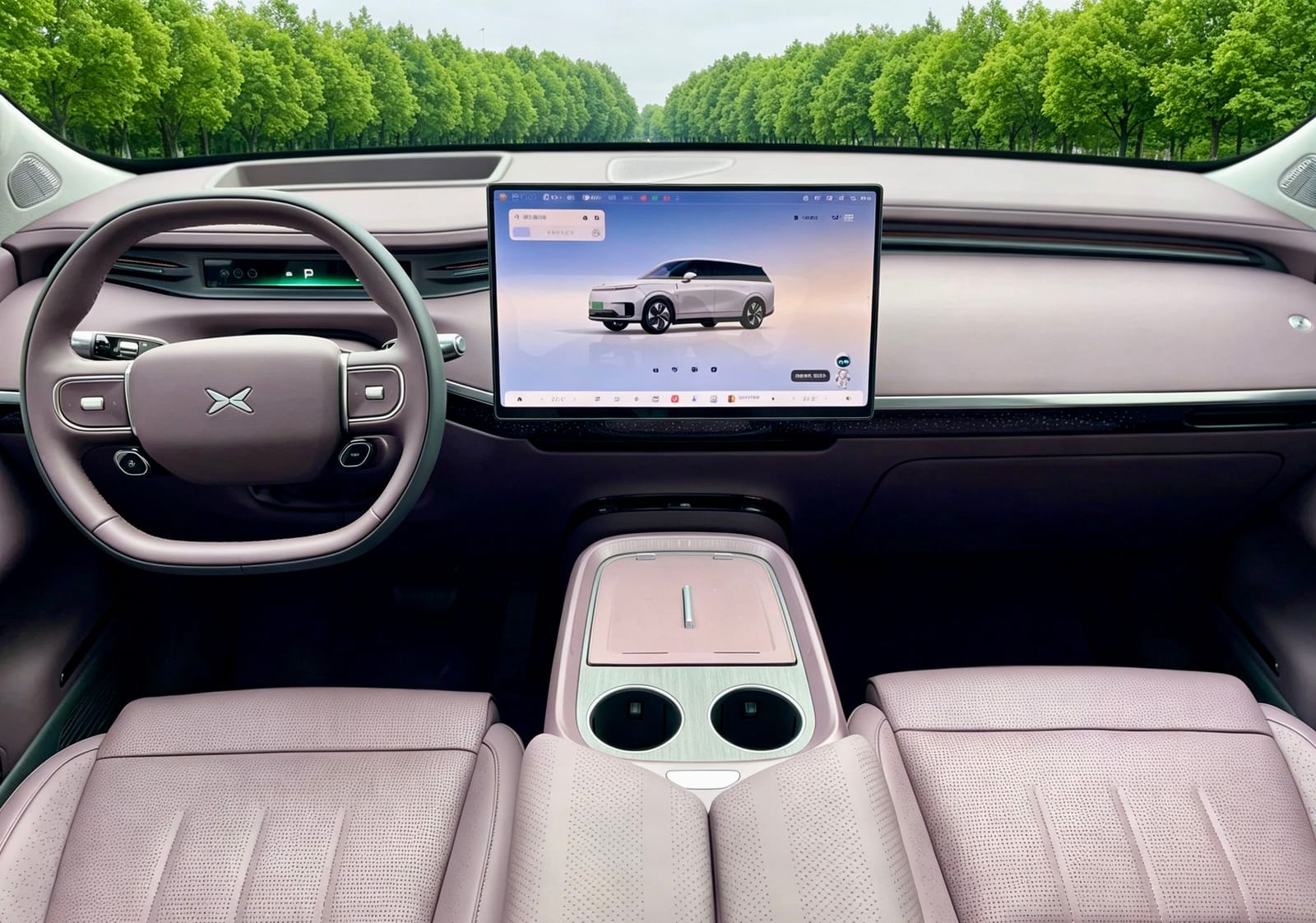
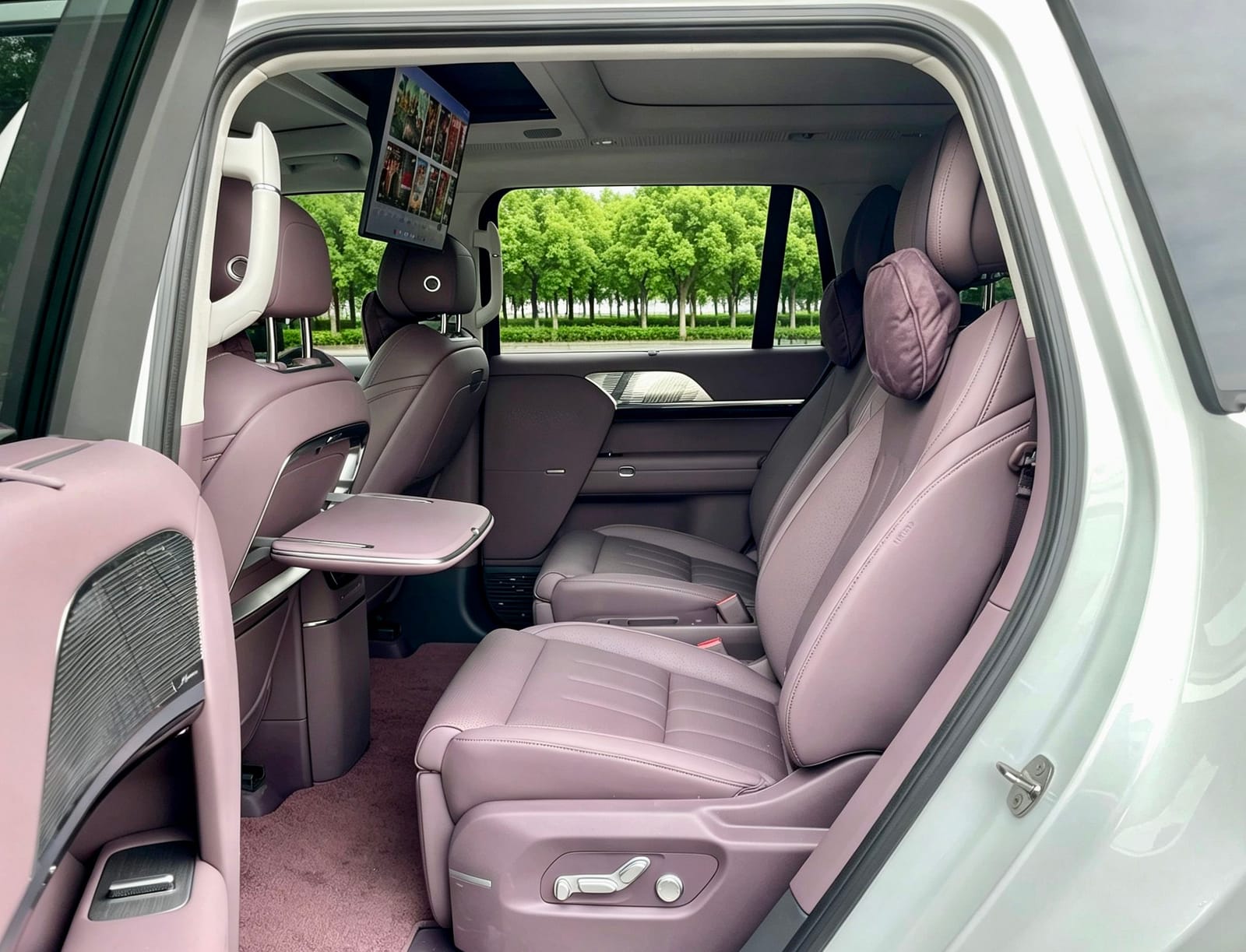
The GX is built around a six-seat, three-row layout with second-row captain chairs, rather than a seven-seat bench arrangement. The photographed car shows the flagship cabin treatment: a large central 3K touchscreen, a slim driver display, an augmented-reality head-up display and a dedicated rear entertainment screen, plus Nappa-style leather, zero-gravity seat functions on the upper grades and a dual-zone refrigerated console.
The body uses large one-piece aluminium die-cast sections, and the steering is a steer-by-wire system with a retracting column — hardware that is novel enough that collision repair and wheel-alignment work must go to a properly equipped workshop. Software-defined features, projected headlamps and dimming privacy glass all depend on control units and sensors that do not exist on older Chinese SUVs, so parts planning matters more than ever.
What a Used GX Inspection Must Cover
Battery state of health. Require a written SOH report from the official diagnostic system, dated and tied to the specific vehicle. For an EREV, check both the high-voltage battery and the 12-volt battery, since the latter gates the whole wake-up sequence.
The range extender itself. Because it runs only intermittently, inspect service history, coolant condition, engine mounts and the starting cycle. A generator engine that rarely runs can still develop stale-fuel, seal and gasket issues; ask to see it start, charge the battery and shut down repeatedly.
Charging verification. Observe a real DC fast-charge session and an AC charge, checking curve, thermal behaviour and any interruptions. Confirm the GB/T port topology and plan adapters for the destination network before purchase.
Dual-motor health. All-wheel-drive cars need both motors and both inverters checked under load; listen for unusual whine and verify torque distribution functions in the diagnostic menus.
Software, account and ADAS. Confirm in writing how the vehicle account transfers, which connected functions work outside China, whether the interface language can be changed for your buyers, and how over-the-air updates behave abroad. Walk through every sensor-dependent assistance function and the surround-view cameras.
Body, glass and novelties. Check panel gaps, the panoramic glass, all six seat mechanisms, the screens, the fridge and the steer-by-wire components. Put the car on a lift and inspect the battery tray, undertray and the extender's exhaust route for damage.
Export Paperwork and Market Reality
Three export points are specific to this kind of vehicle.
First, homologation. As a new-energy vehicle it needs no emissions certificate in the conventional sense, but it still requires type-approval paperwork, high-voltage safety documentation and a charging solution compatible with the destination. The GX's stated compliance with dozens of national regulatory regimes helps, but the importer of record must still confirm local acceptance.
Second, connected services. The app, remote controls, voice assistant and OTA pipeline are built for the Chinese ecosystem. The November 2026 Middle East and Africa launch suggests international software builds are being deployed, but do not assume a China-spec car carries them — verify on the actual vehicle identification number.
Third, parts and service. A 2026 flagship with steer-by-wire, die-cast structures and dense ADAS hardware cannot be repaired with generic tools. Xpeng's expanding overseas store network reduces this risk over time, but independent exporters should identify a capable workshop and agree parts lead times before shipping, and should treat electronic modules and lamps as special-order items.
All Chinese-market GX units are left-hand drive. The separate G9L right-hand-drive programme for Australia shows the manufacturer is developing RHD products, but that does not make the China-spec GX itself a right-hand-drive car.
Buyer Questions
EREV or the battery-electric GX? Choose EREV where charging infrastructure is weak, long inter-city trips are common, or buyers fear being stranded. Choose BEV where reliable fast charging exists and the duty regime favours pure electrics. Never compare their prices without first separating the two powertrains.
Is the range extender just a fragile extra engine? It is a mature generator concept, but it adds service items. A documented maintenance record and a witnessed start-charge-stop cycle matter more than mileage alone.
What is the difference between Max and Ultra? Both are high hardware tiers; Ultra carries the fuller sensor and computing package for advanced assistance. The SE suffix marks the exact sub-grade on the photographed car, so confirm the complete equipment list on the factory sheet.
Can the GX be serviced outside China? Routine checks and tyres are conventional, but high-voltage, steer-by-wire and ADAS work need trained technicians and Xpeng diagnostic tools. Locate that capability before the ship sails.
Does the 1585 badge mean 1,585 kilometres on every trip? No. It is a CLTC combined figure blending electric and extender running in laboratory conditions. Real range depends on speed, climate, load, battery age and driving style, and a used battery must be judged on its measured SOH.
Next Step
Tell us which GX you are considering and we will send material for that exact unit: the battery SOH report, range-extender service records, a recorded charging session, a full walk-around, close-ups of the badges and factory plate, the documents we hold, and an independent inspection before shipment if you want one.

Latin America Used Car Import Guide 2026: Mexico, Brazil, Chile & Peru
Latin America Market Desk

Central Asia Used Car Import Guide 2026: Kazakhstan, Uzbekistan, Kyrgyzstan & Tajikistan
Central Asia Market Desk

China Used Car Export Policy 2026: Complete Guide
Policy Analysis Team