Volkswagen Tayron Buyer Guide: Reading 330TSI, DQ381 and the China-versus-Europe Generation Gap
Using a 2023 FAW-Volkswagen Tayron 330TSI two-wheel-drive Luxury Plus from our own stock, this guide explains how the Chinese first-generation MQB Tayron differs from the new European MQB Evo model, what the 280TSI, 330TSI and 380TSI badges mean, how the EA888 engine and seven-speed wet DSG behave, what a used example must be checked for, and why a global VW nameplate is one of the safer export choices for parts and service.
Why the Tayron Matters
The Tayron is the mid-size SUV that FAW-Volkswagen built for China from 2018, sitting between the smaller Tharu and the larger Teramont in the local line-up. What makes it especially relevant to export buyers today is that the name has gone global: Volkswagen premiered an all-new Tayron in 2024 and launched it across Europe from April 2025 as the successor to the Tiguan Allspace, built in Wolfsburg on the MQB Evo platform with five- and seven-seat versions, diesel and plug-in hybrid options.
That creates both an opportunity and a trap. The opportunity is that buyers from Berlin to Dubai now know the Tayron name, and the Volkswagen parts ecosystem covers virtually every market the car is exported to. The trap is that the Chinese first-generation car and the European new-generation car are completely different products, and nobody should source or quote parts across the two without checking the generation first.
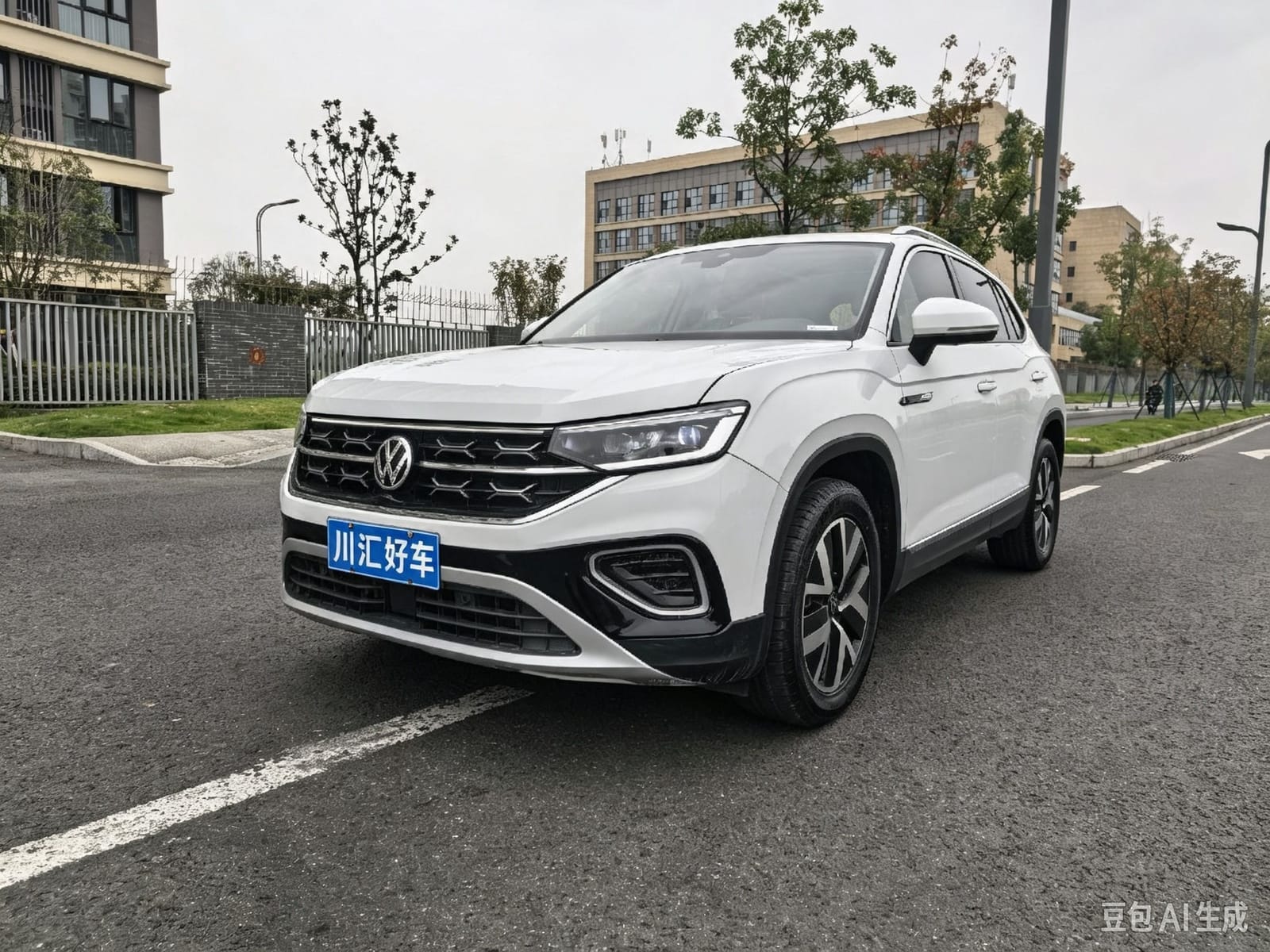
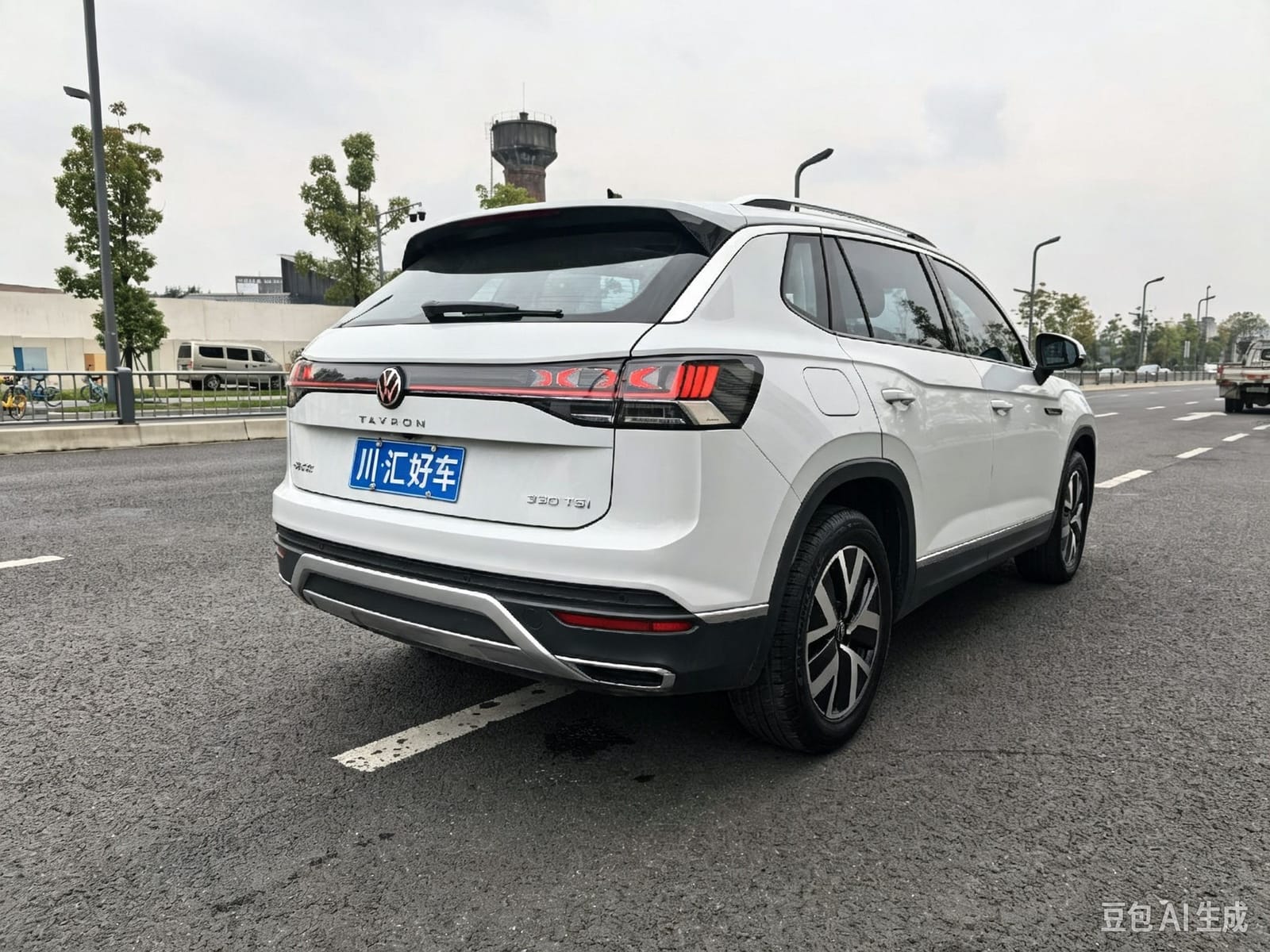
The car in our photographs is a 2023 Tayron 330TSI, two-wheel-drive Luxury Plus Advanced trim, white, built by FAW-Volkswagen. It belongs to the first generation on the MQB A2 architecture, and this guide uses it to make the badge system and inspection logic concrete.
Reading the Badges
Volkswagen China's TSI naming follows a torque-class system rather than engine displacement, so the number on the tailgate has to be decoded rather than read literally.
- 280TSI is the entry petrol class, historically the 1.4-litre EA211 and later the 1.5-litre evo2 engine, aimed at price-sensitive buyers.
- 330TSI is the mainstream two-litre class: the third-generation EA888 in its efficiency tune, rated at 137 kilowatts and 320 newton-metres on this specification, paired with the seven-speed wet DQ381 dual-clutch gearbox and front-wheel drive.
- 380TSI is the high-output two-litre EA888, reserved for 4MOTION all-wheel-drive versions with a Haldex-style rear coupling.
Two practical rules follow. First, never assume two cars with "330TSI" badges from different years carry identical equipment — model-year updates change screens, driver-assistance hardware and trim content, and the factory configuration sheet is the only reliable reference. Second, the photographed car is front-wheel drive; it must not be marketed as an AWD vehicle regardless of the SUV body style.
Chinese First Generation Versus European New Tayron
The generation gap is the single most important fact in this article.
The Chinese first-generation Tayron uses the MQB A2 platform shared with the Chinese-market Tiguan L family, with a length around 4.59 metres and a 2,731-millimetre wheelbase, transverse EA888 engines, DQ381 wet dual-clutch transmissions, MacPherson front and multi-link rear suspension, and a conventional five-seat cabin layout.
The European new Tayron is built on MQB Evo, measures about 4.79 metres long, offers five- and seven-seat configurations, and was launched with TSI petrol, 2.0 TDI diesel and eHybrid plug-in hybrid powertrains, including a long-range PHEV. Digital Cockpit Pro, HD matrix lighting and newer assistance systems are standard or optional equipment that the first-generation Chinese car does not share.
Body panels, electronics, drivetrain parts and service procedures differ between the two. A workshop familiar with the European Tiguan or the new Tayron cannot assume its parts catalogue fits a 2023 Chinese car. Always identify the vehicle from the registration documents and the factory plate, then order against the exact VIN.
What the Powertrain Delivers
The EA888 third-generation engine in the 330TSI is one of the most produced modern turbocharged four-cylinders in the world, which is precisely why it suits export markets: service knowledge is widespread, common failures are documented, and spare parts are available through both official and independent channels.
Its 320 newton-metres arrive from around 1,600 rpm, giving relaxed motorway cruising and confident overtaking without the higher tax exposure of the 380TSI. The engine requires 95-octane fuel and China 6 emissions compliance; destination countries with lower-octane petrol should confirm fuel availability before sourcing. Official combined consumption on the WLTC cycle is around 7.07 litres per hundred kilometres, a laboratory figure that runs higher in city traffic and hot climates.
The DQ381 is a seven-speed wet-clutch DSG, a meaningful step up in heat tolerance and towing durability from the older dry-clutch seven-speed units. It still deserves a careful test drive: low-speed hesitation, jerky crawls or delayed reverse engagement can indicate mechatronic wear or fluid past its service interval, while clean, linear upshifts point to a healthy transmission.
Cabin, Equipment and Practicality
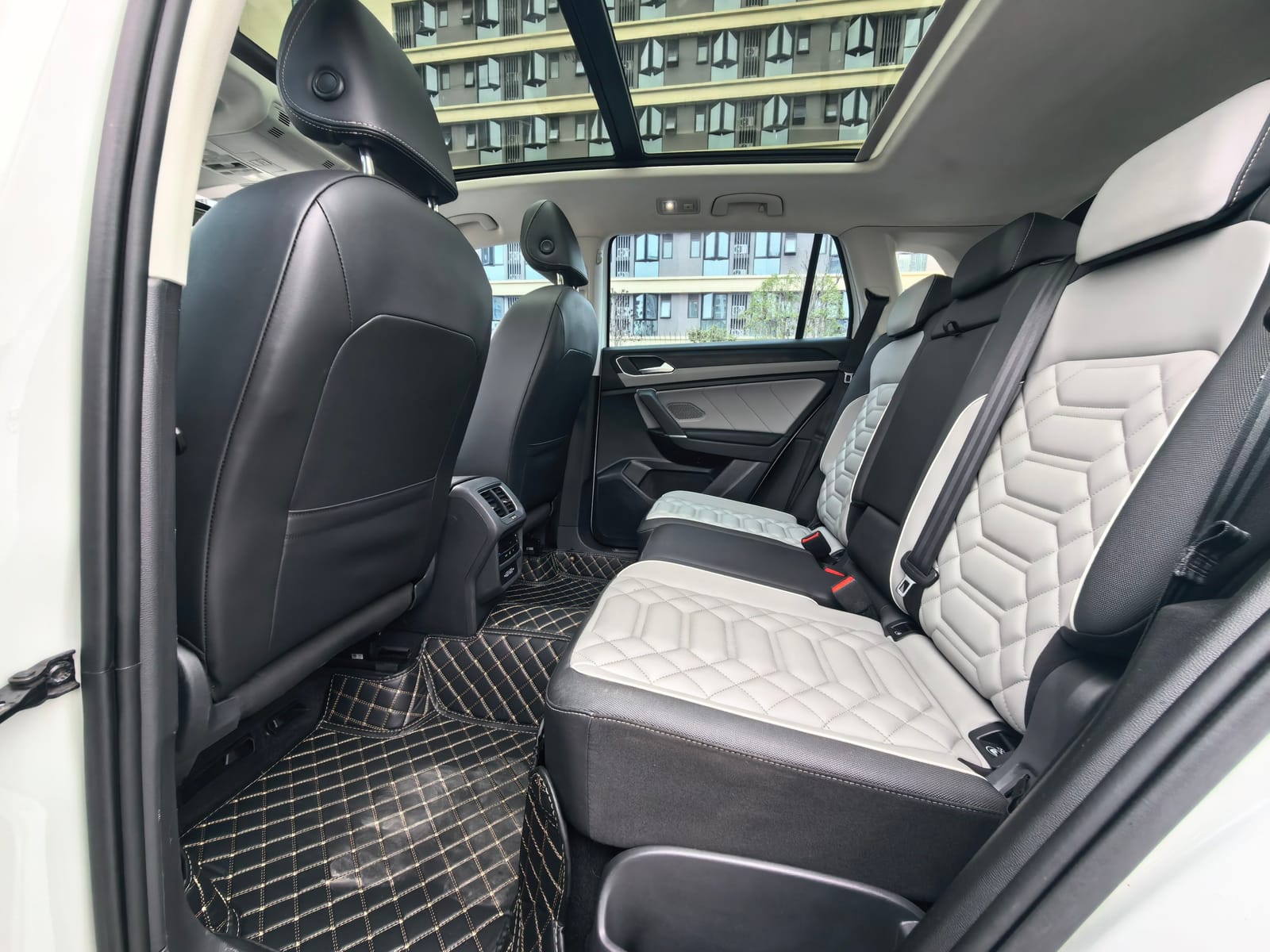
At 4.59 metres long with five seats, the Tayron targets family and fleet buyers who want SUV space without a seven-seat footprint. The photographed Luxury Plus grade carries the 10.25-inch digital instrument cluster, the 12-inch central touchscreen, a panoramic roof, quilted two-tone seating and the IQ.Drive assistance package with Travel Assist combining adaptive cruise and lane support at Level 2 capability.
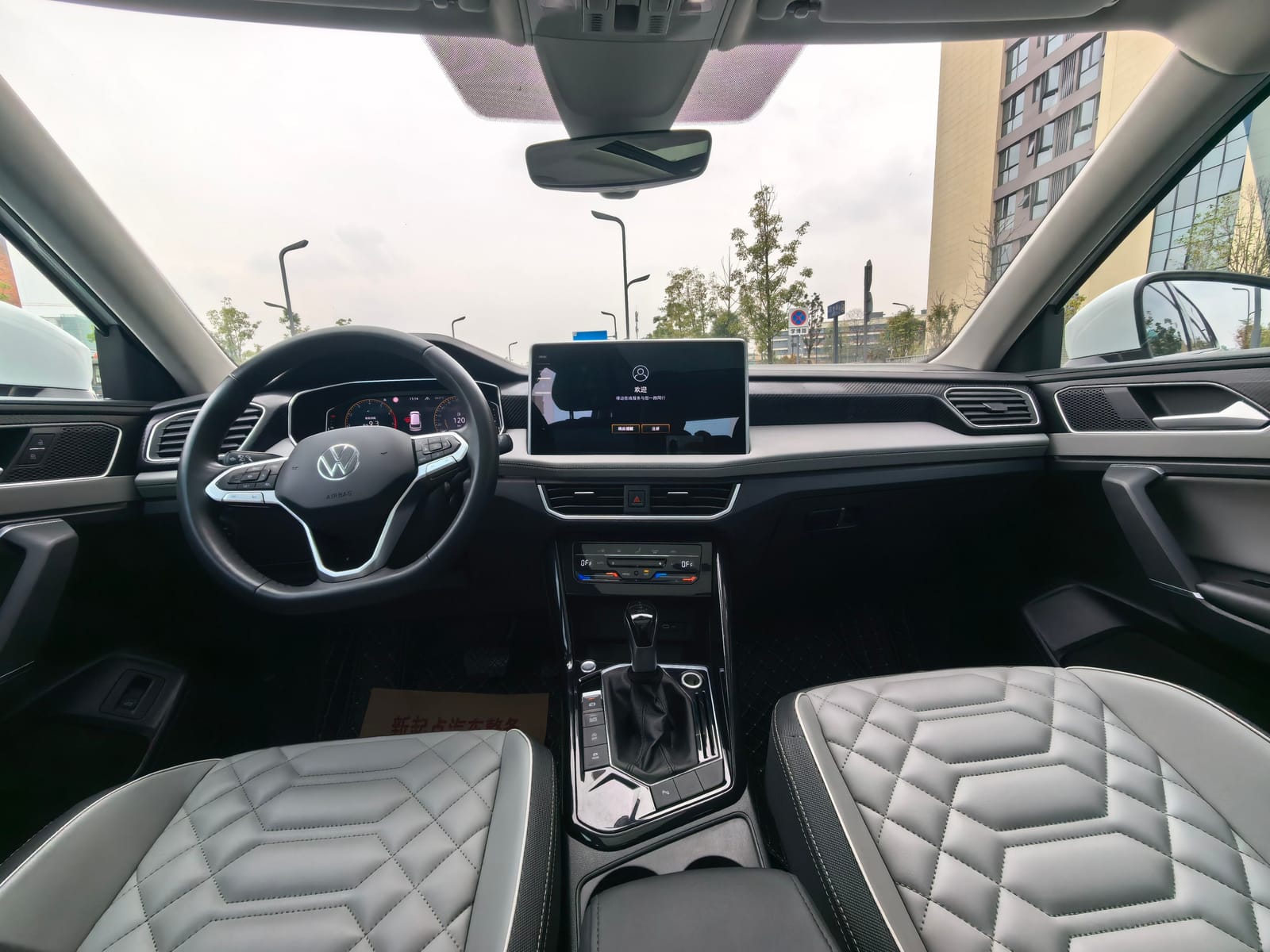
Two export caveats apply to the cabin. The infotainment is a China-market unit with domestic apps and connected services; before shipment, confirm in writing which functions work abroad, whether the interface language can be changed for the buyer, and how any vehicle account is transferred. The second is physical rather than digital: check the panoramic roof drains, because blocked tubes are a common source of head-lining water damage on MQB SUVs.
What a Used Tayron Inspection Must Cover
Engine and turbo. Check for oil seepage around the cam cover, turbo oil lines and sump, verify the service history uses the approved VW specification oil, and scan the ECU for stored faults. Ask whether the gasoline particulate filter has been inspected, as China 6 cars carry GPF hardware that can soot up on short-trip use.
DSG transmission. Drive in stop-start traffic and judge crawl smoothness, reverse engagement and kick-down response; read transmission codes and confirm fluid-change records. A wet DSG is durable, but neglected fluid is the fastest route to an expensive mechatronic repair.
Cooling and timing evidence. Review the water pump and thermostat housing for coolant traces — EA888 cooling components are known service items — and demand a full maintenance record rather than relying on the odometer alone.
Suspension and underbody. On a lift, inspect the front control-arm bushes, anti-roll bar links, rear dampers and subframe mounts; test for clunks over speed bumps. Check the undertray and sump for impact damage, especially on cars previously used outside cities.
Brakes and tyres. Measure front discs and pads, confirm the electric parking brake releases cleanly, and verify all four tyres match in brand, size and age; mismatched rubber will upset ABS and stability calibration even on a front-drive car.
Electronics and ADAS. Walk through every parking sensor and camera, the Travel Assist functions, lane-keeping, blind-spot warnings, both screens, seat motors, climate zones and all keys. Module replacement abroad is a special-order exercise even for a global brand.
Export Paperwork and Market Reality
All Chinese-market Tayrons are left-hand drive, matching the Middle East, Central Asia, Russia, Africa and Latin America — the belt where Volkswagen already runs mature dealer networks. Right-hand-drive markets should be directed to separately developed RHD products rather than converted China-spec cars.
Documentation should include the registration certificate, factory configuration sheet, export licence paperwork, maintenance records and a full inspection report. Because the Tayron name is now sold new in Europe and elsewhere, used examples benefit from immediate brand recognition and parts access, but they also compete against certified pre-owned stock; a verifiable history and transparent condition report are therefore the trader's main selling tools.
Displacement-based duty regimes generally treat a two-litre turbo more harshly than a 1.5-litre, so the landed-cost difference between 280TSI and 330TSI should be modelled before sourcing. And because Chinese first-generation and European new-generation parts are not interchangeable, the VIN-driven parts list should be agreed with the destination workshop before the ship sails.
Buyer Questions
Is the Tayron a real off-roader? No. The 330TSI is a front-wheel-drive road SUV for tarmac, graded gravel and family use. Serious loose-surface work needs the 380TSI 4MOTION or a ladder-frame vehicle.
Are the Chinese and European Tayrons the same car? No. Different platforms, dimensions, powertrains and electronics. Treat them as separate products and never cross-order parts without the VIN.
Is the wet DSG reliable? The DQ381 is substantially more robust than dry-clutch DSG units, but it depends on scheduled fluid changes and gentle low-speed use. Full service records matter more than age.
Which grade should an exporter target? The 330TSI offers the best balance of global EA888 parts support and mainstream duty exposure; choose 280TSI where displacement taxes dominate, and 380TSI only where buyers genuinely need AWD.
Will the Chinese infotainment work abroad? Basic functions generally work, but connected apps and services are China-region dependent. Verify on the actual vehicle and document the outcome before promising anything.
Next Step
Tell us which Tayron you are considering and we will send material for that exact unit: a full inspection report, the factory configuration sheet, a cold-start and driving video, underbody and suspension close-ups, the documents we hold, and an independent pre-shipment inspection if you want one.
Latin America Used Car Import Guide 2026: Mexico, Brazil, Chile & Peru
Latin America Market Desk
Central Asia Used Car Import Guide 2026: Kazakhstan, Uzbekistan, Kyrgyzstan & Tajikistan
Central Asia Market Desk
China Used Car Export Policy 2026: Complete Guide
Policy Analysis Team