Toyota Highlander: The Third-Generation 2.0T and the 2.5 Hybrid Are Two Different Cars
The Highlander sold in China comes in three forms under one name. What separates the third-generation 2.0T from the 380T and the 2.5 hybrid, why the hybrid is the better car and the harder sale, and the three things to inspect before anyone commits.
The Car That Sells Itself in Every Market
If a Land Cruiser is the answer to bad roads and a Teramont is the answer to a large family, the Highlander sits between them: seven seats, a car-based platform, a nameplate that exists in almost every country a used-car importer sells into, and a reputation for simply not breaking.
The complication is that it is not one car. It is three, sharing one badge: the third-generation 2.0T, the 380T that carries the same turbocharged engine in the newer body, and the 2.5-litre hybrid — which is the better car and the harder sale.

Three Cars Under One Name
| Version | Engine | Body | Gearbox |
|---|---|---|---|
| Third generation | 2.0T turbo | 2015–2021 body | 6-speed automatic |
| 380T | 2.0T turbo | 2021-onward body | Automatic |
| 2.5 hybrid | 2.5L petrol + electric | 2021-onward body | E-CVT |
The third-generation 2.0T is the export workhorse and needs no defence: a conventional turbo engine, a conventional automatic, no high-voltage system, and no specialist training needed to keep it on the road.
The hybrid is the better car to own — quieter, markedly cheaper to run — and the harder one to sell into a market without Toyota hybrid service experience. That trade-off is the entire decision.
The 380T exists because Toyota China kept the turbo engine available for buyers who did not want the hybrid. It is mechanically the simplest way into the new body.
Specifications
| Item | Third generation (2015–2021) | Fourth generation (2021+) |
|---|---|---|
| Length | 4,890 mm | 4,965 mm |
| Width | 1,925 mm | 1,930 mm |
| Height | 1,720 mm | 1,750 mm |
| Wheelbase | 2,790 mm | 2,850 mm |
| Seats | 7 | 7 |
| Drive | Front-wheel drive or all-wheel drive | All-wheel drive (E-Four, electric rear axle) |
Do not quote a fourth-generation measurement against a third-generation car. They are different platforms and the fourth-generation body is a hand longer.
What Export Buyers Should Check
- The hybrid's high-voltage battery. This is the one part a local workshop cannot cheaply substitute. Ask for battery health data, check the age of the pack, and make sure the buyer knows what a replacement costs in their own market before committing. Everything else on this car is ordinary; this is not.
- Emission class, from the certificate. Chinese registrations record the class in the vehicle's own paperwork and the answer varies by production batch, not only by model year. Take it from the certificate of the individual car rather than from a brochure or a listing field.
- Turbo and direct-injection components on the 2.0T. Ask about the turbocharger, the injectors and the high-pressure fuel pump. This engine is durable, but these are the expensive parts when they do fail.
- Third-row and tailgate wear. In a family car the third row is where children spent a decade. Look at the third-row fabric, the seat latches and the boot floor.
- Body rust on the third-generation cars. These lived outside. Check the tailgate aperture, the rear wheel arches and under the bonnet.
- Service history with mileage continuity. A Chinese-market service record should match the odometer across years, not just on the last page.
- Which car you are actually looking at. Confirm the generation and the powertrain from the documents, not from the shape of the headlights.
Real Photos of This Model
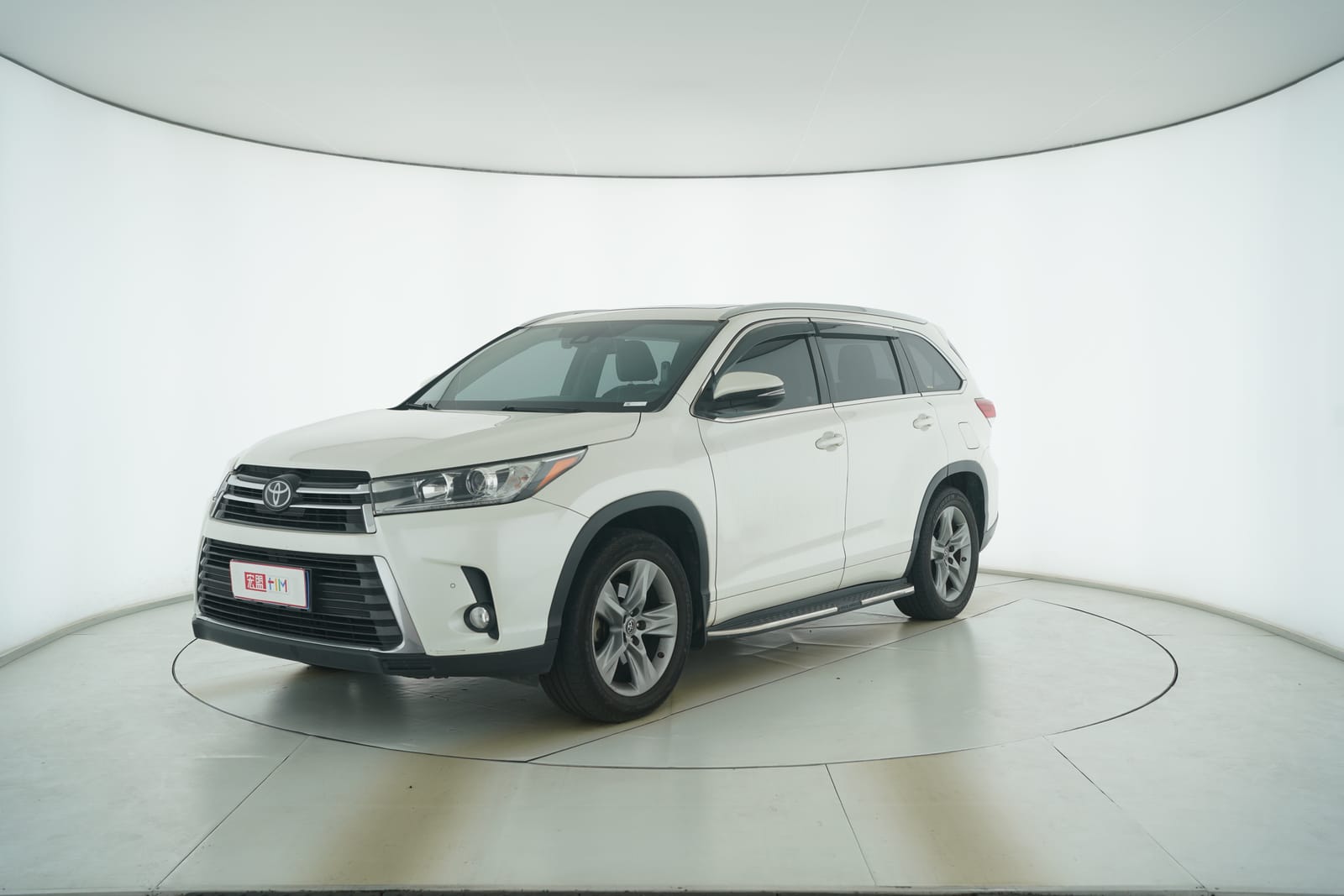
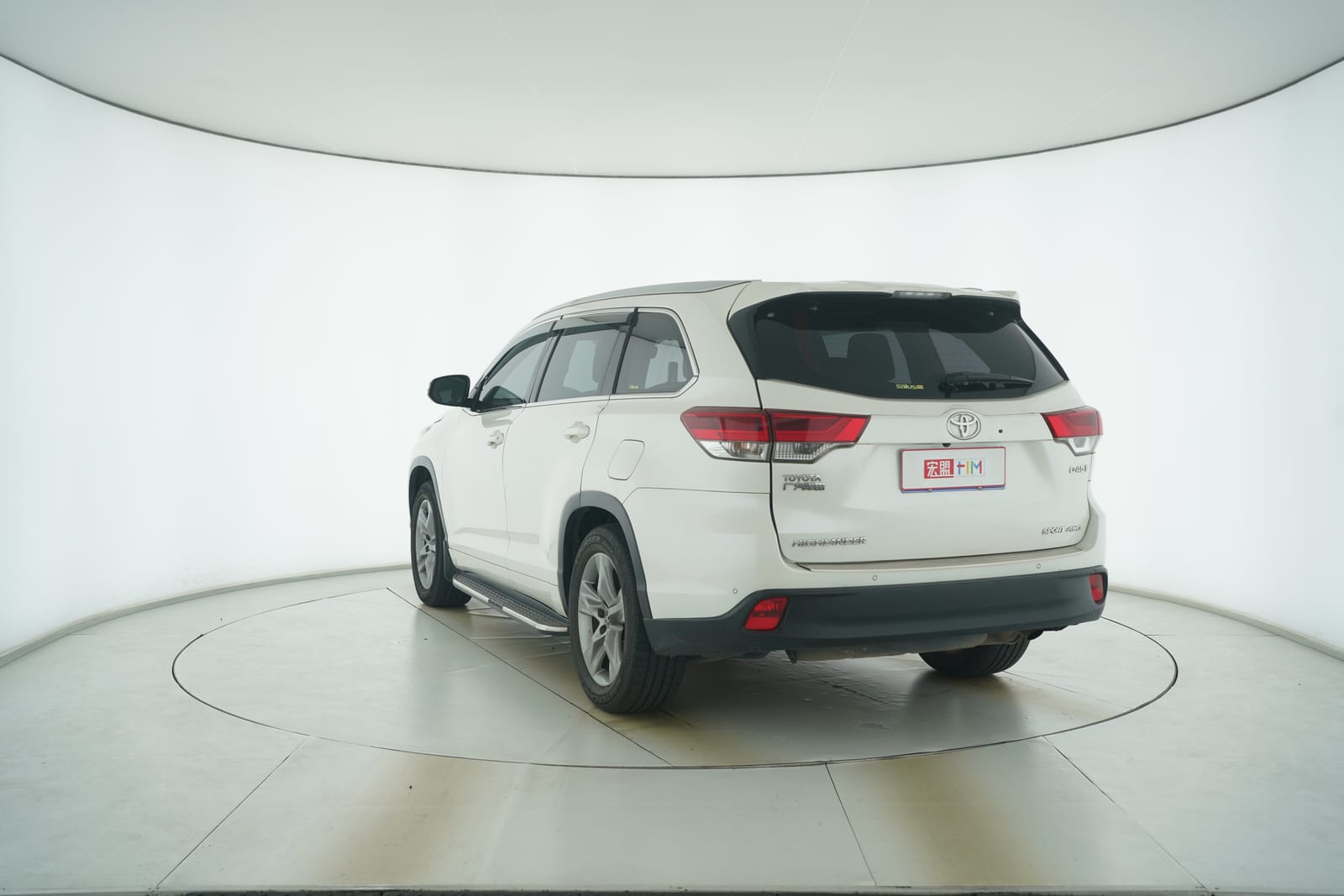
These are photographs of Highlanders we have handled, taken in our own inspection studio in China — the same imaging every car goes through before it is listed.
2018, 2.0T four-wheel drive, Luxury trim, 7 seats — white.
2022, 2.5 hybrid, four-wheel drive, Premium trim, 7 seats — black.
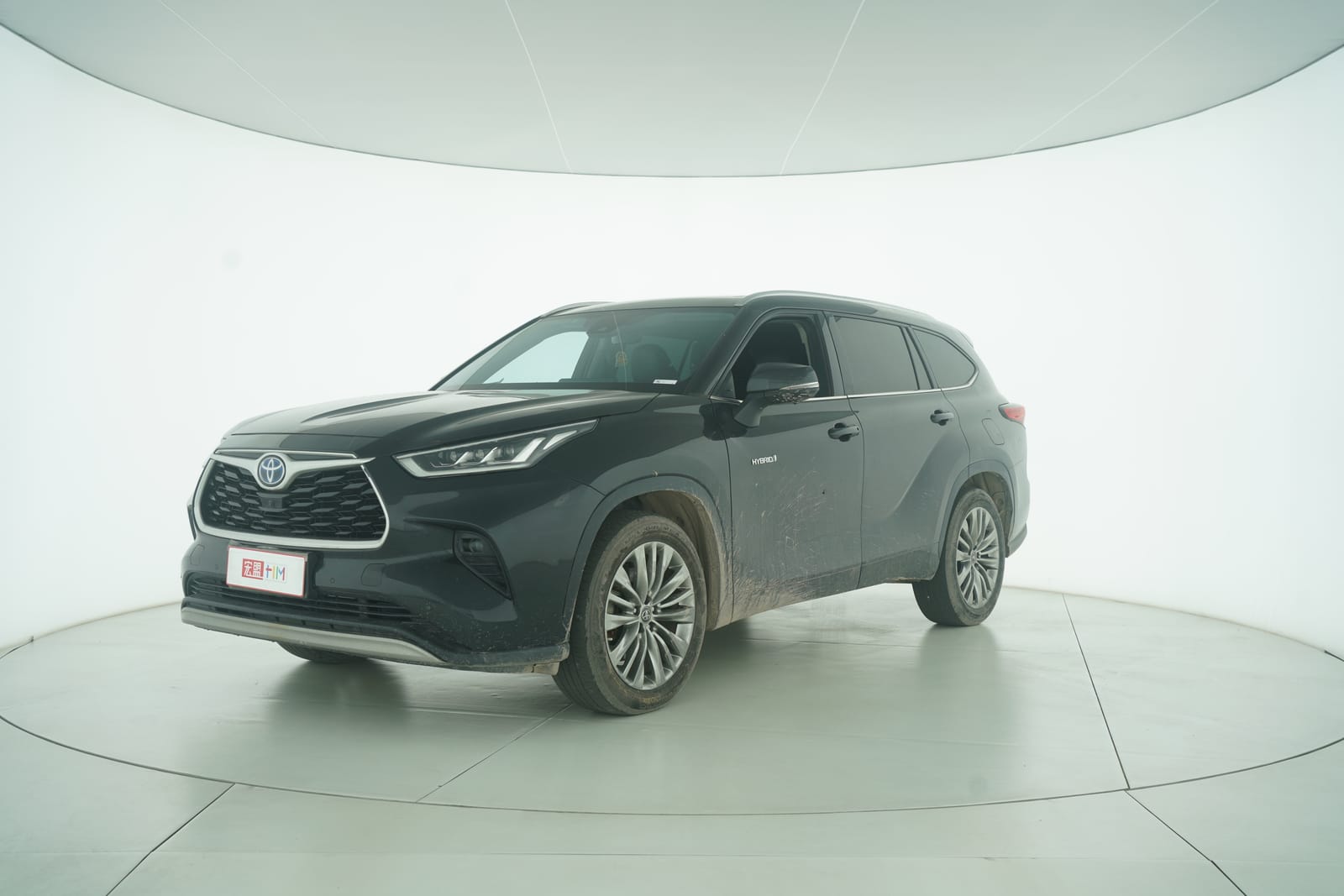
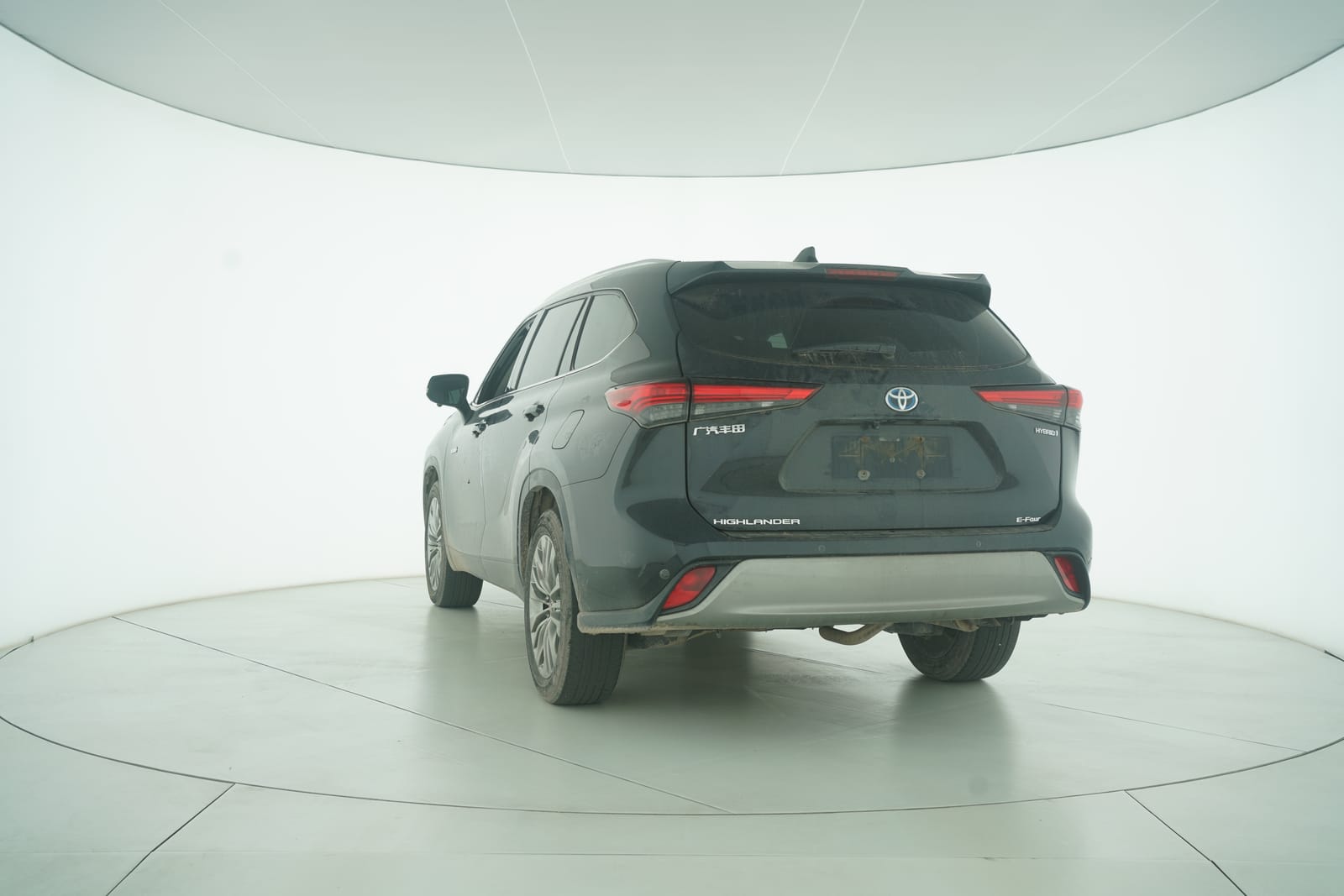
Note the dust down the flanks of the black car: it was photographed as it arrived, before preparation. That is the honest state to inspect a used car in, and it is what the studio records.

Who Should Import It
A good fit when the buyer wants:
- A seven-seat petrol family car with a global nameplate and easy parts
- The simplest possible specification — a third-generation 2.0T with no high-voltage anything
- A car for a market where Toyota service exists but hybrid service does not: that market wants the 2.0T
- The current body without hybrid complexity: the 380T
Think twice when:
- The buyer wants the hybrid in a market with no high-voltage technicians. It is the better car and the worse decision.
- Your market is strict on emission class — the class must come from each car's own certificate
- The buyer is comparing against a new-car price locally — this is a used-car business on both sides of the deal
- Somebody needs seven seats for adults every week — the third row is for children, on every generation
Latin America Used Car Import Guide 2026: Mexico, Brazil, Chile & Peru
Latin America Market Desk
Central Asia Used Car Import Guide 2026: Kazakhstan, Uzbekistan, Kyrgyzstan & Tajikistan
Central Asia Market Desk

China Used Car Export Policy 2026: Complete Guide
Policy Analysis Team