Toyota Crown Kluger Buying Guide: HEV or 2.0T, AWD Badges and Real-Vehicle Checks
The Toyota Crown Kluger is a three-row crossover, not a Crown sedan, and its HEV and 2.0T versions need different inspection priorities. This guide explains why an AWD badge does not make both powertrains mechanically identical, how to read trim and model-year information, and what to check in the hybrid system, turbo engine, chassis, third row and export documents.

Start With the Full Name: Crown Kluger, Not Crown Sedan
The Toyota Crown Kluger is a three-row crossover SUV. The Crown name on its grille does not make it a version of the Crown sedan, and the two should not share an inspection checklist based on name alone. Record the complete model name, body style, model year and full trim before comparing vehicles.
The large grille and Crown emblem establish a visual family identity, not a powertrain. Similar front styling can cover either a hybrid or a turbocharged petrol vehicle. Identification must continue through the registration records, full trim description and actual powertrain markings.
Model year and first-registration date are also separate facts. A later registration does not change the model year, and replaced lamps, grilles or wheels do not establish a different production version.
HEV and 2.0T Are Different Mechanical Choices
2.5L HEV identifies a hybrid version, while 2.0T identifies a turbocharged petrol version. They should not be treated as the same engine with different trim equipment. Their service information, diagnostic checks, cooling requirements and driving behaviour need to be assessed separately.
For the hybrid, observe engine start-stop transitions, readiness for driving, warning messages, hybrid-system diagnostics and the condition of the relevant cooling paths. A short silent movement does not prove hybrid-battery health, and a dashboard without warnings does not replace a diagnostic scan.
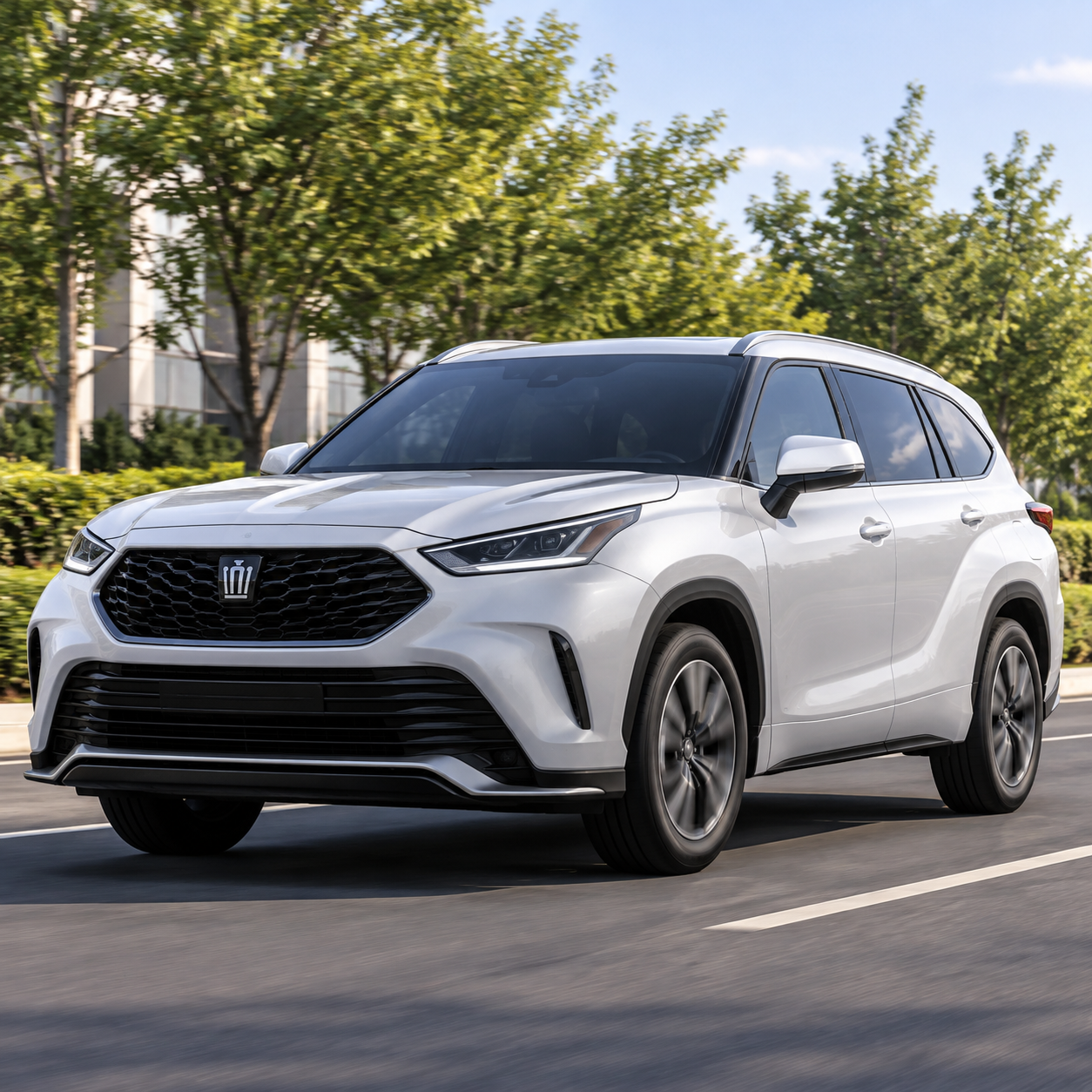
For the 2.0T, begin with a cold engine and check starting, idle, oil and coolant condition, leaks, hoses, mounts and stored faults. During a complete warm-road test, assess acceleration response, temperature behaviour and abnormal noise. Do not infer power, torque or engine condition from the 2.0T wording alone.
An AWD description likewise does not mean that HEV and 2.0T vehicles share one mechanical four-wheel-drive layout. Verify the exact configuration and test its operation without warning lights, vibration or abnormal noise. AWD improves neither body condition nor the vehicle's suitability for every unpaved route.
Trim Names Do Not Replace Equipment Verification
Names such as Premium and Premium Plus used in translations of the Chinese trims should be treated as labels, not as a universal equipment ranking across powertrains and model years. Keep the original full trim in the purchase records and verify the installed features directly.
Operate the seats, climate control, screens, cameras, parking aids, lighting and fitted driver-assistance systems. A trim name does not prove that every function is present or working after repairs and modifications.

Real-Car Exterior References
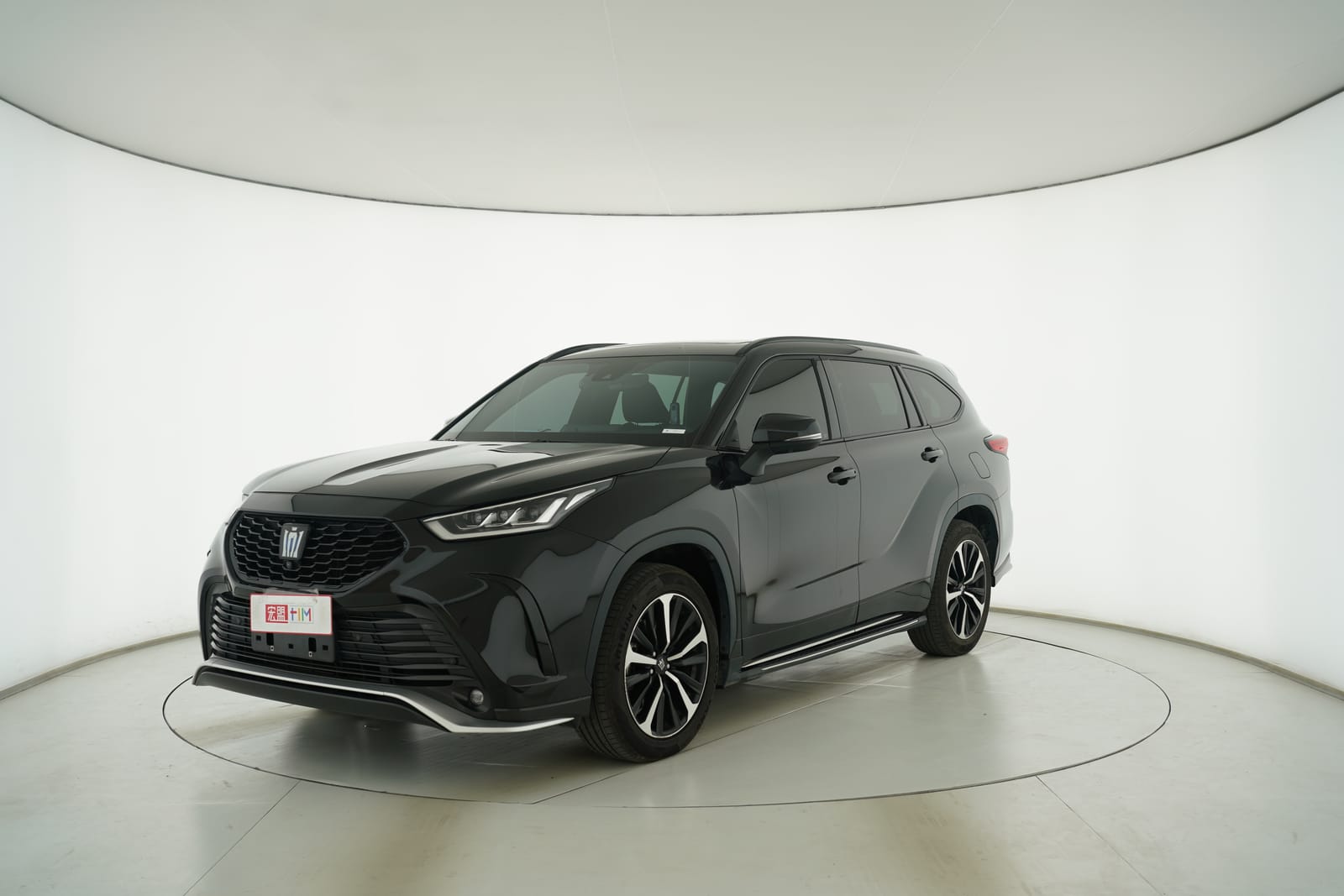
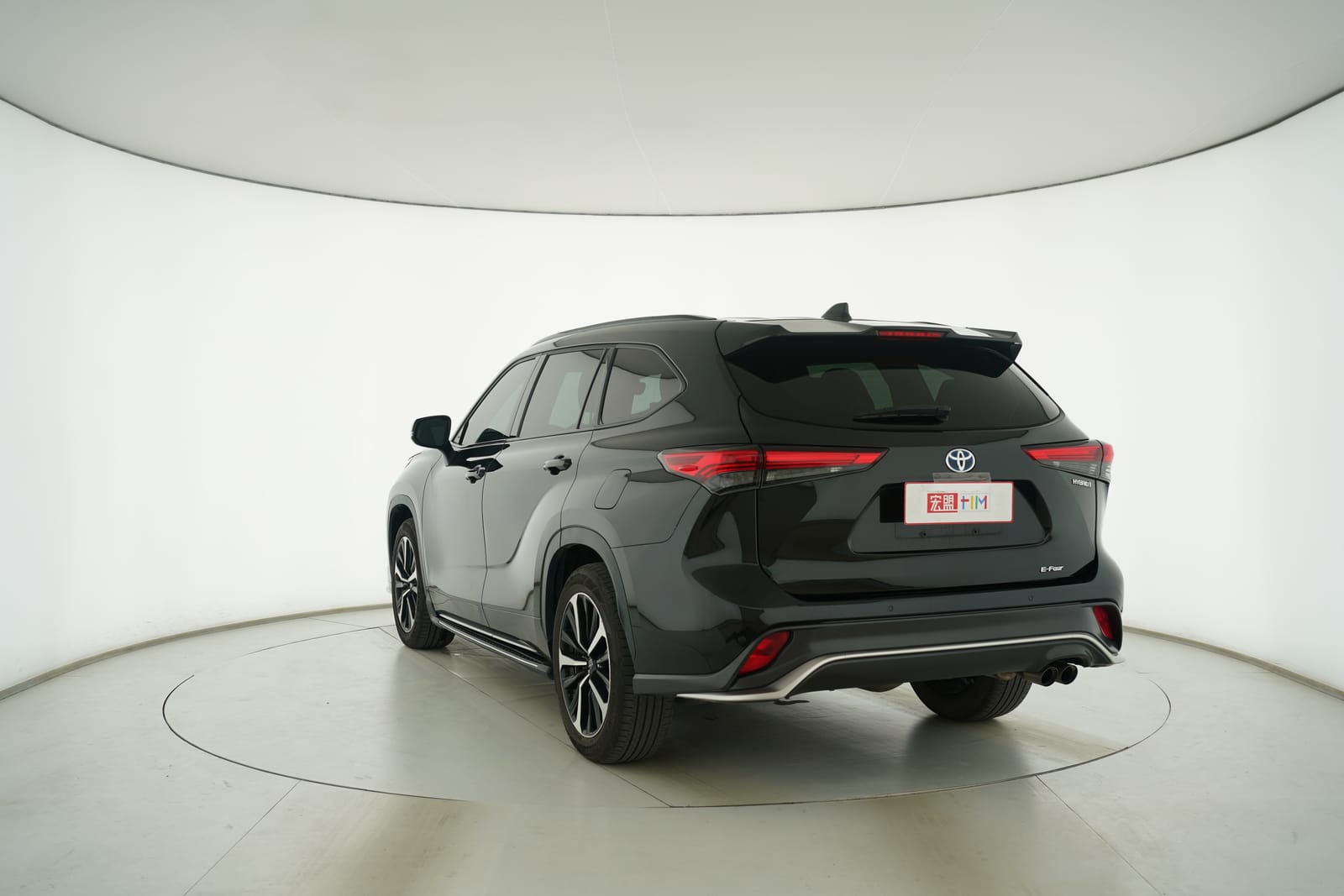
These photographs document body styling, wheels, lights, visible badges and colour. They do not establish hybrid-battery condition, engine health, complete equipment, modification history or document content.
2021 Crown Kluger 2.5L HEV AWD Premium, Black
2022 Crown Kluger 2.0T AWD Premium Plus, White
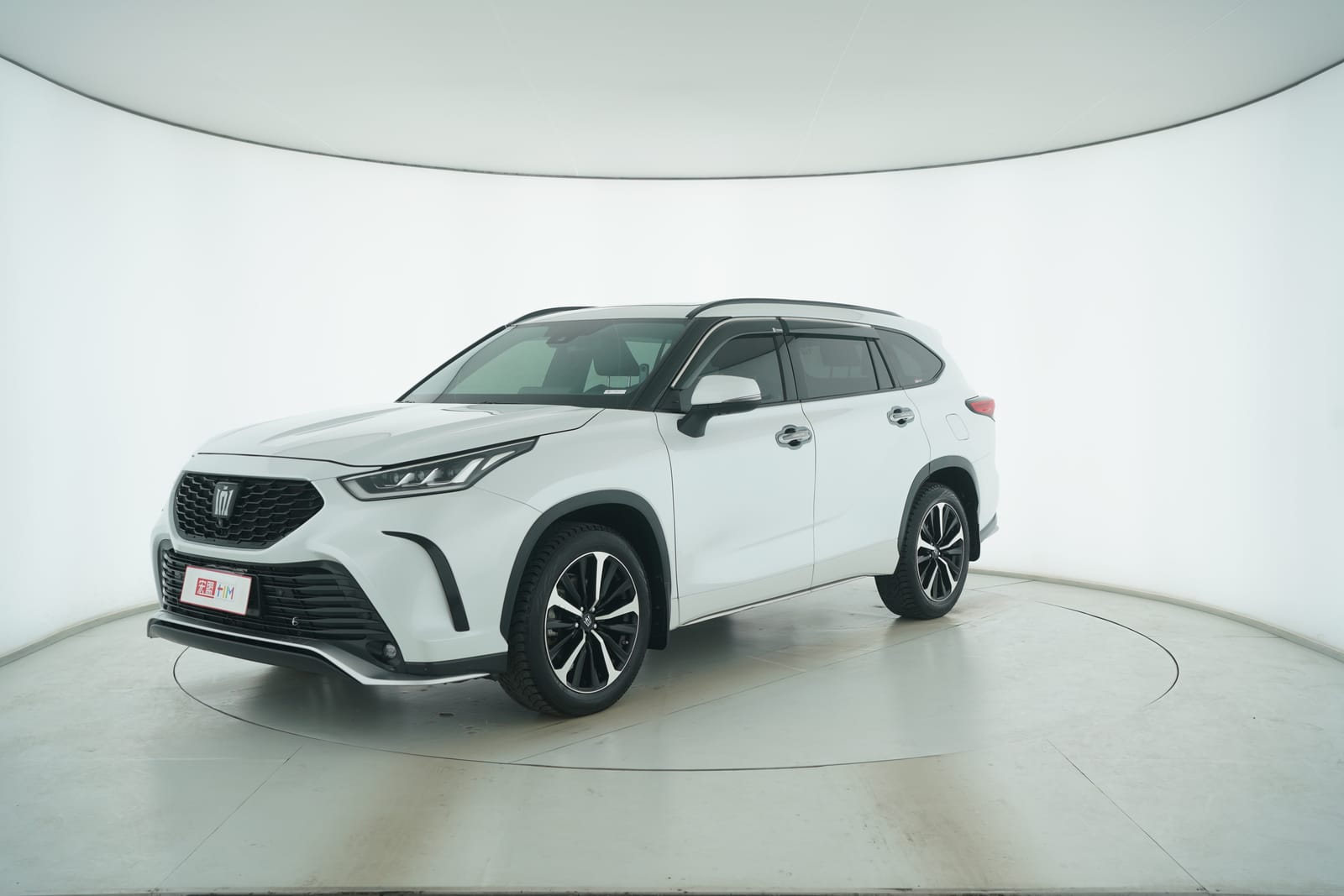
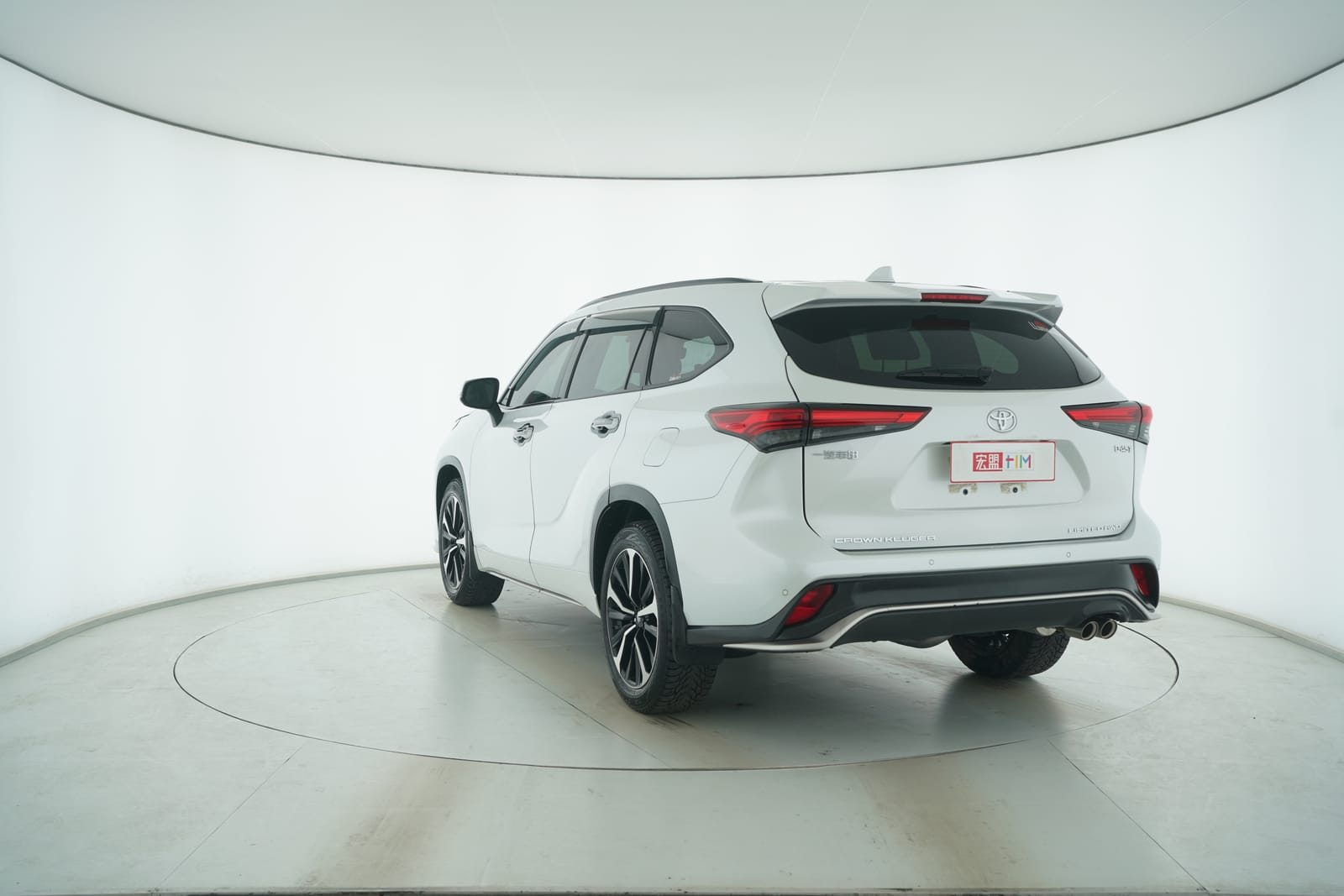
The visible hybrid and turbo-related badges are useful identification clues, but they do not replace factory and registration records. Photograph all relevant badges and reconcile them with the documents for the individual vehicle.
Inspect the Shared Three-Row Vehicle Carefully
Whichever powertrain is fitted, inspect the body structure, panel gaps, paint, weld points, suspension mounts and underbody. Check tyres, brakes, steering and suspension for uneven wear, pull, vibration and noise over bumps. The extra mass and passenger use of a three-row vehicle make these checks important even when the exterior appears clean.
Test every seating position used by occupants, including third-row access, seat belts, seat mounts, folding mechanisms and required child-seat anchors. Open the luggage area with the seats in their intended travelling positions and inspect the floor, seals and drainage paths for moisture or repair evidence.
Record non-factory wheels, suspension, lighting, roof equipment, electronics or software changes. Confirm installation quality and destination-market legality. A road-focused crossover should not be assessed as an unlimited off-road vehicle merely because it has AWD and roof rails.
Six Checks Before Export
- Confirm the full model identity. Keep Crown Kluger separate from the Crown sedan and match body, model year, trim and records.
- Identify the actual powertrain. Do not treat HEV and 2.0T as equipment variations of one engine; use the correct service and diagnostic information.
- Verify AWD and installed equipment. Test operation and warnings rather than assuming that badges or trim names prove a mechanical layout or feature list.
- Complete cold-and-hot driving checks. Assess the relevant engine, hybrid system and transmission behaviour, investigating leaks, temperature abnormalities, vibration and stored faults.
- Inspect structure, chassis and passenger functions. Check body, underbody, tyres, brakes, suspension, all seating rows, luggage space and moisture paths, documenting modifications.
- Reconcile export documents and destination rules. Match ownership, registration, modification and shipping records. The emissions standard must be verified vehicle by vehicle against the certificates supplied with that car and the destination's import requirements.
Choose by Verified Condition, Not by Badge Alone
HEV and 2.0T answer different ownership and service requirements, but neither description guarantees a better individual vehicle. A higher-sounding trim or AWD badge also says nothing definitive about accident history, maintenance or present mechanical condition.
The useful export decision comes after exact identification, diagnostics, a complete road test and document reconciliation. Compare the individual Crown Kluger's verified condition and destination suitability rather than relying on its Crown emblem, powertrain label or trim name.

Latin America Used Car Import Guide 2026: Mexico, Brazil, Chile & Peru
Latin America Market Desk
Central Asia Used Car Import Guide 2026: Kazakhstan, Uzbekistan, Kyrgyzstan & Tajikistan
Central Asia Market Desk

China Used Car Export Policy 2026: Complete Guide
Policy Analysis Team