Toyota Camry: China Has Built Its Own for Twenty Years, and the New One Speaks Hybrid
The Camry has been built in Guangzhou by GAC Toyota since 2006 — four generations of Chinese production, from the soft sixth-generation car to the TNGA eighth and the hybrid-leaning ninth. How to read the 2.0E / 2.5G / 双擎 badge ladder, what the hybrid badge really means for running costs, and the five checks before committing.
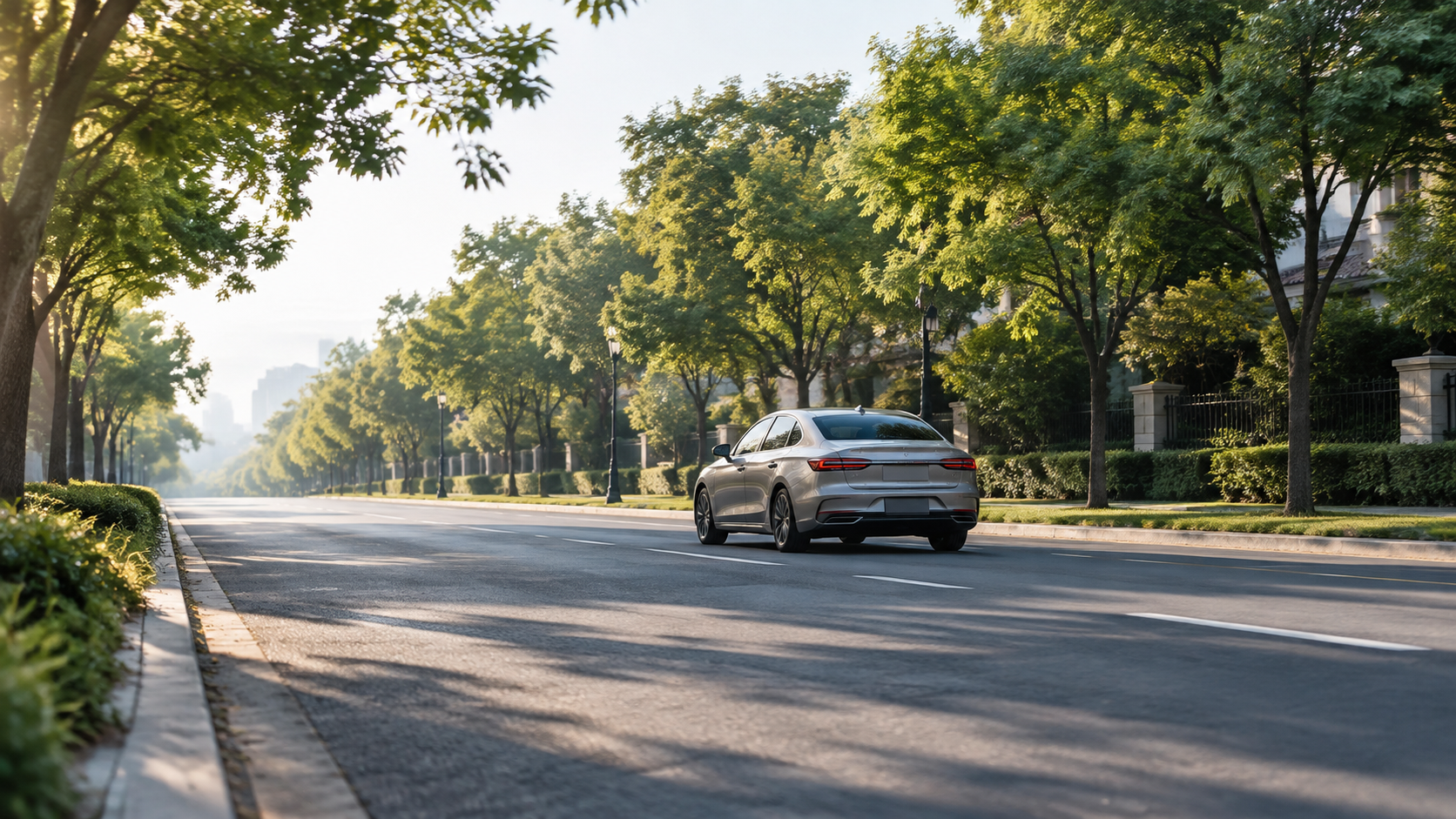
The Camry You Can Export Is Not the Camry You Grew Up With
Every Camry that leaves China as a used export was built in Guangzhou by GAC Toyota, the joint venture that has produced the car locally since 2006. That is a longer continuous run than most nameplates get anywhere, and it matters: the Chinese car follows the global engineering but has its own trim ladder, its own engine roster, and — in the newest generation — a distinctly Chinese tilt toward hybrid power.
Four generations of Chinese-built Camrys are now old enough to circulate as used cars. Knowing which is which is the whole game.
The Four China-Built Generations
- Sixth generation (2006–2011). The first local car: soft, quiet, unambitious, and durable. After the next generation arrived, this body stayed in production for several more years as the budget-priced 经典 (Classic) — so a 2013 registration does not necessarily mean a seventh-generation car.
- Seventh generation (2012–2017). Sharper styling, same philosophy. This is the era of the 200G and 2.0G badges still common in wholesale channels.
- Eighth generation (2018–2023). The clean break. Built on Toyota's TNGA architecture: lower, stiffer, genuinely good to drive, with a modern powertrain roster — a 2.0 petrol with a CVT, a 2.5 petrol with an 8-speed automatic, and the 双擎 (Shuangqing) hybrid pairing a 2.5-litre engine with Toyota's e-CVT hybrid system.
- Ninth generation (2024 onwards). The hybrid turn. The range is built around the 双擎 hybrids — a 2.0 hybrid and, depending on model year, a 2.5 hybrid — with a petrol 2.0 kept as the price anchor. Styling went sharp and slim-lamped; the 运动 (Sport) trims add their own bumpers and wheels.
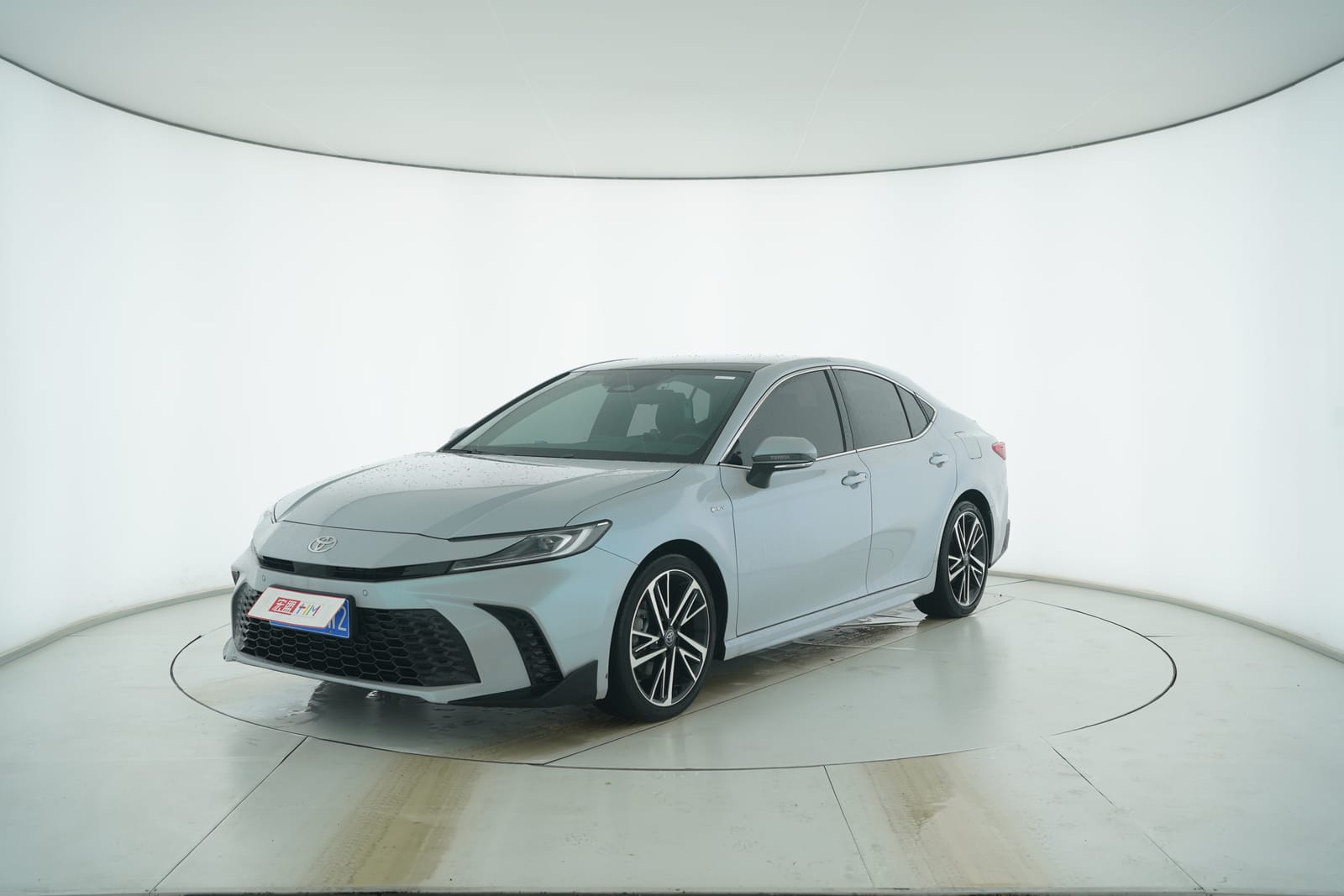
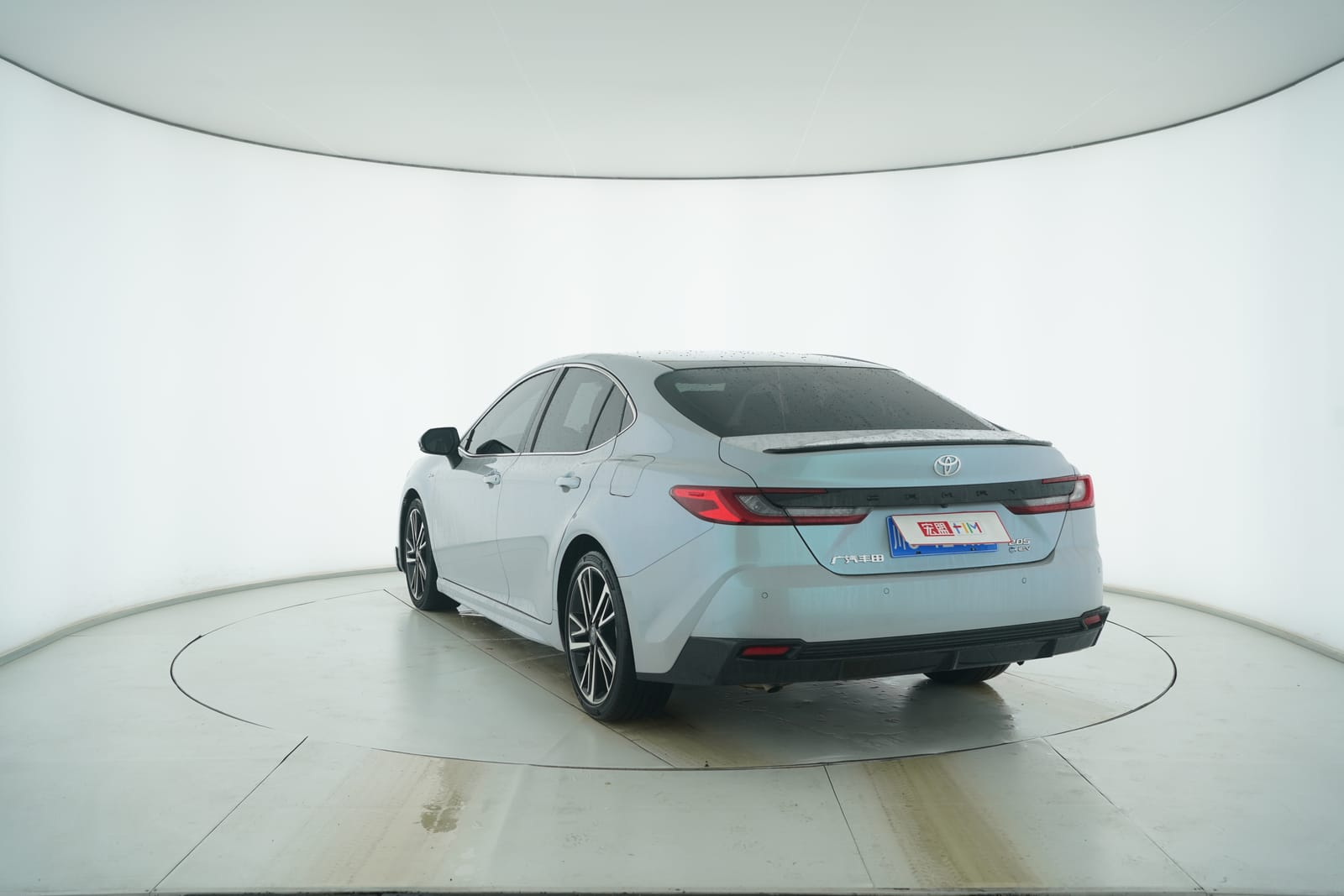
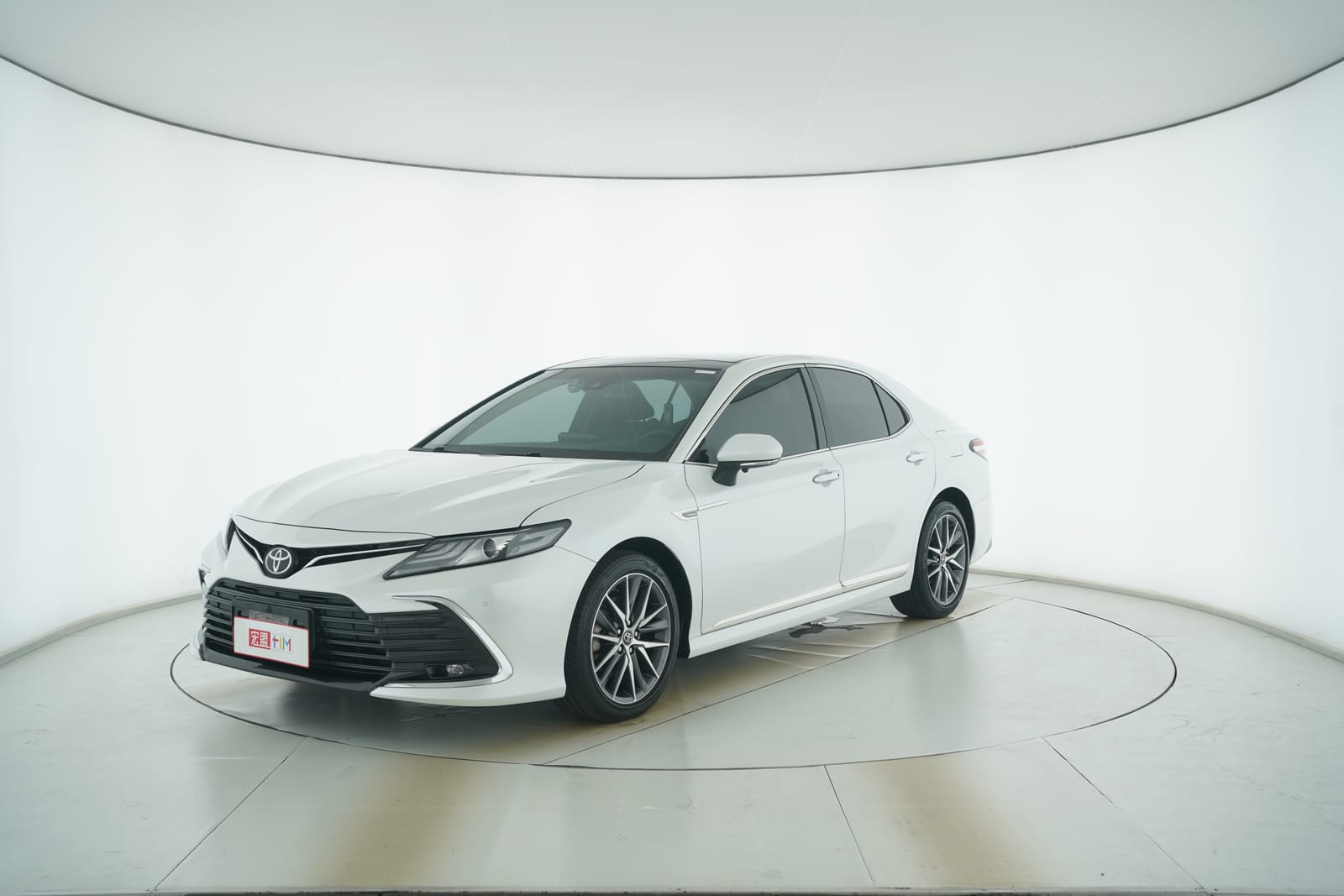
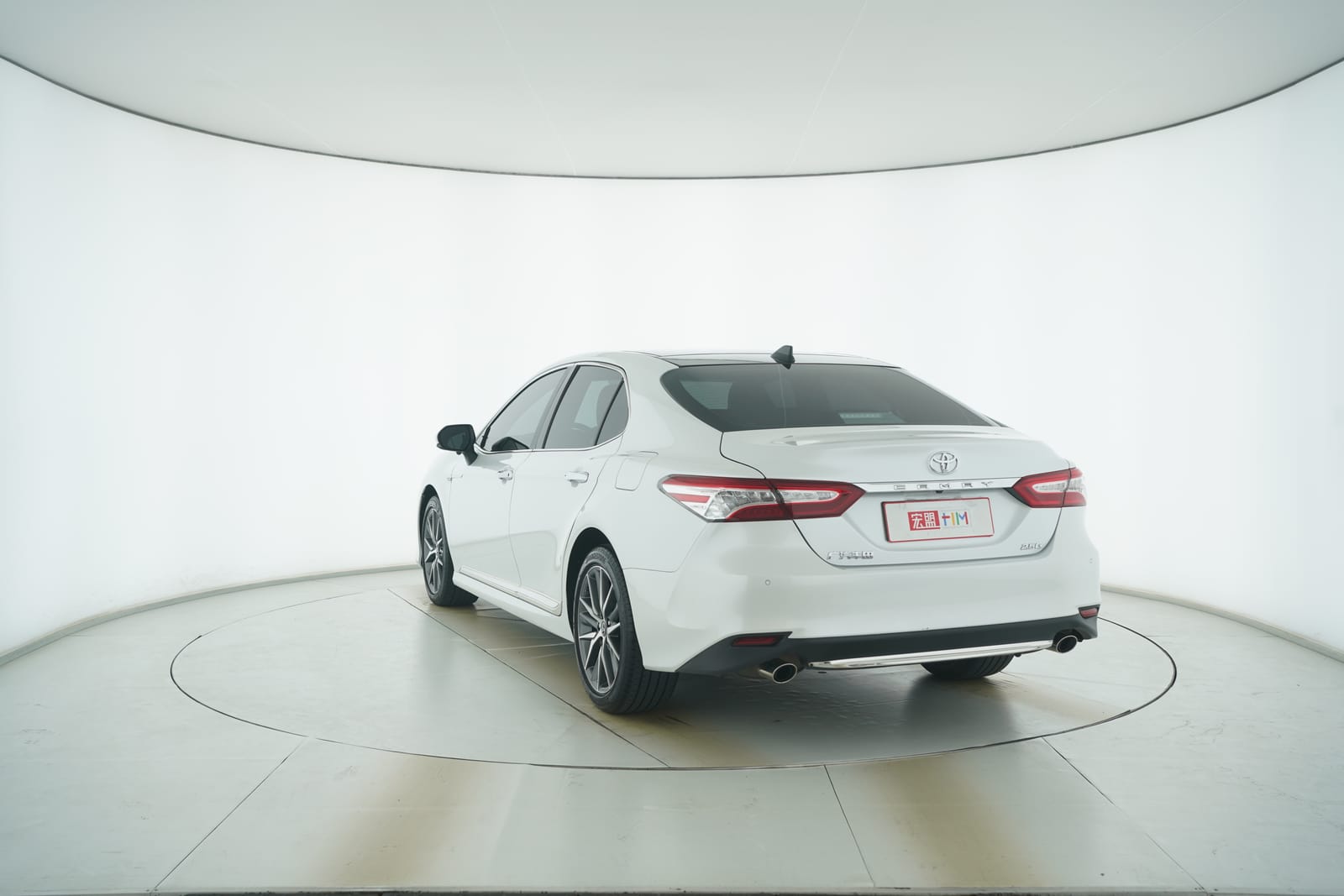
The two cars photographed for this article sit one on each side of the TNGA divide: a white 2021 car from the eighth generation and a grey 2024 hybrid from the ninth.

Reading the Badge: 2.0E, 2.5G, and the H for Hybrid
Chinese Camry badges follow a simple code once you know it: the number is the engine size in litres, the letter is the equipment grade. E is the entry grade, G the comfortable middle, Q the flagship; 运动 or an S in the name marks the sportier styling pack. The hybrids carry the word 双擎 and put an H in the badge — a 2.5HG is the hybrid at the G grade.
Two traps for the remote buyer. First, the same letter means different equipment in different generations, so read the full trim name rather than the letter alone. Second, the Classic (经典) cars wear period badges but are the older body underneath — the registration year and the styling together tell you what you are looking at.
Petrol or 双擎: What the Hybrid Badge Buys
Toyota's hybrid system is the reason to consider a used Chinese Camry over its rivals. The e-CVT has no clutches or bands to wear, the petrol engine runs a gentler combustion cycle, and the fuel savings in stop-and-go driving are substantial — exactly the use case that wears conventional drivetrains hardest. The trade is a more complex car to assess: the traction battery's condition becomes part of the inspection, which is why the checks below include it.
For mostly-highway use the arithmetic narrows, and the 2.5 petrol with the conventional 8-speed automatic remains a satisfying, simple car. Buy the drivetrain for the driving the car will actually do.
Five Things to Check Before Committing
- The emission certificate of the individual car. China V and China VI cars overlap around 2019–2020, and the emission field in a listing does not always match the paperwork. Only the certificate that ships with the car tells the truth, and your destination market decides which class it accepts.
- Hybrid battery health, on any 双擎. Ask for a dealer diagnostic report or have the battery read through the diagnostic port. Check the battery cooling intake and its filter — on these cars the battery breathes cabin air, and a clogged intake shortens its life.
- The dipstick on cold-climate, short-trip cars. Some early 2.5-litre engines that spent their lives on short winter journeys showed rising oil levels from fuel dilution. Pull the dipstick: the level should be where it was left, and the oil should not smell of petrol.
- Transmission behaviour matched to type. The 2.0's CVT should move off and creep without shudder or flare; the 2.5's 8-speed should shift cleanly cold and hot; a hybrid should glide between electric and petrol power without a jolt. Any harshness goes on the negotiation list.
- Working history. Camrys are popular with corporate drivers and premium ride services. A verifiable service history and consistent ownership records matter more than the odometer alone.
Two Cars From Our Own Stock
The white 2021 car is the eighth generation in its classic export specification: 2.5-litre petrol, conventional automatic, the full-width grille face.
The grey 2024 car is the ninth generation's hybrid sport trim — slimmer lamps, sharper bumpers, and the HEV badge on the front wing that tells you the drivetrain before you ever read the paperwork.
Who This Car Suits
- Buyers whose markets already trust Toyota. The Camry's reputation for durability is global, and the dealer network reaches nearly everywhere the car does.
- City-heavy use, if you buy the hybrid. The 双擎 system earns its keep in traffic, and it has now had two decades of refinement.
- Left-hand-drive markets. All China-built Camrys are left-hand drive; right-hand-drive destinations need a different source.
Think twice if:
- Your market is strict on emission class. The answer comes from each car's certificate, not from the model year or the listing field.
- The buyer wants the newest driver-assistance suite. Equipment varies widely by grade and generation; confirm the exact features of the individual car rather than assuming from the badge.
- You cannot verify a hybrid's battery. A 双擎 without a battery health check is a gap in your inspection — close it before committing, or choose the petrol car.

Latin America Used Car Import Guide 2026: Mexico, Brazil, Chile & Peru
Latin America Market Desk
Central Asia Used Car Import Guide 2026: Kazakhstan, Uzbekistan, Kyrgyzstan & Tajikistan
Central Asia Market Desk
China Used Car Export Policy 2026: Complete Guide
Policy Analysis Team