Li Auto L7 Buyer Guide: China's Five-Seat Range-Extended Family SUV
Two Li Auto L7s, a 2024 Max in green and a 2023 Pro in white, explain the five-seat layout, how the range-extended powertrain works, what the Max badge adds, what to inspect before buying and what to plan for export.
A Different Kind of Family SUV
Li Auto built its reputation on one idea: a large family car that drives on electricity but carries its own generator, so the owner never depends on a charging network. The L7 applies that idea to a five-seat SUV.
That is the first thing to understand about it. The L7 is not a smaller L9 with the third row removed for cost reasons; it is a two-row car by design, with the space that would have gone to a third row given to the rear passengers and the boot. For a family of four or five, that is often the more useful arrangement.
The second thing is the brand. Li Auto is one of the fastest-moving Chinese manufacturers, and the L7 has been updated more than once since launch. Two cars sold under the same name can differ in equipment and in software. Check the model year and the trim before comparing anything else.
Max and Pro: What the Badge Buys
The L7 has been sold mainly in two equipment levels.
- Pro is the mainstream version: the same body, the same five-seat cabin and the same range-extended drivetrain, with a simpler sensor set.
- Max adds the hardware for the more advanced driver-assistance system, and in most model years a rear entertainment screen and a fuller rear-seat specification. On the cars in our photographs the difference is visible from outside: the Max carries a sensor pod on the roof, the Pro does not.
Do not assume that every Max is identical. Equipment changed between model years, and some features that were optional on early cars became standard later. The individual car, its build date and its equipment list are what matter.
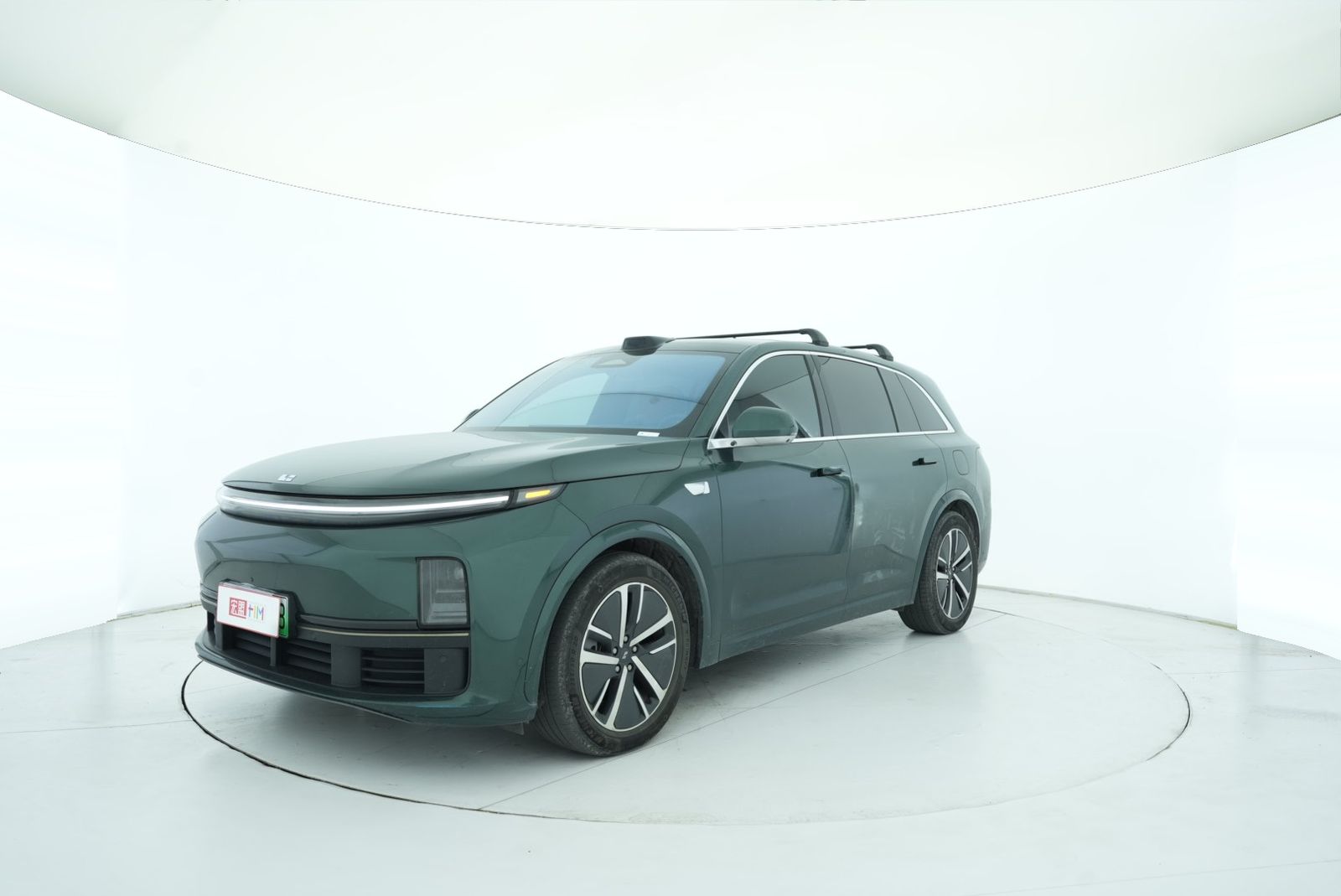
*2024 Li Auto L7 Max, green.*
The Two Cars in the Photographs
The first car is a 2024 L7 Max in green. It is the higher specification, with the roof sensor pod and the fuller cabin equipment.
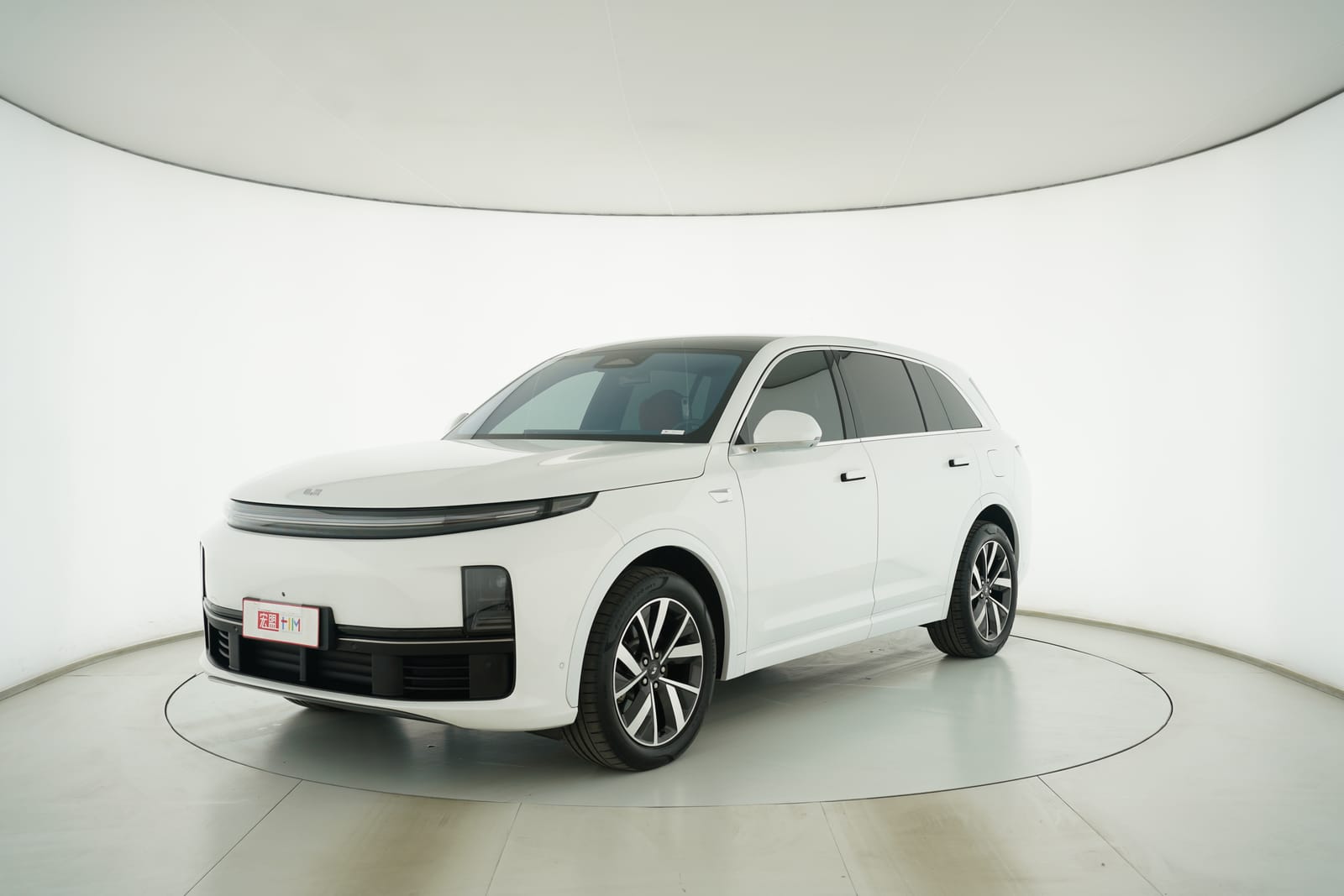
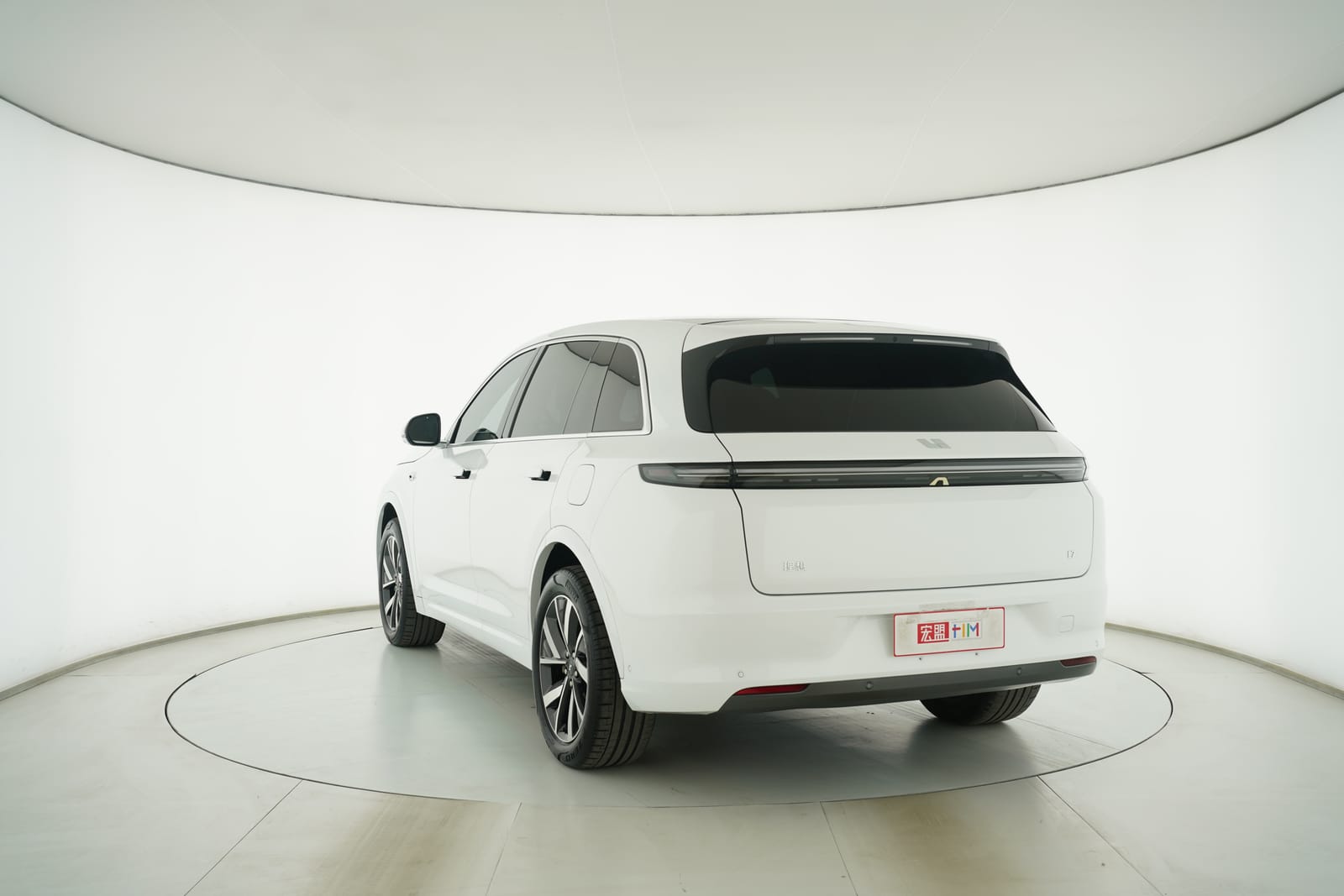
*2023 Li Auto L7 Pro, white.*
The second is a 2023 L7 Pro in white. Mechanically it is the same kind of car: electric drive, a petrol generator on board and a five-seat cabin. What it lacks is the top-level assistance hardware.
How the Range Extender Works
The wheels are driven by electric motors. A battery in the floor provides the everyday range; when it runs low, a small petrol engine starts and generates electricity. The engine does not drive the wheels directly.
The consequence is a car that behaves like an electric vehicle most of the time: instant response, one-pedal-style driving if you use the regenerative braking settings, and a quiet cabin at low speed. On a long run it refuels like a petrol car, which is why the layout suits markets where charging is uneven.
Two practical points follow. First, the car is at its best when it is charged regularly: the battery covers ordinary daily driving, and the generator is for longer trips. Second, because it carries both systems, there is more to inspect than on a pure petrol car or a pure electric one.
Inside
The cabin is the reason people buy an L7. The front is dominated by screens, and almost every function is operated by touch or voice. The materials are soft where your hands land, and the design is calm rather than decorative.
The rear is where the L7 makes its case. There is no third row, so legroom is generous, the seat back reclines, and the boot behind it is deep enough for a family's luggage without folding anything. The Max adds a screen for the rear passengers, which is useful with children and irrelevant without them.
Check the individual car rather than the brochure: seat heating, ventilation, massage and the rear screen are the items that vary most between trims and model years.
How It Drives
The L7 is tuned for comfort. Acceleration is strong because electric motors deliver torque from rest, but the car is not trying to be a sports SUV. The ride is soft, the steering is light, and the cabin is quiet at cruising speed.
Some versions are fitted with air suspension, which can raise and lower the body and improves the ride further. It is also a system that deserves a careful check on a used car, because repairs are expensive. Confirm whether the specific car has it before you assume.
Driver assistance is a large part of the L7's appeal, and it is also the part most dependent on software and regional data. Confirm what works in your country before you buy: mapping, voice services and some assistance functions may be limited outside China.
What to Check Before Buying
- High-voltage battery. Ask for a battery health report, not just a visual check. Confirm charging behaviour and whether the pack has ever been repaired.
- Range extender. Start from cold and let the generator run. Listen for unusual noise and look for leaks around the engine bay.
- Charging. Test AC and DC charging where equipment is available, and confirm which cables come with the car.
- Software. Check the installed version, whether updates have been applied, and whether any functions are region-locked.
- Air suspension. If fitted, check that the car sits level, that it rises and lowers, and that there are no warning messages.
- Screens and sensors. Test every display, camera and seat motor. Camera and radar calibration after body repair is expensive.
- Tyres and brakes. The car is heavy; look for uneven wear and for discs with a deep lip.
- Body and undercarriage. Check panel gaps, paint and the underside for scrapes.
- Documents. Confirm the model year and trim from the registration document, not from the listing title. Emission compliance is confirmed per vehicle against the certificate that travels with that car, not by model.
Export Notes
- Battery transport. A range-extended car still carries a large high-voltage battery. Lithium batteries are regulated for shipping, so confirm the carrier's rules, the documentation supplied with the car and the state of charge required.
- Charging standards. China uses GB/T. Many destination markets use Type 2 and CCS. Plan the adapter or charger installation before the car arrives.
- Connected services. Confirm with the seller which services work outside China and whether navigation maps can be replaced for your region.
- Parts. The L7 is common in China but rare elsewhere. Specify the model year when ordering, and confirm local diagnostic support before importing.
- Drive and documents. The car is left-hand drive. Confirm the import rules of the destination country and that the invoice, certificate of conformity and export licence match the vehicle identification number.
- Emission rules. These are decided per vehicle, not per model. Verify each car against its own certificate rather than relying on a general statement about the L7.

Choosing Between the Two
The green Max is the car to choose if you want the fullest equipment and the advanced assistance hardware, and if you are prepared to maintain the extra sensors and systems. It is also the more distinctive colour.
The white Pro is the simpler proposition: the same space, the same drivetrain, fewer systems to go wrong and a specification that is easier to service outside China. For most export buyers it is the more sensible starting point.
FAQ
Is the L7 a pure electric car? No. It is range-extended: electric drive with a petrol generator on board.
Does it have seven seats? No. The L7 is a five-seat, two-row car. The L8 and L9 are the six-seat models.
Can it be charged normally? Yes. It accepts AC charging and, depending on specification, DC fast charging. Confirm the charging equipment that comes with the individual car.
Can it be exported? It is left-hand drive, but battery transport rules, charging compatibility and software support all need checking before purchase.
What is the biggest risk? Battery condition and software support outside China. Both can be checked before the car ships.
Next Step
Tell us which L7 you are considering and we will send a walkaround video of that exact car, showing the charging port, the battery report, the rear cabin and the boot, so you can judge the vehicle rather than the brochure.

Latin America Used Car Import Guide 2026: Mexico, Brazil, Chile & Peru
Latin America Market Desk
Central Asia Used Car Import Guide 2026: Kazakhstan, Uzbekistan, Kyrgyzstan & Tajikistan
Central Asia Market Desk
China Used Car Export Policy 2026: Complete Guide
Policy Analysis Team