Honda CR-V Buying Guide for Export Buyers: 240TURBO, Sport Hybrid and Generations
The Chinese-market Honda CR-V combines family-SUV practicality with two distinct electrification levels: the 240TURBO 1.5-litre turbo petrol CVT and the 2.0-litre Sport Hybrid. This guide separates fifth- and sixth-generation cars, explains what the badges do and do not mean, and sets out the transmission, hybrid-system, seating, driver-assistance and document checks needed before export.

Start With the Generation and Powertrain
The Honda CR-V is a road-focused compact family SUV, with Chinese-market cars produced by Dongfeng Honda. On the used market, the most useful first distinction is between the fifth generation launched in China in 2017 and the sixth generation introduced in 2022. The newer car has different exterior proportions, a revised cabin and updated electronics, but generation alone still does not tell you the engine, seating layout or equipment.
The second distinction is the powertrain. A 240TURBO badge identifies the 1.5-litre turbo petrol family rather than a 2.4-litre engine. It is commonly paired with a CVT. A Sport Hybrid, identified in China by the Rui Hybrid naming, uses a 2.0-litre petrol engine as part of Honda's hybrid system. These vehicles need different inspection and diagnostic routines even when their bodywork looks similar.

What 240TURBO Means on a Used CR-V
The 240TURBO combines a small-capacity turbocharged petrol engine with continuously variable transmission in the configurations most often encountered. Front-wheel drive and all-wheel drive depend on the individual trim. The badge is not a guarantee of equipment, seating or drive layout, so the registration documents and actual vehicle remain decisive.
During inspection, begin with a cold start and then repeat the road test at operating temperature. Check steady idling, smooth engagement from rest and predictable response as speed and throttle change. Abnormal vibration, hesitation or inconsistent engine speed deserves diagnosis rather than being dismissed as normal CVT behaviour. Service records should correspond to the actual engine and transmission; there is no single maintenance assumption that covers every model year.

Sport Hybrid Is Not Simply a Petrol CVT With a Battery
Honda's hybrid system can move the vehicle using electric drive, combine engine-generated electricity with motor drive, or connect the petrol engine mechanically under suitable conditions. The driver therefore does not experience it as a conventional stepped automatic. An engine starting, stopping or changing speed while the vehicle continues to move can be part of normal hybrid operation.
That does not remove the need for a structured test. Check transitions at low and moderate speeds, warning lights, cooling airflow around accessible hybrid components and the consistency of the power-flow display. A dashboard with no warning is not a battery-health certificate. Obtain suitable diagnostic results for the high-voltage battery, power electronics and stored fault codes, and review any repair history involving the hybrid system.
Our Photographed Petrol and Hybrid Examples
These two vehicles show the visual and technical variation buyers can encounter. Their captions describe only the individual cars photographed; other CR-Vs must be checked independently.
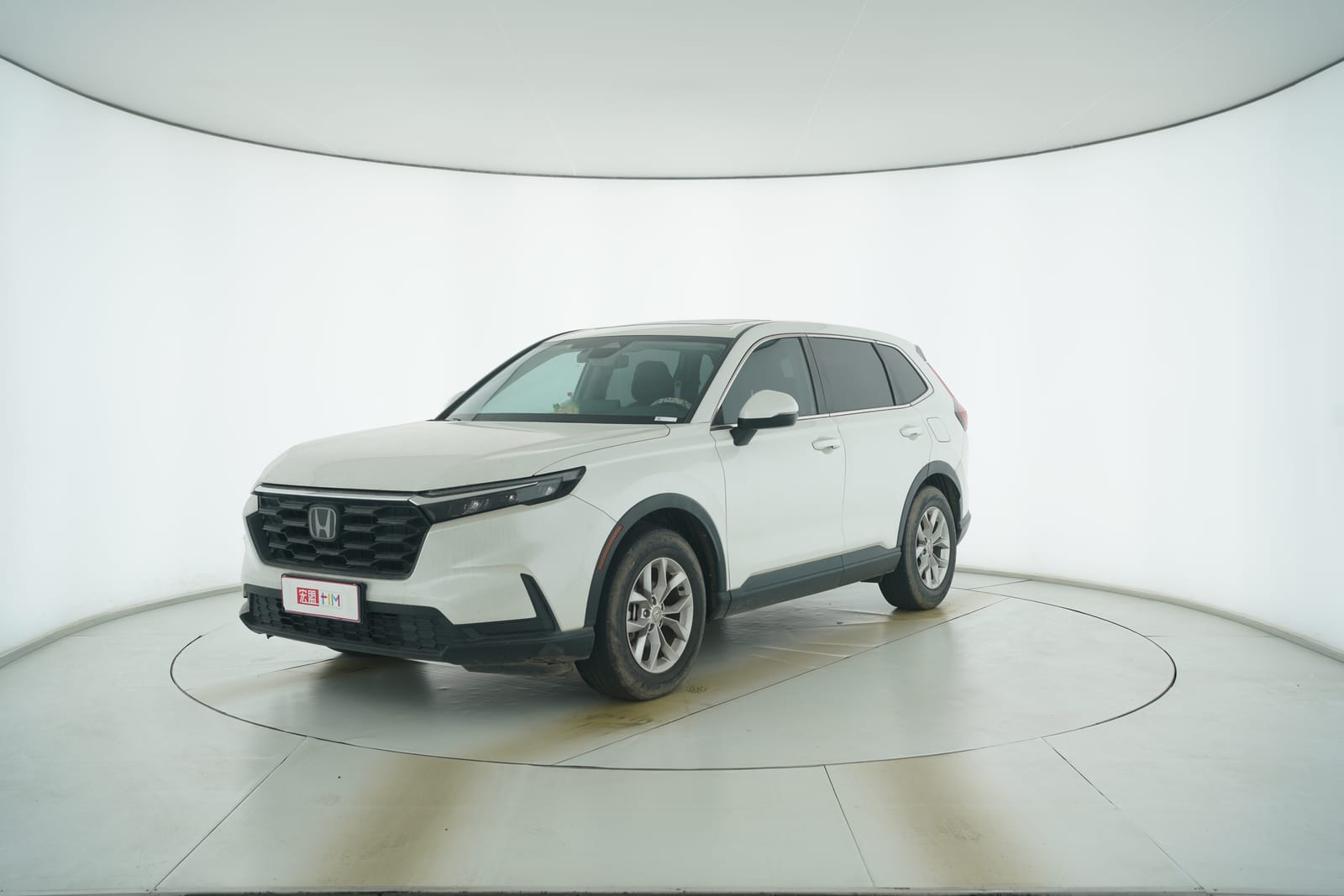
*2024 CR-V 240TURBO two-wheel-drive Fengshang five-seat trim, white.*
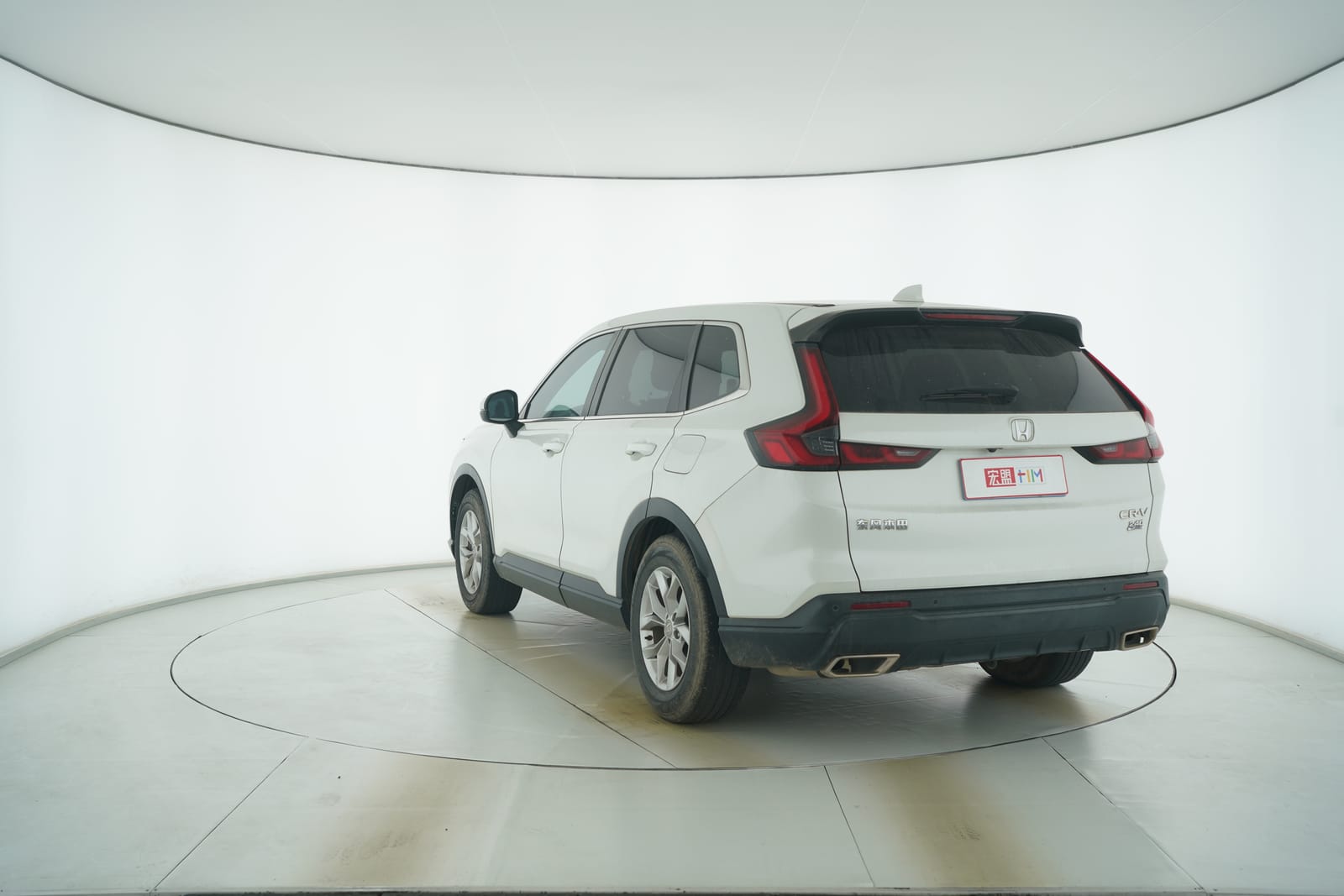
*2024 CR-V 240TURBO two-wheel-drive Fengshang five-seat trim, white.*
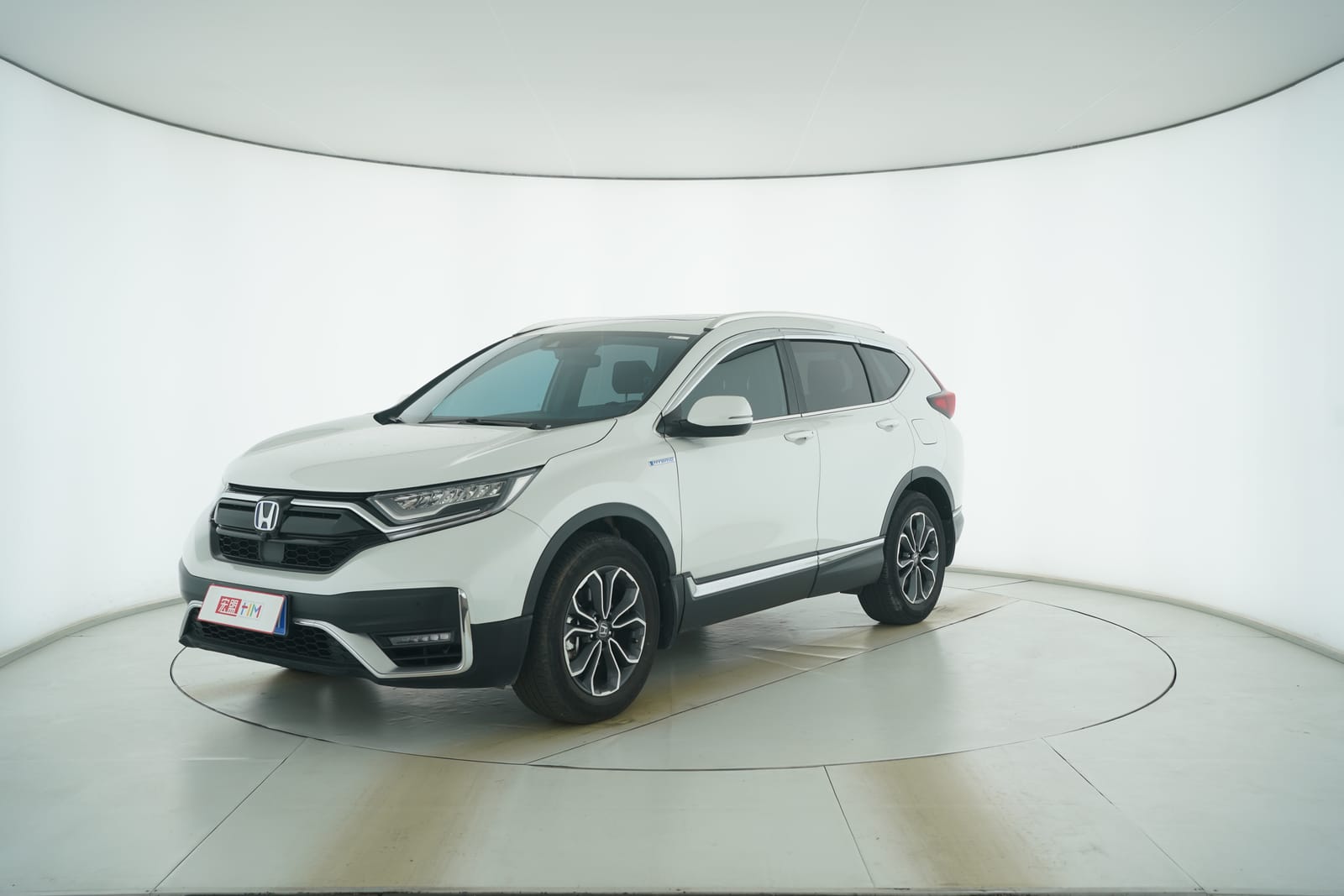
*2021 CR-V Sport Hybrid 2.0L two-wheel-drive Jingchi trim, white.*
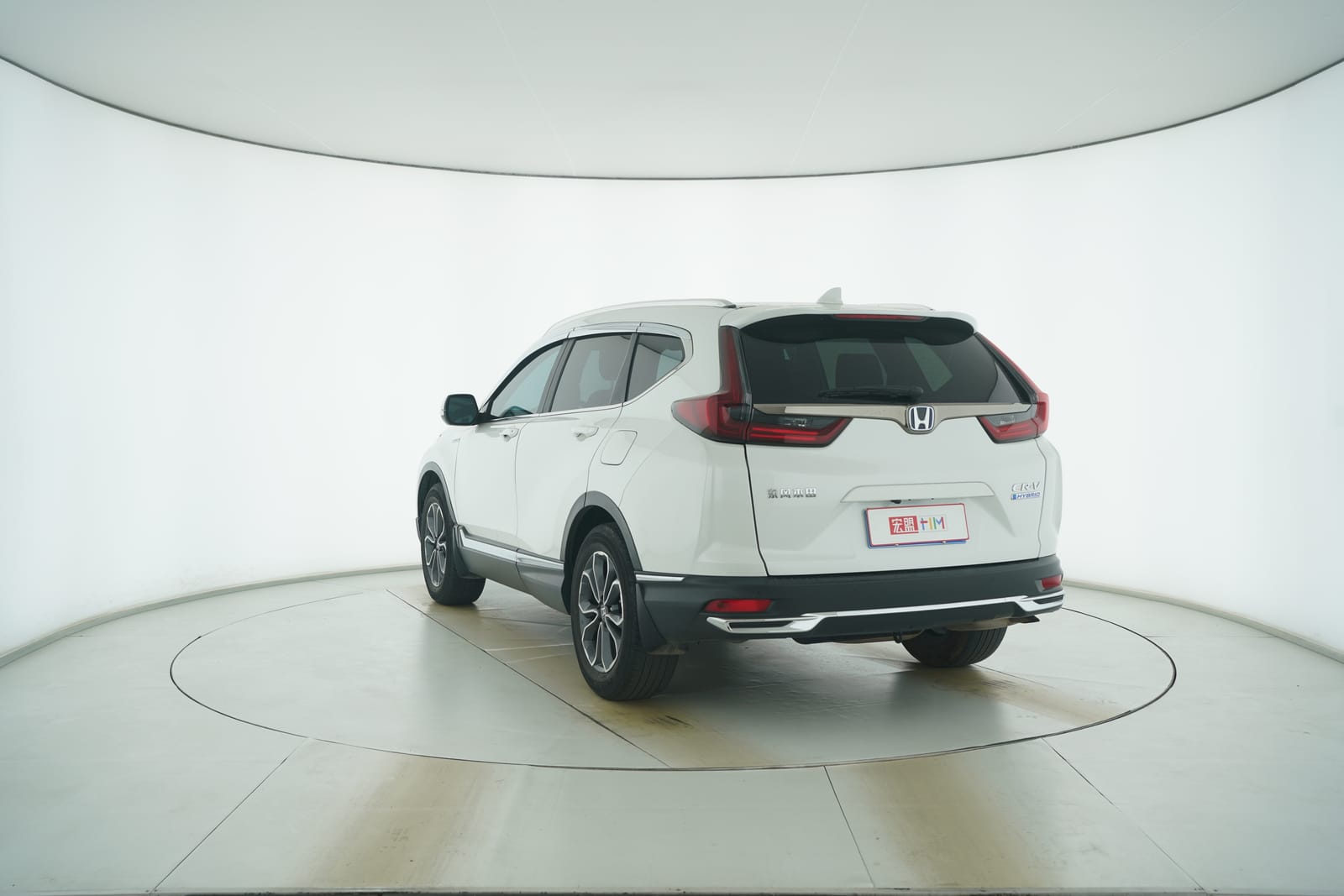
*2021 CR-V Sport Hybrid 2.0L two-wheel-drive Jingchi trim, white.*
Cabin Packaging: Count Seats, Do Not Assume
The CR-V's strengths are easy rear-seat access, a useful luggage opening and a cabin designed around family use. Sixth-generation Chinese-market specifications include different seating configurations, so a buyer must confirm the actual number of seats on the vehicle and its documents. Where a third row is fitted, assess access, legroom and remaining luggage space with all rows in use rather than treating it as equivalent to a larger MPV.
Operate every seat adjustment and folding mechanism, inspect the load floor and tailgate seals, and check that belts and buckles match the seating layout. Screen, instrument, seat and parking-assistance equipment varies by trim. On a car with Honda Sensing functions, test the controls and look for evidence of front-end repair or windscreen replacement that could make camera or radar calibration relevant.
Export-Focused Inspection Checklist
- Identify the exact generation and drivetrain. Do not let a similar grille or a shared CR-V badge substitute for document and physical verification.
- Test the transmission that is actually fitted. For 240TURBO, check cold and warm CVT behaviour; for Sport Hybrid, assess mode transitions and obtain hybrid-system diagnostics.
- Check cooling and service evidence. Review records for the engine, transmission and hybrid cooling paths as applicable, and inspect for leaks, damaged undertrays or warning messages.
- Verify seating and safety equipment. Confirm seat count, belt positions, cameras, radar and Honda Sensing functions on the individual car.
- Inspect body and suspension together. Uneven tyre wear, steering pull, water marks or mismatched paint can point to repairs or maintenance needs that a model overview cannot detect.
- Review documents for the destination. Emissions compliance must be checked vehicle by vehicle against the accompanying certificates and destination rules. Do not infer an emissions rating from model year, engine badge or a database field.
Petrol or Hybrid: Which Is the Better Fit?
The 240TURBO suits buyers who want a conventional turbo-petrol driving pattern and are prepared to assess CVT condition and service history carefully. The Sport Hybrid suits buyers who value its electric-assisted driving character and have access to appropriate hybrid diagnostics and technical support in the destination market.
Neither choice is automatically the right export purchase. A well-documented vehicle with clean diagnostics, intact safety equipment and verifiable certificates is more important than choosing a powertrain on reputation alone. Generation, seating and drive layout should be treated as separate checks rather than bundled into the CR-V name.

Latin America Used Car Import Guide 2026: Mexico, Brazil, Chile & Peru
Latin America Market Desk

Central Asia Used Car Import Guide 2026: Kazakhstan, Uzbekistan, Kyrgyzstan & Tajikistan
Central Asia Market Desk

China Used Car Export Policy 2026: Complete Guide
Policy Analysis Team