BYD Song Plus: Petrol or DM-i Plug-In Hybrid, and Which One to Export
The Song Plus is BYD's mid-size family SUV, launched in 2020 with a 1.5T petrol engine and transformed in 2021 by the DM-i plug-in hybrid version that made it one of China's best-selling vehicles. This guide compares the two cars on this page, explains how the DM-i system actually works, what the rotating screen and cabin are like, what to check on a used hybrid, and the export questions that matter most: the GB/T charging port, battery condition, parts and the fact that the same car is sold abroad as the BYD Seal U.
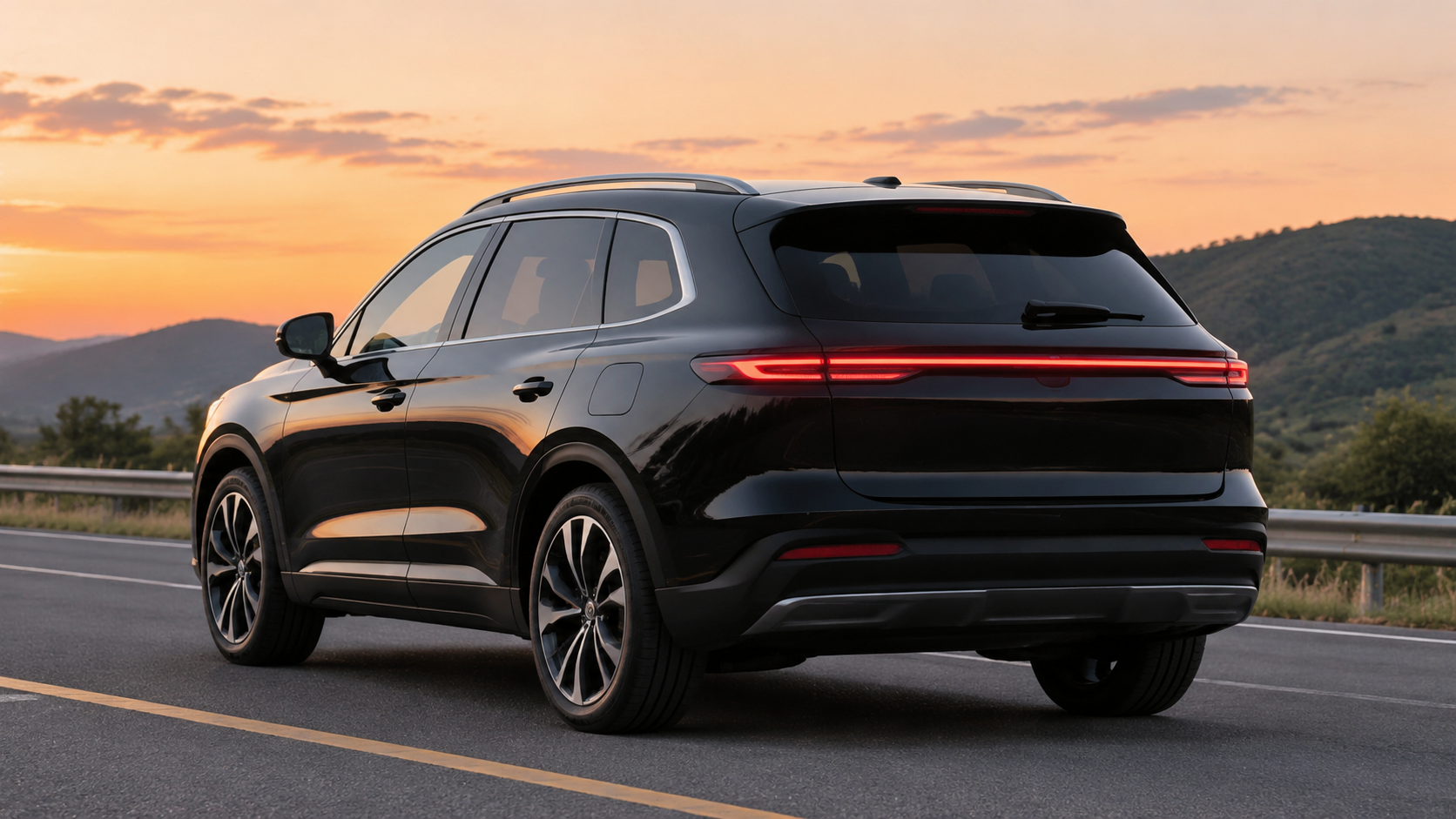
What the Song Plus Is
The Song Plus is BYD's mid-size family SUV, positioned above the smaller Song and below the Tang. It launched in 2020 with a conventional turbocharged petrol engine and five seats.
In 2021 BYD added the DM-i plug-in hybrid version, and that is the car that changed the model's place in the market. DM-i is not a performance hybrid: the petrol engine mostly generates electricity, the electric motor does most of the driving, and the battery can be charged from the mains.
Both versions share the same body and cabin. The front ends differ, and so does the way the car behaves.
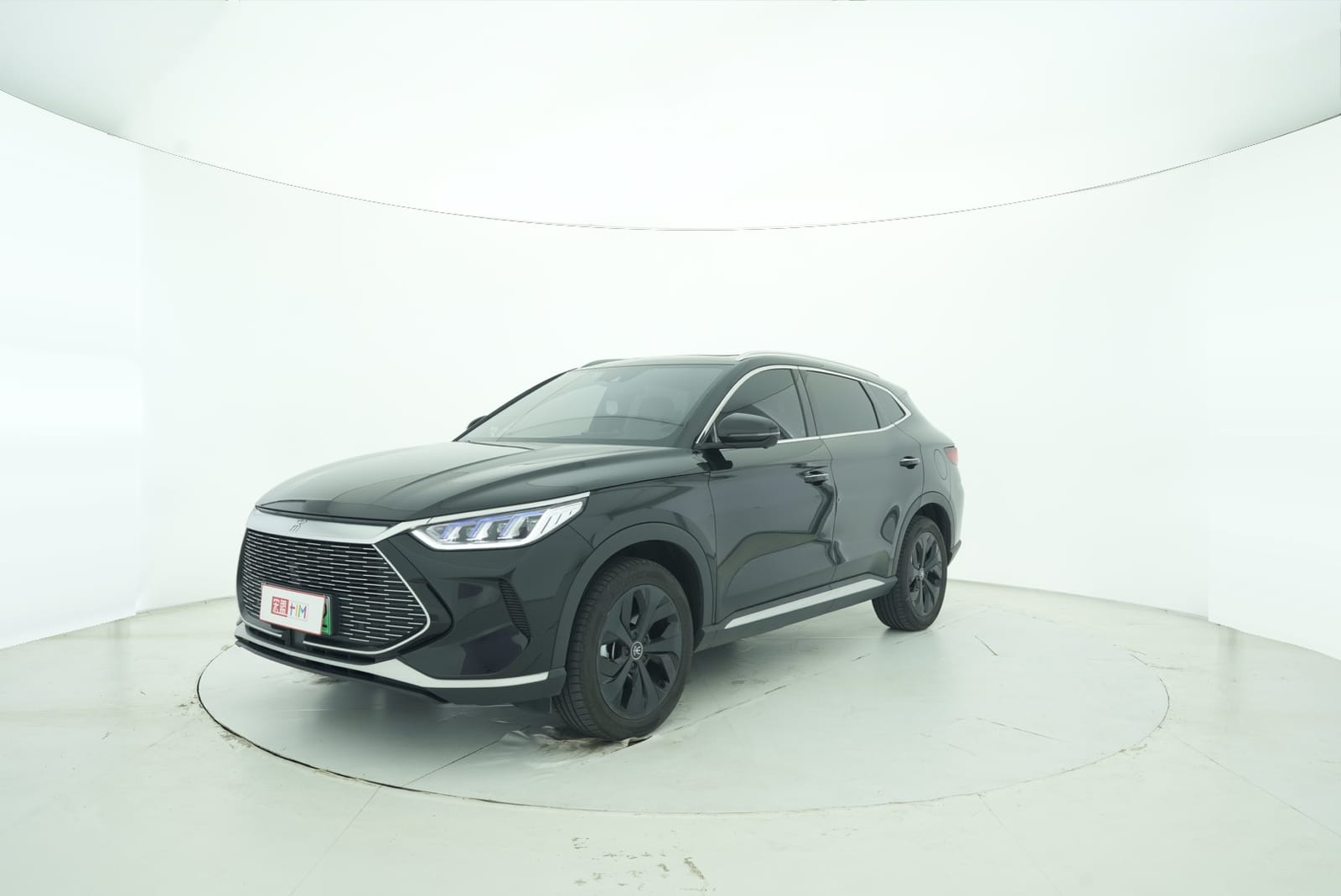
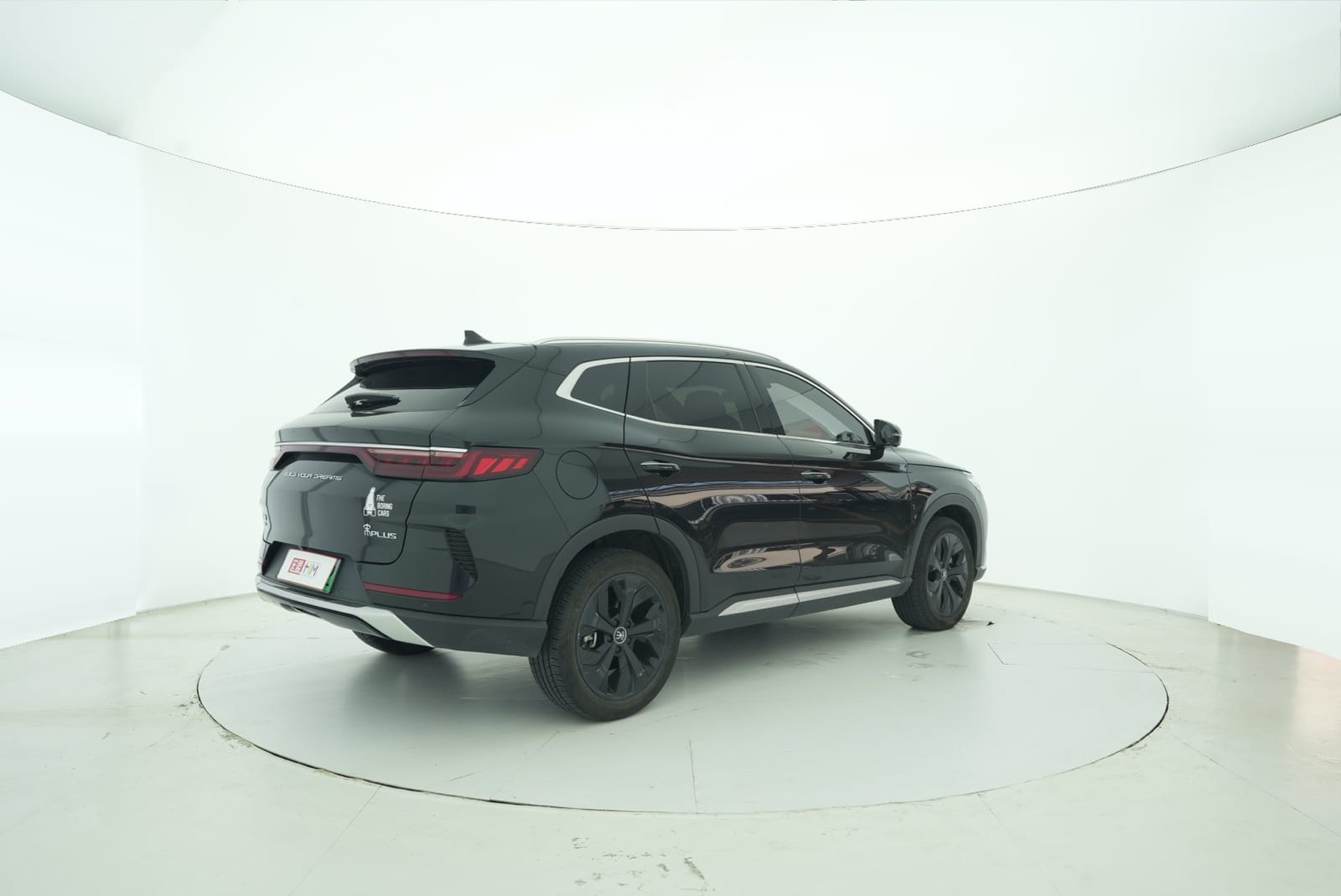
*2021 BYD Song Plus DM-i 旗舰PLUS, black.*
Two Cars, Two Front Ends
The first car on this page is a 2021 Song Plus DM-i in 旗舰PLUS trim, black. The second is a 2020 petrol Song Plus 1.5T 自动尊贵型, also black.
Look at the grilles and you can tell them apart. The DM-i version has a very large grille with wide horizontal chrome bars that dominates the nose. The earlier petrol car has a smaller, differently patterned grille and a more conventional front bumper.
Otherwise the shapes match: a tall five-door body with roof rails, a rising beltline and a full-width light strip across the tailgate.
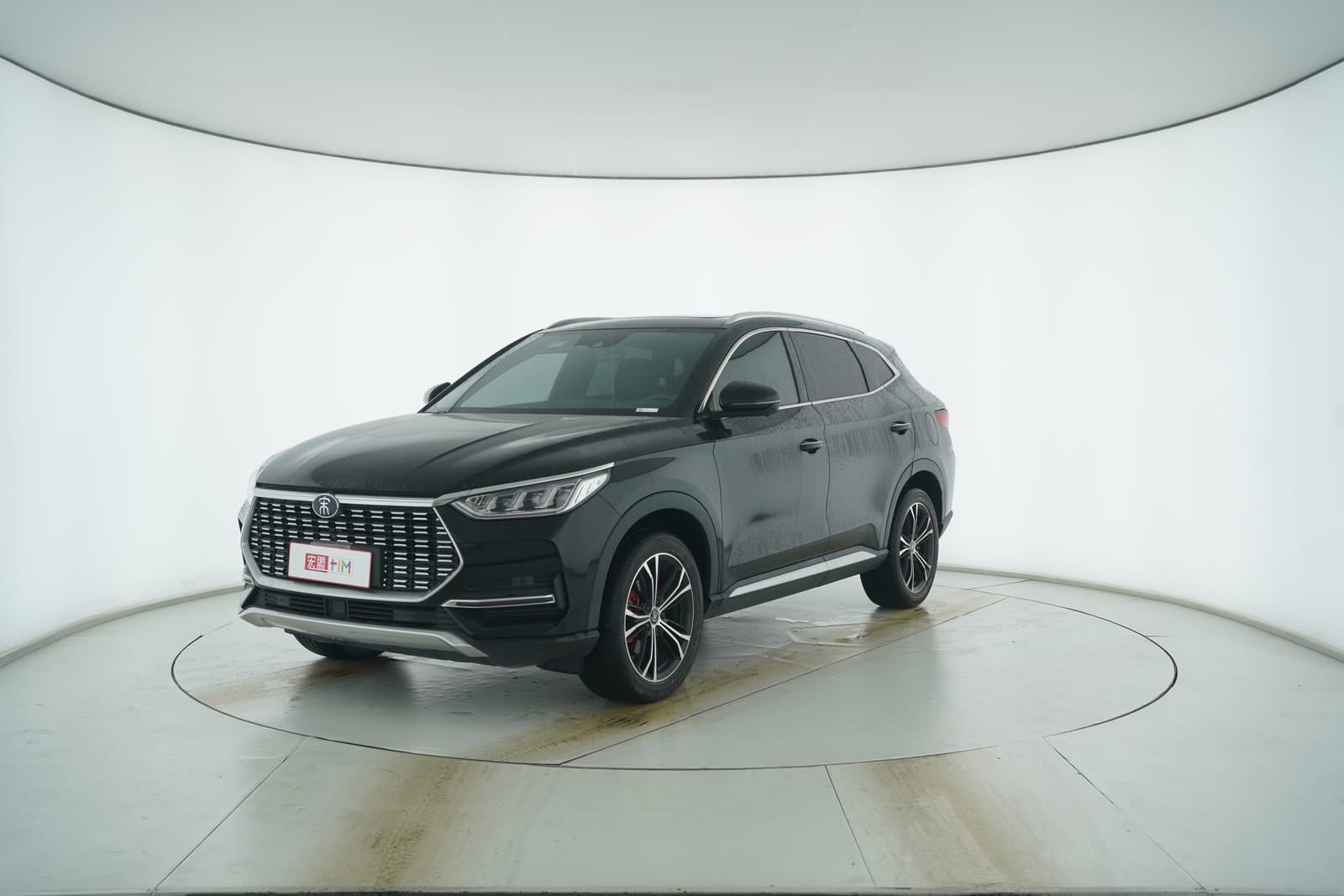
*2020 BYD Song Plus 1.5T 自动尊贵型, black.*
How DM-i Works
The DM-i system in this car combines three things:
- A 1.5-litre naturally aspirated petrol engine that runs on the Atkinson cycle, tuned for efficiency rather than power, and which can drive the wheels directly at higher cruising speeds.
- An electric motor that provides the main propulsion in town and most of the performance.
- A blade-shaped lithium iron phosphate battery pack developed by BYD, charged from a socket or by the engine.
The result is a car that behaves like an electric vehicle at low speed and like a very economical hybrid on a long run. It does not need to be plugged in to function: without charging, it still runs as a hybrid, though consumption rises.
BYD sold the 2021 DM-i with two battery sizes offering different amounts of electric range. The exact figure is stamped in the car's documents and shown in the vehicle's own menu, so check the specific car rather than a badge.
Charging is where export buyers must pay attention. Chinese-market cars use the GB/T connector, which is not used in Europe, the Gulf or Latin America. A destination charger will not fit without an adapter, and the on-board AC charger may accept only single-phase power. Many owners outside China simply run the car as a hybrid and charge at home with the supplied cable where possible.
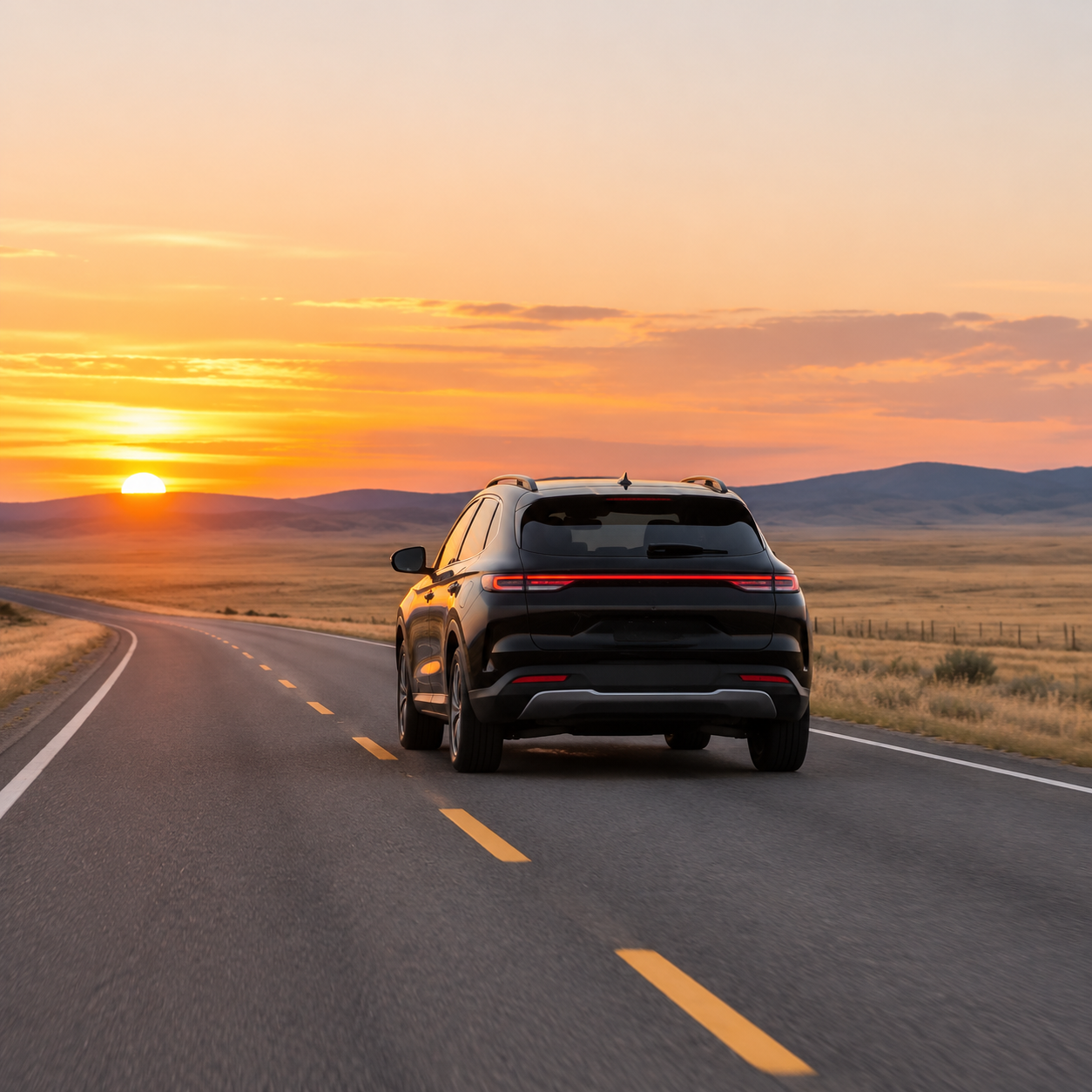
The Petrol Version
The 2020 car uses a 1.5T four-cylinder turbocharged petrol engine driving the front wheels through an automatic gearbox. It is the simpler, more conventional vehicle: no high-voltage system, no battery pack to age, no charging question.
Performance is adequate rather than quick. The engine is tuned for smoothness and fuel economy in normal use, and the cabin quietness is good for the class. Fuel consumption is higher than the DM-i's, especially in city driving, which is exactly where the hybrid spends most of its time on electric power.
Buyers in markets with unreliable fuel quality or limited charging infrastructure often prefer this version for its simplicity, and workshops unfamiliar with high-voltage systems will thank them.
Inside
The cabin is the same in both cars, and the centrepiece is BYD's rotating screen: a large touchscreen that turns from landscape to portrait at the press of a button. It is a useful party trick and genuinely handy with navigation apps.
Material quality is better than the price suggests in the visible areas, with soft-touch panels on the dashboard and doors. Lower down, the plastics are harder.
Space is a strength. Front and rear passengers have room, the rear seat is wide enough for three, and the boot is a proper family size with a flat floor. The rear seat folds to extend it.
The infotainment runs BYD's own system, in Chinese by default, with voice control built around Chinese services. Check whether the language can be changed and which connected functions work outside China before you buy.

Driving
The DM-i is the smoother car in town. It pulls away on electric power, so there is no gearbox hesitation, and the cabin is very quiet at low speed. On the motorway the engine joins in and the car feels like a normal, refined SUV.
The petrol car is more traditional: a turbo engine with an automatic gearbox, a bit of lag when you press the accelerator hard, and a firmer, less insulated feel. Neither car is sporty; both prioritise comfort and space.
One thing to understand about the DM-i: the engine can start and stop at any time, and in cold weather it may run more often to warm the battery. Buyers used to a conventional car sometimes mistake this for a fault. It is normal.
What to Check on a Used Car
On the DM-i specifically:
- Battery health. Ask for a battery health or state-of-health reading from a BYD service point. Capacity fades with age and use, and a replacement pack is the single most expensive item on the car.
- Charging. Test the charging port with the cable supplied, and confirm whether AC charging works. Check the port for damage and corrosion.
- Hybrid system. Drive in electric mode, in hybrid mode and at a steady motorway speed. Listen for unusual noises when the engine starts, and check that the transition is smooth.
- Cooling and high-voltage warnings. Any warning lamp related to the high-voltage system needs a diagnostic session, not a guess.
On both cars:
- Gearbox and driveline. A dual-clutch or automatic should engage smoothly; shuddering and clunks are not normal.
- Suspension and tyres. Check for leaking dampers and uneven tyre wear, especially on the front.
- Body and underside. Look for kerb damage under the bumpers, and for rust around the tailgate and wheel arches.
- Screens and cameras. Test every screen, camera and window, and confirm which functions need a Chinese account.
- Documents. Confirm year and version from the registration document. Emission compliance is confirmed per vehicle against the certificate travelling with that car, not by model.
Export Notes
- The same car has a different name abroad. BYD sells the Song Plus in export markets as the Seal U, including a plug-in hybrid variant. Parts catalogues and workshop information may be easier to find under that name, though not every part is identical between the China-market car and the export version.
- Charging standard. China-market cars use GB/T. Plan for an adapter or for AC charging only, and confirm what the destination market allows.
- Hybrid classification. Plug-in hybrids are treated differently from pure petrol cars for customs, taxes and registration in many countries. Check the rules of the destination market before shipping.
- Parts and diagnostics. BYD's network outside China is growing but uneven. Confirm before purchase that a workshop can read the car's diagnostic system.
- Documents. Invoice, certificate of conformity, export licence and vehicle identification number must agree.
Which One to Choose
Choose the DM-i if the destination market has charging, if you value quiet low-speed running and low fuel consumption, and if you have access to a workshop that can service a high-voltage system. It is the more modern and more economical car, and the one the model is known for.
Choose the petrol 1.5T if the car will live somewhere without charging, if fuel quality is uncertain, or if you want the simplest possible ownership. It is less efficient and less refined, but it removes the battery and charging questions entirely.
For an export buyer, the deciding factor is support. A hybrid without a workshop that can read its systems is a risk; a petrol car with a conventional engine can be maintained almost anywhere.
FAQ
Is the Song Plus the same as the Seal U? In export markets BYD sells a version of this car as the Seal U. The two are closely related but not identical in every part, so check the specific vehicle.
Can the DM-i run without charging? Yes, it works as a hybrid without being plugged in, but fuel consumption is higher than when it is charged regularly.
Is it all-wheel drive? The cars described here are front-wheel drive. Check the specific car if all-wheel drive matters to you.
Can it be exported? Yes, it is left-hand drive, but the charging standard, hybrid classification and workshop support need checking first.
Next Step
Tell us which Song Plus you are considering, petrol or DM-i, and we will send a walkaround video of that exact car, including a cold start, the battery and charging screens, and a slow-speed drive in electric mode.

Latin America Used Car Import Guide 2026: Mexico, Brazil, Chile & Peru
Latin America Market Desk
Central Asia Used Car Import Guide 2026: Kazakhstan, Uzbekistan, Kyrgyzstan & Tajikistan
Central Asia Market Desk
China Used Car Export Policy 2026: Complete Guide
Policy Analysis Team