Audi A8L: Buying a Used Flagship Sedan for Export
The A8L is Audi's long-wheelbase flagship, imported into China from Germany rather than built there. Every car in this guide is left-hand drive, petrol and four-wheel drive, which makes the model a realistic export to the CIS, the Middle East, Africa and Latin America. This article explains the difference between the D4 and D5 generations, what the two cars on this page actually are, what to inspect on a used A8L — especially air suspension, the 48-volt system and the electronics — and the export questions that decide whether the car is worth shipping.
What the A8L Is
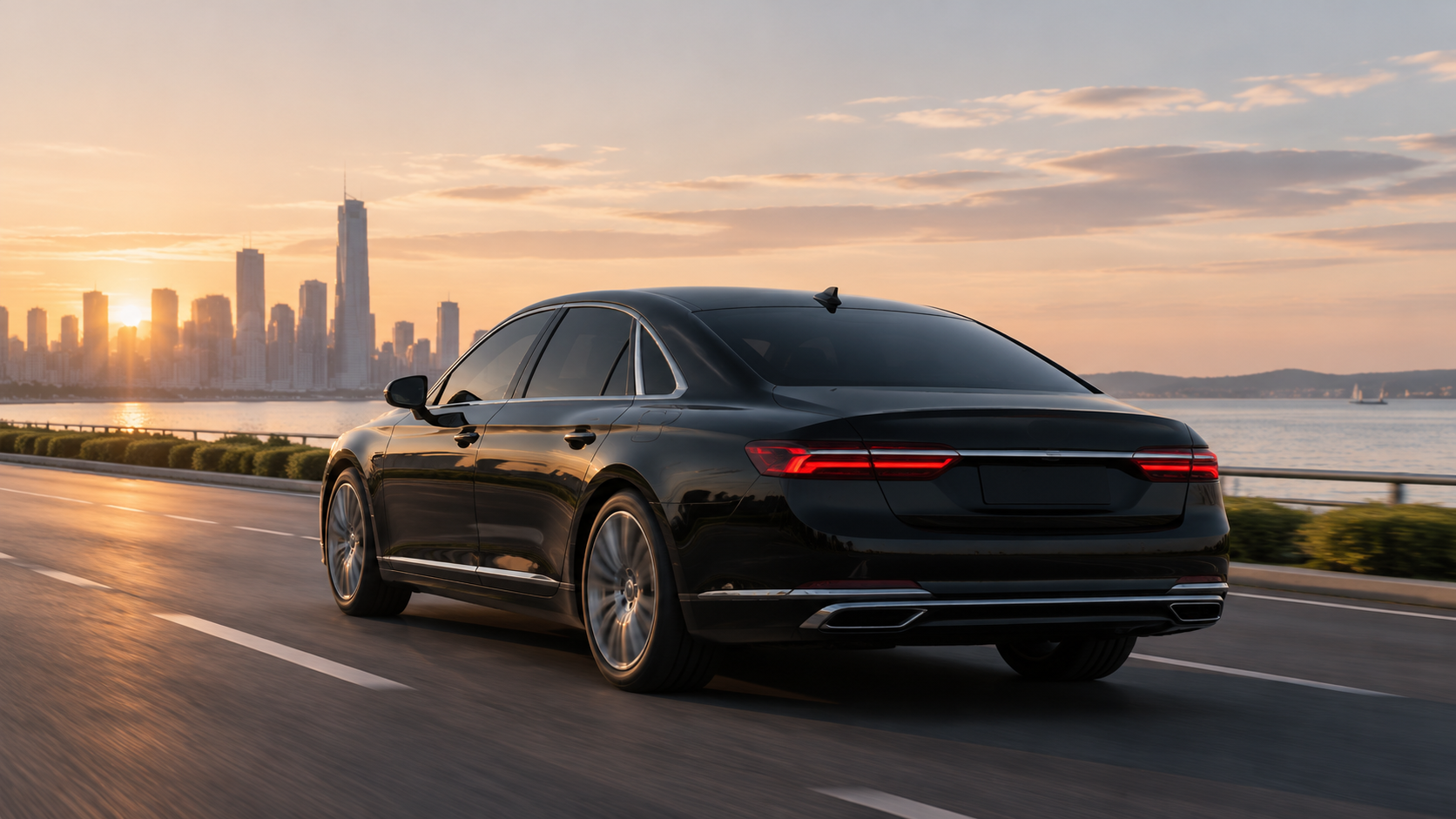
The A8L is Audi's flagship sedan in long-wheelbase form. In China, only the L version is sold, and it arrives as a fully imported car from Germany rather than being built by the joint venture.
Every A8L in this guide is a left-hand-drive, petrol, four-wheel-drive car with an automatic gearbox. That combination is what makes it exportable: it suits the CIS, the Middle East, most of Africa and Latin America, and rules out right-hand-drive markets entirely.
It is also a large car: a little over five metres long, on a wheelbase above three metres. Buyers should plan for parking, garage height and road width rather than treat it as a big A6.
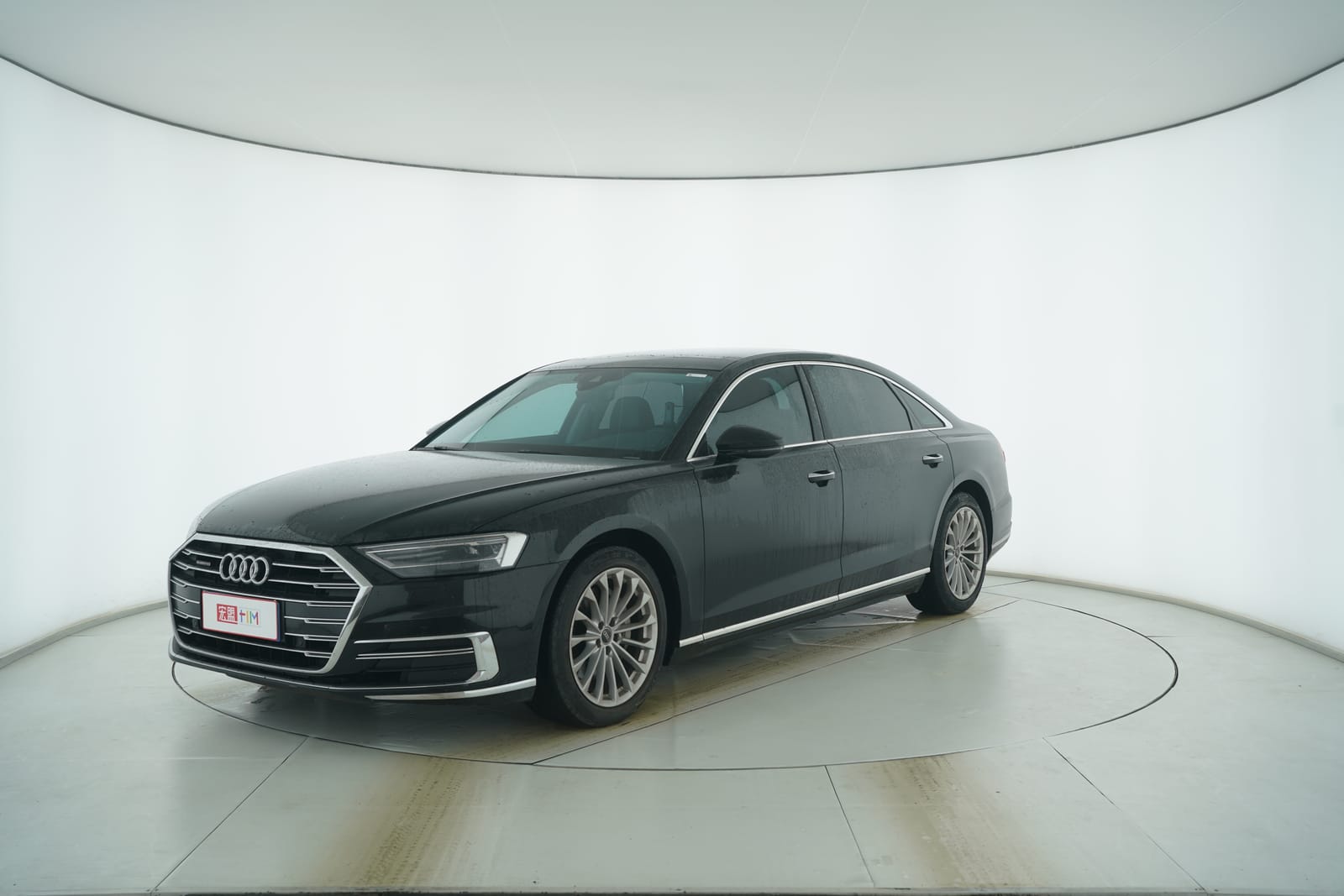
*2022 Audi A8L 50 TFSI quattro 舒适型典藏版, black.*
Two Generations, Two Characters
The cars in this guide come from the D4 and D5 generations, and the difference matters more than the model year suggests.
D4, roughly 2010 to 2017. Aluminium body, a more traditional dashboard with a pop-up screen, and a range of V6 and V8 engines. In China, 45 TFSI and 50 TFSI cars are 3.0-litre V6s at different outputs, 55 TFSI is a 4.0-litre V8, and a 6.3-litre W12 topped the range. Air suspension was available but not universal; the W12 is a specialist car with specialist costs.
D5, from 2018. A newer platform with a twin-screen interior in which the lower screen controls climate and typing, while the upper one handles navigation and media. All cars have a 48-volt electrical system, air suspension and quattro. In China the 50 TFSI is a 3.0-litre V6, the 55 TFSI a higher-output version of the same engine, and the 60 TFSI a 4.0-litre V8.
If you are comparing cars, compare within a generation. A late D4 and an early D5 are different cars to own, service and diagnose.
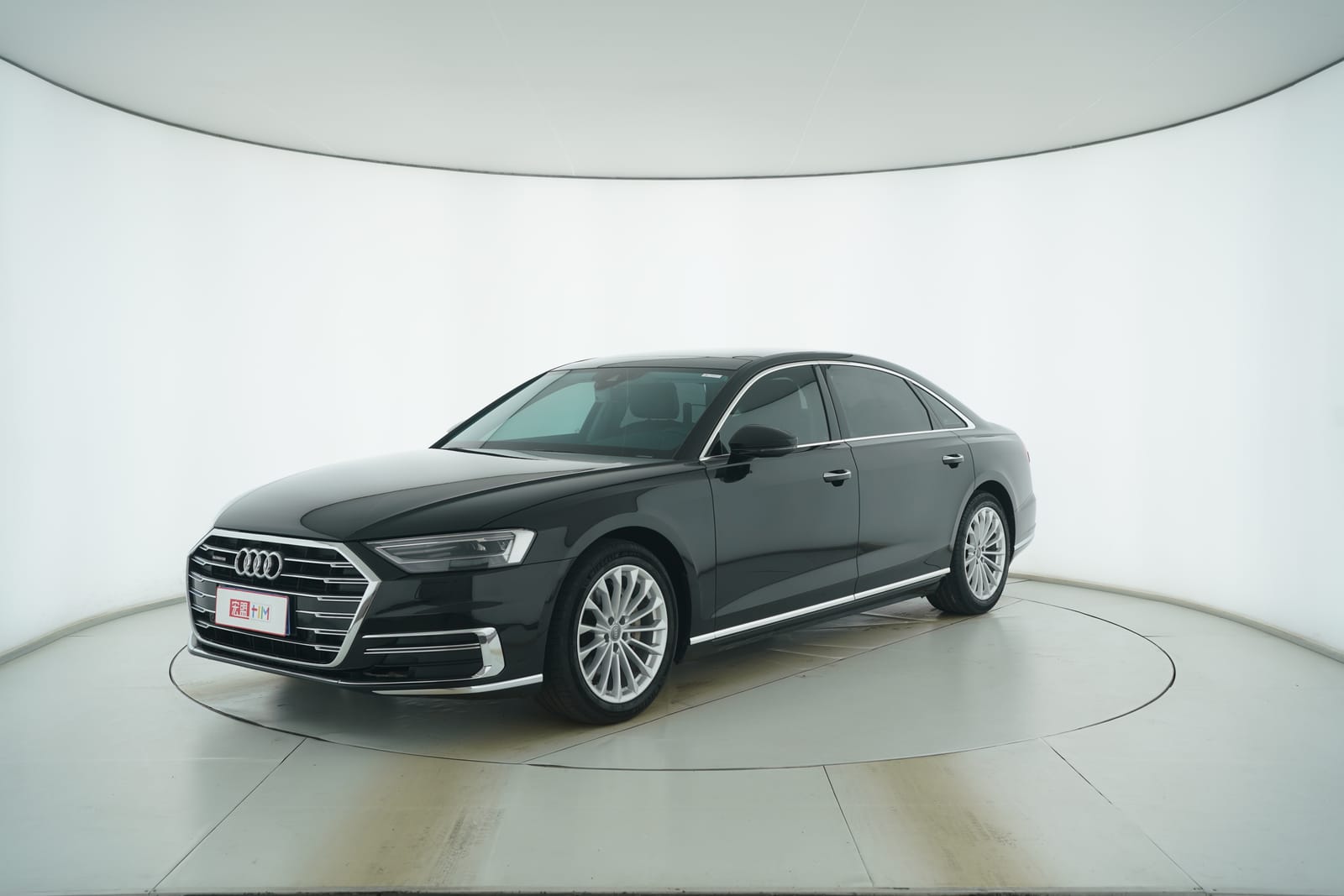
*2019 Audi A8L Plus 50 TFSI quattro 舒适型, black.*
The Two Cars on This Page
The first is a 2022 A8L 50 TFSI quattro in 舒适型典藏版 trim, black. The second is a 2019 A8L Plus 50 TFSI quattro in 舒适型 trim, also black.
Both are D5 cars with the 3.0-litre V6, quattro and air suspension. The 2022 car is the later version of the same generation, with the updated front-end treatment; the 2019 car is an earlier D5. Read the configuration sheet of the individual car rather than assuming equipment from the model year.
The Rear Cabin Is the Point
In an A8L, the rear seat is the reason the car exists. Legroom is enormous, the seats recline on the higher trims, and the cabin is quiet at speed in a way few cars manage.
Higher-specification cars add massaging rear seats, a rear control tablet, sunblinds, four-zone climate and premium audio. The two cars here are comfort-trim cars, so check the actual fittings rather than assuming the full luxury list.
Up front, the D5 cabin is dominated by two screens with haptic feedback. It looks impressive and works well when new, but it is also the part of the car most likely to show wear or faults on a used example. Test every function before you buy.
Driving It
The 3.0-litre V6 is smooth and quiet, with enough torque to move the car without drama. The eight-speed automatic shifts almost invisibly in normal driving.
Air suspension gives the A8L its character: it isolates the cabin from bad surfaces and lowers the car at speed. When it works, it is excellent. When it fails, it is expensive, and that is the single most important thing to check on a used car.
Quattro is permanent four-wheel drive tuned for grip on tarmac, not for off-road use. It helps in rain and snow and adds weight and fuel consumption.
Buying Used: What to Check
Air suspension. Listen for the compressor running repeatedly, watch the car settle evenly overnight, and check that all four corners raise and lower. Ask whether any strut or compressor has been replaced.
48-volt system (D5). The mild-hybrid system supports the electrical load and the stop-start. Warning messages, a dead stop-start or a battery that drains quickly are reasons to walk away.
Electronics. Test both centre screens, the virtual cockpit, every seat adjustment, the sunroof, the powered boot lid and the rear blinds. Faults here are common and repairs are not cheap.
Gearbox and quattro. Drive from cold, listen for hesitation, and check for noise from the driveline on a slow full-lock turn.
Body and structure. Aluminium panels are expensive to repair and hard to inspect without a proper check. Look for uneven panel gaps and paint mismatch, and have the chassis checked on a lift.
Tyres and brakes. A heavy car wears both quickly. Matching premium tyres matter for ride and for the quattro system.
Documents. Service history, import documents, registration and VIN must tell the same story.

Export Notes
Fuel. The V6 is designed for high-octane petrol. Where 95 is unavailable, plan for additives and tell the buyer honestly what that does to performance.
Parts. Audi's global parts network is broad, which is a real advantage over smaller brands. Body panels for an imported A8L are the exception: order from China or Germany before shipping, not after.
Diagnostics. These cars need Audi's own diagnostic software, not a generic scanner. Confirm your workshop has it, and that it can reach every module, before promising service.
Air suspension and export climate. Dust and heat shorten the life of air springs. If your market is hot and dusty, budget for suspension work and tell the customer.
Electronics and language. The infotainment and instrument cluster may be set to Chinese. Check whether your market's language can be loaded; not all modules can be re-flashed.
Emissions. Never rely on the listing. Each car's emission standard is whatever its accompanying certificate states — 逐车以随车证书为准 — and the destination country applies its own rules to that document.
Paperwork. Export licence for used vehicles, invoice, registration certificate and VIN must agree with each other and with the car.
Who It Suits
The A8L suits a buyer who wants a genuine flagship sedan for chauffeur or executive use, in a market where a large German car carries weight and where a workshop with proper diagnostic tools exists. It does not suit a buyer who wants cheap running costs, simple mechanics or a car for rough roads.
FAQ
Is the A8L all-wheel drive? The cars in this guide are quattro. Confirm the individual car.
Is it built in China? No, the A8L is imported from Germany.
Which engine is the 50 TFSI? In the D5 generation sold in China, a 3.0-litre V6. Earlier cars used different outputs.
Does it have air suspension? The D5 cars here do. Check the specific car, especially D4 examples.
Can the screens be switched to another language? Sometimes, module by module. Test before you buy.
Is it suitable for a right-hand-drive market? No.
Next Step
Tell us which A8L you are considering and we will send a walkaround video of that specific car: cold start, the air suspension rising, both screens in operation and a slow drive over a rough surface.

Latin America Used Car Import Guide 2026: Mexico, Brazil, Chile & Peru
Latin America Market Desk
Central Asia Used Car Import Guide 2026: Kazakhstan, Uzbekistan, Kyrgyzstan & Tajikistan
Central Asia Market Desk
China Used Car Export Policy 2026: Complete Guide
Policy Analysis Team